
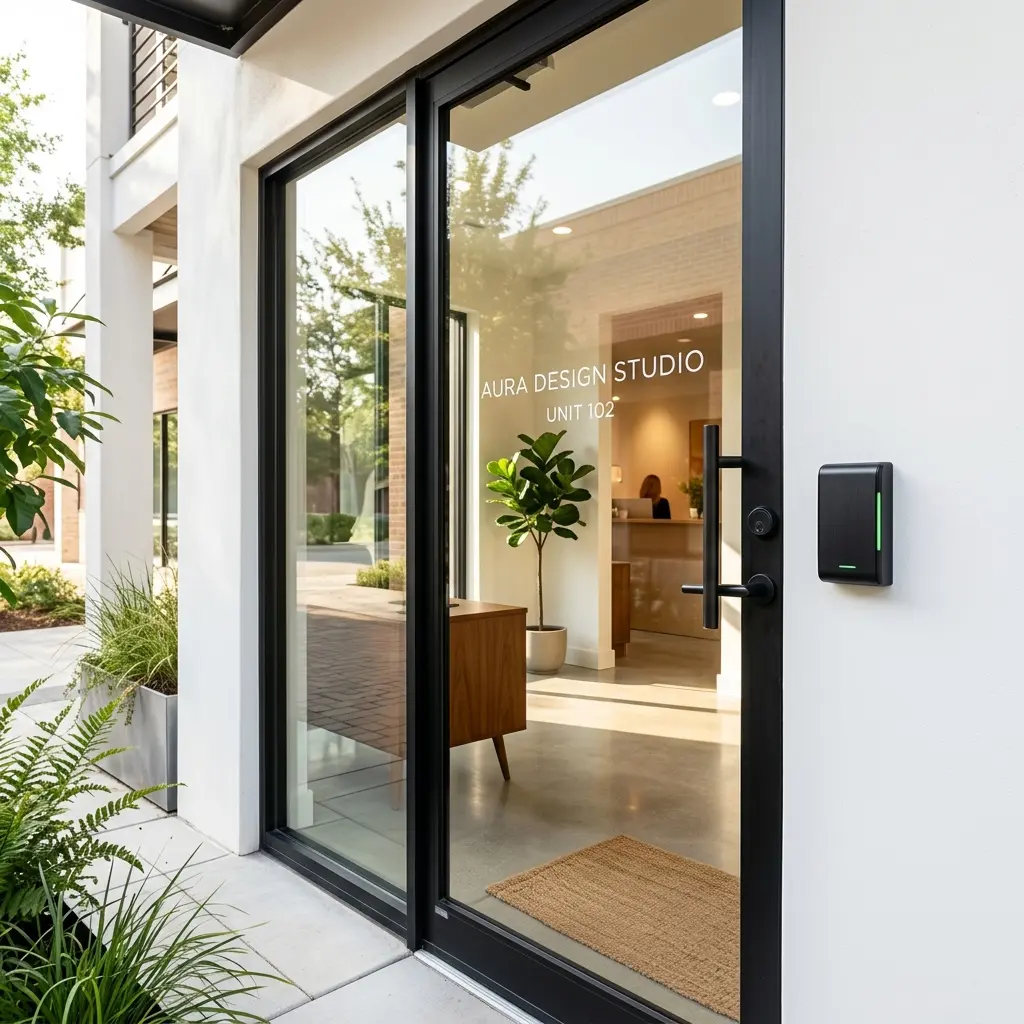
Welcome to our comprehensive guide to modern access control systems. In this resource, we combine industry standards and practical expertise to help property managers and business owners design, evaluate, and deploy reliable physical security solutions.
Choosing the Best Apartment Access Control Systems: Tips for Peace of Mind in Your Community
Security within apartment complexes has never been more critical as communities grow denser and residents demand both safety and convenience. Modern apartment access control systems are not just about restricting entry???they are about building trust, protecting privacy, and fostering a sense of belonging among tenants. With the rise of smart living technologies, property owners can now choose systems that combine robust protection with effortless management. As security threats evolve, so too must the way we secure residential spaces, moving beyond keys and guards to intelligent, connected systems. The right access control solution empowers communities with the peace of mind that comes from knowing every entry is monitored, verified, and secure.
Apartment Access Control Systems Explained: The Key to Smarter, Safer Living
An apartment access control system is a digital security solution that regulates who can enter specific areas of a residential property. It replaces traditional locks and keys with electronic authentication methods, giving property managers full visibility over who enters and exits the premises. These systems may control access to main gates, lobbies, elevators, parking lots, or even individual units. Unlike traditional locks that are easily duplicated or misplaced, modern access systems ensure only authorized credentials can unlock entry points???significantly reducing the risk of unauthorized access.
Core Functions and Components
Every apartment access control system is built on essential components that work together to create a secure, seamless, and manageable environment for residents and property managers.
- Access Credentials: These include key cards, fobs, PIN codes, mobile apps, or biometric scans that verify a person???s identity before granting entry. They replace traditional keys, offering more control and easier management of user permissions.
- Entry Points: Access systems can be installed at multiple locations, such as main gates, lobby doors, parking areas, elevators, and even individual apartment units. Each entry point is programmed to allow only authorized users at designated times.
- Software Management: Cloud-based management platforms enable property administrators to monitor activity, adjust access rights, and generate entry logs in real time. This allows for remote control and quick response to security events.
- System Integration: Modern access control solutions integrate with intercoms, CCTV, visitor management, and emergency systems to form a unified security network. This ensures complete visibility, faster incident response, and a safer community overall.
Why Access Control Is Essential in Multi-Tenant Buildings
In multi-tenant properties, access control plays a vital role in maintaining order, protecting residents, and ensuring that every part of the community operates securely and efficiently.
- Enhanced Safety and Accountability: Access control systems track who enters and exits the property, creating an audit trail that strengthens overall building security and fosters a culture of responsibility among residents and staff.
- Reduction of Unauthorized Entry and Property Crime: By limiting access to approved individuals only, these systems greatly minimize risks such as break-ins, trespassing, and theft within shared or private areas.
- Improved Tenant Satisfaction and Property Value: A well-secured environment attracts quality tenants, increases retention rates, and enhances the reputation and market value of the property.
- Easier Management for Landlords and Building Admins: Digital systems simplify daily operations by allowing administrators to issue, modify, or revoke access instantly???saving time, reducing costs, and eliminating the hassle of physical key management.
The Different Types of Apartment Access Control Systems

Apartment access control comes in several forms, each designed to meet different levels of security, convenience, and management needs within residential communities.
1. Key Card & Fob Systems
Key card and fob systems are among the most familiar forms of electronic access control. Users are issued RFID-enabled credentials that unlock doors when presented to a reader. They are easy to manage and ideal for mid-sized to large apartment complexes. Lost cards can be quickly deactivated, eliminating the risk of unauthorized entry. However, while they offer strong physical control, they lack advanced data reporting and may not integrate seamlessly with cloud or mobile systems.
2. PIN Code and Keypad Systems
PIN-based systems require residents or staff to enter a code to gain access. They are cost-effective and simple to install, making them suitable for smaller apartment buildings or secondary entry points. However, they are vulnerable if codes are shared or not updated regularly. For improved security, many buildings pair keypad access with secondary authentication methods like cards or mobile credentials.
3. Mobile-Based Access Control
Smartphone-based systems are rapidly becoming the preferred choice for modern apartments. Using Bluetooth, NFC, or Wi-Fi, these systems allow residents to unlock doors via a secure app???no physical key or card required. Property managers can issue virtual keys instantly and revoke them just as easily, all from a centralized dashboard. They also enable remote access management, making them perfect for communities that value convenience, efficiency, and touchless operation.
4. Biometric Access Systems
Biometric systems identify users through unique biological traits such as fingerprints, facial recognition, or iris scans. They deliver unmatched security because credentials cannot be lost, duplicated, or shared. These systems are ideal for luxury residences and high-security properties. Although installation costs are higher, the long-term benefits???enhanced safety, automation, and reliability???often justify the investment.
5. Cloud-Based Access Systems
Cloud-based systems are the backbone of next-generation apartment security. By hosting control software remotely, these systems enable property managers to monitor, update, and manage multiple sites from any device. Features like real-time alerts, audit logs, and software integration make them an all-in-one security management platform. Their scalability and flexibility make cloud access ideal for large communities and property portfolios seeking centralized oversight.
Factors to Consider When Choosing an Apartment Access Control System

Selecting the right access control solution requires understanding your property???s unique needs, balancing security goals with practicality, and ensuring long-term scalability.
1. Security Level & Threat Assessment
Before selecting a system, property owners should assess the specific security challenges of their complex. Factors such as building size, number of residents, number of entry points, and previous incidents all influence the level of protection required. A professional security provider can conduct a risk assessment to identify vulnerabilities and recommend the right combination of hardware and software solutions. This ensures the system not only meets current needs but anticipates future risks.
2. Scalability and Future-Proofing
As apartment communities expand, their security systems must adapt accordingly. Choosing scalable access control solutions ensures that adding new users, entry points, or even entire buildings doesn???t require a complete system overhaul. Cloud and modular systems excel in this regard???they???re easily upgradable, cost-efficient, and capable of supporting new technologies as they emerge.
3. Ease of Use for Residents and Management
No matter how advanced a system is, it must be user-friendly. Residents should find it intuitive to use their credentials, and administrators should be able to manage permissions with minimal training. Modern systems come with mobile apps, dashboards, and automated notifications that simplify everyday operations. Accessibility features should also be considered to accommodate elderly or differently-abled residents.
4. Integration with Existing Infrastructure
A well-designed access control system should complement the building???s existing security framework. Whether you already have CCTV cameras, alarm systems, or intercom networks, look for solutions that integrate seamlessly. Open-API systems allow cross-platform communication, enabling property managers to monitor all security components from a single interface. Integration ensures efficiency, reduces blind spots, and strengthens overall safety.
5. Data Privacy and Cybersecurity
As access control becomes increasingly digital, protecting user data is just as critical as securing physical entry points. Choose systems that use end-to-end encryption, multi-factor authentication, and secure cloud storage. Compliance with data protection regulations such as GDPR or local cybersecurity laws ensures resident privacy is never compromised. A reputable installer will also provide guidance on maintaining network security and performing regular software updates.
6. Cost vs. Long-Term Value
Budget is always a major factor, but focusing solely on upfront cost can lead to higher expenses down the line. Consider total cost of ownership???including installation, maintenance, software licensing, and hardware upgrades. Quality access control systems may have higher initial investment, but they deliver superior ROI by reducing security breaches, management costs, and tenant turnover. Always weigh value against reliability and longevity.
7. Support and Maintenance
Ongoing support is the backbone of any reliable access control system. Choose a provider that offers 24/7 assistance, routine maintenance, and timely software updates. Local expertise is also a plus, ensuring faster response times when service is needed. A strong support partnership means your system will continue to perform optimally for years to come.
How to Compare Access Control Providers and Installers

Finding the right installation partner involves more than just pricing???it???s about choosing a provider with the right expertise, reliability, and commitment to your building???s ongoing security.
1. Experience and Credentials
Not all security installers are created equal. Look for providers who specialize in multi-tenant access control and have a proven record in apartment or condominium environments. Verify their certifications, partnerships with top security brands, and customer references. Experienced installers understand the unique dynamics of residential buildings???balancing security with convenience and privacy.
2. Customization and Consultation
Every apartment complex is different. Reputable installers begin with a thorough site survey to assess physical layouts, resident demographics, and management needs. They then design tailored solutions that address these specifics, rather than offering a one-size-fits-all package. Customization ensures that both security and user experience are optimized from day one.
3. Post-Installation Support
A reliable installer provides more than just installation???they offer onboarding, training, and long-term technical support. Property managers and residents should receive clear instructions and hands-on guidance to maximize system efficiency. Regular updates, health checks, and remote troubleshooting help prevent downtime and ensure continuous protection.
4. Warranty and Service Agreements
Before signing any contract, review the installer???s warranty and service-level agreements (SLAs). Understand what coverage includes (hardware replacement, software updates, and emergency response times). A transparent agreement protects your investment and ensures consistent system performance. Choose a provider who values accountability and long-term partnership over quick installations.
Common Mistakes to Avoid When Choosing an Access Control System

Many property owners overlook key details during selection and installation, leading to costly inefficiencies and gaps in security that could have been easily prevented.
- Ignoring Compatibility: Installing a system that doesn???t integrate with existing infrastructure can create operational silos and inefficiencies.
- Prioritizing Cost Over Quality: Cheaper systems often lack advanced security or reliable support, leading to higher maintenance costs later.
- Neglecting Data Security: Failing to ensure proper encryption and compliance can expose resident data to cyber threats.
- Overlooking User Training: Without proper training, even the most advanced systems can cause frustration or misuse.
- Failing to Plan for Growth: Choose scalable systems to avoid expensive upgrades as your property expands or resident numbers increase.
Final Thoughts: Secure Access, Peace of Mind
Choosing the best apartment access control system is more than a security decision???it???s a commitment to community well-being and modern living. A thoughtfully chosen system protects residents, streamlines management, and elevates property value. By partnering with a trusted security solutions provider, you can ensure your building???s protection is intelligent, adaptable, and future-proof. At Efficient Low Voltage Solutions & System Integration, we specialize in designing and installing cutting-edge access control solutions that give residents what they deserve???safety, simplicity, and peace of mind in every entry. Contact us today!
How to Identify Security Vulnerabilities Before Choosing an Access Control System
Every property, whether commercial, industrial, multi-family, or residential, faces unique security challenges. While access control systems are often viewed as a solution to unauthorized entry, selecting a system without first understanding existing risks can leave critical gaps in protection. Investing in technology before identifying weaknesses may result in unnecessary expenses, incomplete coverage, and ongoing security concerns.
Understanding security vulnerabilities is the foundation of any effective security strategy. Before choosing biometric readers, keycard systems, mobile credentials, or integrated access control platforms, property owners and managers should evaluate how people enter, move through, and interact with a facility. Identifying security vulnerabilities early helps ensure that any security investment addresses real risks rather than perceived threats.
Why Identifying Security Vulnerabilities Matters
An access control system is only as effective as the security plan behind it. Many organizations focus on purchasing the latest technology without fully understanding where their weaknesses exist.
When security vulnerabilities go unnoticed, organizations may experience:
- Unauthorized access to sensitive areas
- Increased risk of theft or vandalism
- Employee safety concerns
- Data and asset protection issues
- Compliance violations
- Reduced effectiveness of security investments
A thorough understanding of security vulnerabilities helps decision-makers select access control features that directly address identified risks.
Technology Alone Cannot Solve Every Problem
Modern security technology offers impressive capabilities, but even advanced systems can fall short if they are installed without proper planning.
For example:
- A biometric reader may secure a main entrance while side entrances remain vulnerable.
- Electronic credentials may be implemented while visitor access remains unmanaged.
- Security cameras may record incidents but fail to prevent unauthorized entry.
Identifying security vulnerabilities first ensures that technology is deployed strategically rather than reactively.
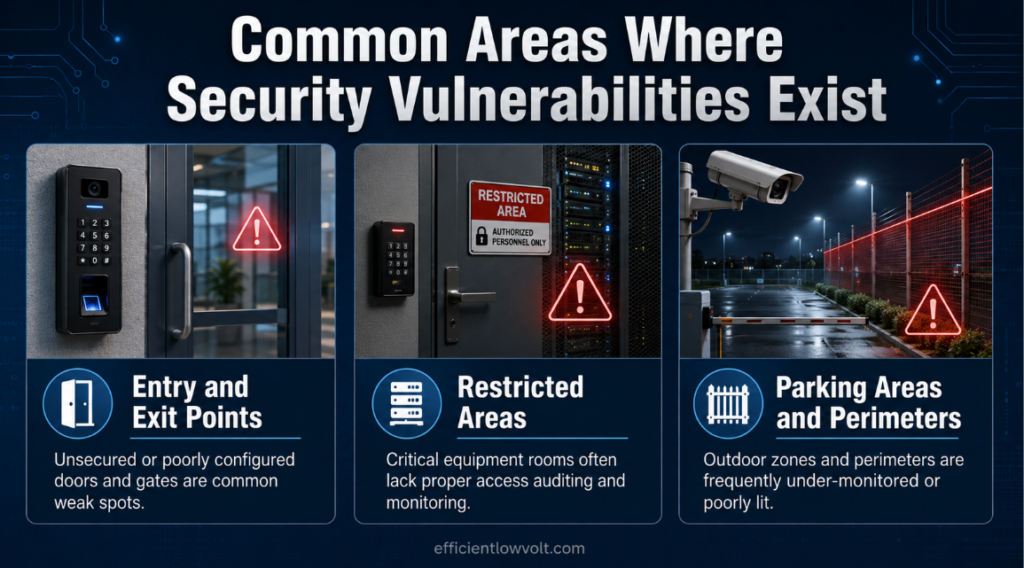
Common Areas Where Security Vulnerabilities Exist
Security vulnerabilities often appear in locations that receive little attention during daily operations.
1. Entry and Exit Points
Doors, gates, loading docks, and service entrances frequently become targets for unauthorized access.
Potential concerns include:
- Unlocked secondary entrances
- Damaged door hardware
- Shared access credentials
- Tailgating incidents
- Poorly monitored exits
Evaluating these areas helps determine what type of access control system may be necessary.
2. Restricted Areas
Certain sections of a property require additional protection because they contain valuable assets, sensitive information, or critical infrastructure.
Examples include:
- Server rooms
- Equipment rooms
- Executive offices
- Inventory storage areas
- Financial records departments
Identifying security vulnerabilities within these spaces helps establish appropriate access permissions and monitoring requirements.
3. Parking Areas and Perimeters
Many security incidents begin outside the building.
Common concerns include:
- Uncontrolled vehicle access
- Poor lighting
- Limited surveillance coverage
- Open perimeter fencing
- Unsecured pedestrian entrances
An effective security strategy considers both internal and external security vulnerabilities.
Conducting a Security Vulnerability Assessment
Before choosing an access control system, a structured assessment should be performed.
1. Evaluate Existing Security Measures
Begin by reviewing current protections.
Questions to consider include:
- How is access currently managed?
- Who has access to sensitive areas?
- Are keys being tracked effectively?
- Are visitor procedures documented?
- Are surveillance systems functioning properly?
The answers often reveal security vulnerabilities that have developed over time.
2. Analyze Traffic Patterns
Understanding how individuals move throughout a facility is critical.
Observe:
- Employee movement patterns
- Visitor traffic flow
- Contractor access requirements
- Delivery schedules
- Emergency evacuation routes
Traffic analysis helps determine where access restrictions may be required and where security vulnerabilities are most likely to occur.
3. Review Incident History
Past incidents frequently provide valuable insight into future risks.
Review records related to:
- Unauthorized entry attempts
- Theft incidents
- Property damage
- Lost credentials
- Security policy violations
Patterns may reveal recurring security vulnerabilities that require attention.
Physical Security Weaknesses That Affect Access Control Performance
Access control systems depend on strong physical infrastructure.
1. Poor Door and Lock Conditions
Even sophisticated access control systems can be compromised if doors or frames are damaged.
Issues may include:
- Worn door hardware
- Misaligned doors
- Weak strike plates
- Broken hinges
- Inadequate locking mechanisms
Physical weaknesses often create security vulnerabilities regardless of the technology installed.
2. Inadequate Lighting
Poor visibility creates opportunities for unauthorized activity.
Well-lit environments help:
- Improve surveillance effectiveness
- Increase employee safety
- Deter criminal behavior
- Enhance identification capabilities
Lighting assessments should be part of any security vulnerability evaluation.
3. Blind Spots in Surveillance Coverage
Access control and surveillance systems often work together.
When camera coverage contains gaps, organizations may struggle to:
- Verify incidents
- Monitor entry points
- Investigate security breaches
- Identify unauthorized individuals
These blind spots represent significant security vulnerabilities that should be addressed during planning.
Human Factors That Create Security Vulnerabilities
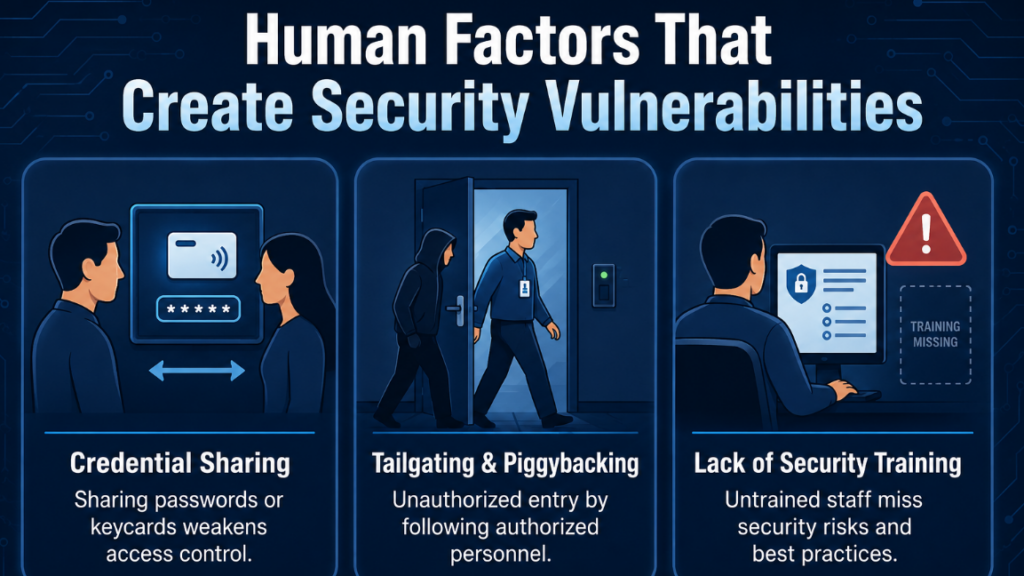
Technology cannot eliminate risks caused by human behavior.
1. Credential Sharing
Employees sometimes share access cards or credentials for convenience.
This practice can:
- Reduce accountability
- Increase unauthorized access risks
- Complicate investigations
- Create compliance concerns
Access control systems should support policies that discourage credential sharing.
2. Tailgating and Piggybacking
Tailgating occurs when an unauthorized individual follows an authorized person into a secure area.
Common causes include:
- Courtesy behaviors
- Lack of employee awareness
- Insufficient monitoring
- Inadequate visitor procedures
Many organizations underestimate how frequently these security vulnerabilities occur.
3. Lack of Security Training
Even the best access control system cannot compensate for poor security awareness.
Training should address:
- Access procedures
- Visitor management
- Credential protection
- Incident reporting
- Emergency response
Employees play a critical role in reducing security vulnerabilities.
Matching Access Control Features to Identified Risks
After security vulnerabilities have been identified, organizations can evaluate solutions more effectively.
1. Keycard Access Systems
Keycard systems provide controlled access while simplifying credential management.
They may be suitable for:
- Office buildings
- Educational facilities
- Apartment communities
- Healthcare environments
These systems can help address security vulnerabilities related to traditional keys.
2. Biometric Access Control
Biometric technologies use unique physical characteristics for authentication.
Examples include:
- Fingerprint recognition
- Facial recognition
- Iris scanning
These solutions can reduce security vulnerabilities associated with lost, stolen, or shared credentials.
3. Mobile Access Credentials
Mobile credentials allow users to access secure areas through smartphones.
Benefits may include:
- Simplified credential management
- Reduced replacement costs
- Improved convenience
- Enhanced security controls
Organizations seeking flexible access solutions often consider mobile technologies after evaluating security vulnerabilities.
The Role of Integration in Reducing Security Vulnerabilities
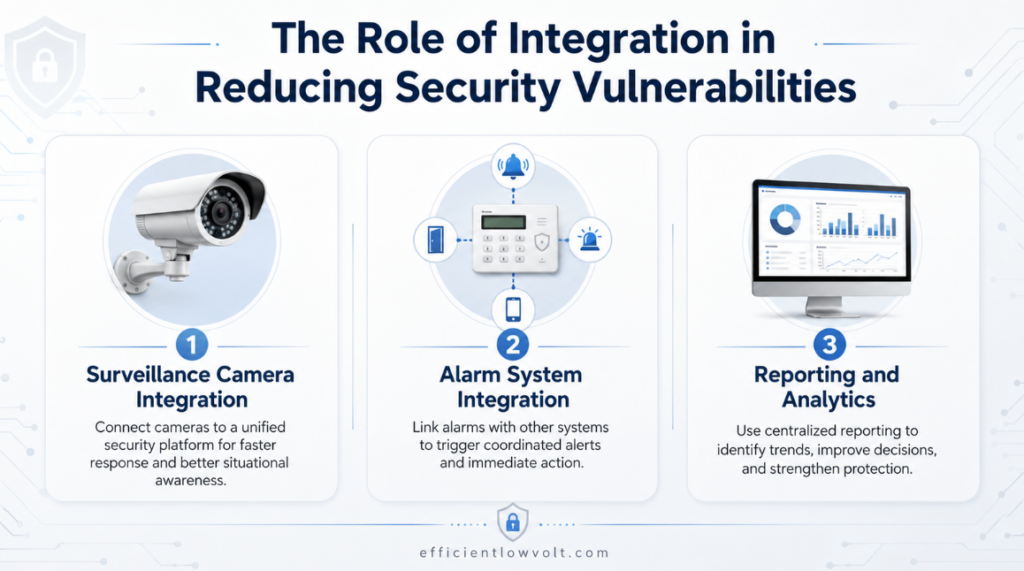
Access control systems become more effective when integrated with other security technologies.
1. Surveillance Camera Integration
Combining access control with video monitoring provides additional visibility.
Benefits include:
- Event verification
- Improved investigations
- Enhanced monitoring
- Increased accountability
Integration helps organizations identify and respond to security vulnerabilities more efficiently.
2. Alarm System Integration
Access control systems can work alongside intrusion detection systems.
This combination allows organizations to:
- Receive alerts
- Monitor unusual activity
- Automate responses
- Improve incident management
Integrated security environments create multiple layers of protection.
3. Reporting and Analytics
Modern systems generate valuable data.
Analytics may help identify:
- Frequent access attempts
- Unusual activity patterns
- Access violations
- Operational inefficiencies
These insights support ongoing efforts to reduce security vulnerabilities.
Importance of a Professional Security Assessment Before System Selection
A professional security assessment provides an objective evaluation of existing conditions and future security needs.
Experienced low-voltage security professionals understand how physical infrastructure, operational procedures, access control technologies, and surveillance systems work together. Their expertise helps identify hidden security vulnerabilities that may not be obvious during internal reviews.
Professional assessments typically evaluate:
- Building layout
- Entry points
- Existing security infrastructure
- User access requirements
- Regulatory considerations
- Future growth plans
This process helps ensure that selected access control systems align with actual risks rather than assumptions.
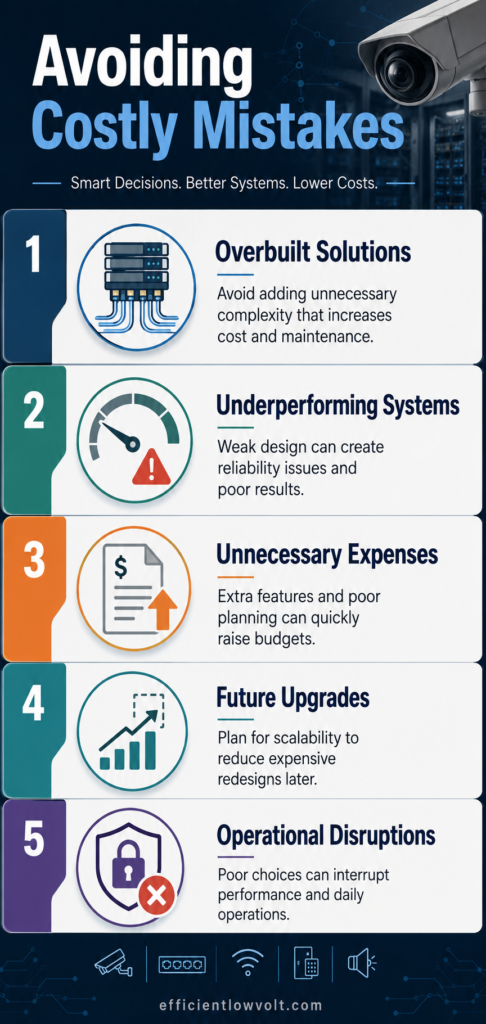
Avoiding Costly Mistakes
Choosing an access control system without understanding security vulnerabilities can lead to:
- Overbuilt solutions
- Underperforming systems
- Unnecessary expenses
- Future upgrades
- Operational disruptions
A professional evaluation helps organizations make informed decisions that support long-term security objectives.
Discover the Security Gaps Before They Become Serious Problems
Choosing an access control system should never begin with technology alone. The most effective security strategies start by identifying security vulnerabilities across facilities, operations, infrastructure, and daily procedures. Understanding these risks allows organizations to implement solutions that address actual threats while improving efficiency, accountability, and protection. By evaluating entry points, physical security conditions, human factors, and operational workflows, property owners can make smarter decisions about access control investments and long-term security planning.
Efficient LowVolt Solutions provides advanced protection solutions designed to help commercial and residential properties strengthen access management and overall security. From biometric access systems and keycard entry solutions to surveillance camera integration and scalable low-voltage security infrastructure, the team works closely with clients to implement technologies that align with their unique operational and protection requirements.
Access Control Wiring Mistakes to Avoid for a Reliable Security System
Access control systems have become a cornerstone of modern security, helping businesses and homeowners manage who can enter specific areas through technologies like biometric scanners, keycard systems, and integrated surveillance. While most people focus on selecting advanced hardware and software, one critical component is often overlooked: access control wiring. Behind every successful authentication, door unlock, and security alert is a network of cables responsible for delivering power and transmitting data between devices.
The truth is, many system failures are not caused by faulty equipment but by mistakes in wiring design and installation. Poor wiring can lead to unreliable performance, system downtime, and even serious security vulnerabilities. In this article, we???ll explore the most common access control wiring mistakes, how they impact system reliability, and what you can do to avoid them.
Why Access Control Wiring Matters More Than You Think
Access control systems rely on seamless communication between multiple components, including controllers, card readers, locks, sensors, and power supplies. Each of these elements depends on properly installed wiring to function as a unified system.
Even the most advanced access control systems can fail to perform reliably if the underlying access control wiring is poorly planned or improperly installed, as every command, authentication, and response depends on stable electrical and data transmission across the network. Without a solid wiring foundation, signals can become inconsistent, delayed, or completely lost.
Unlike visible hardware, wiring issues are often hidden behind walls or ceilings, making them harder to detect and fix. This is why proper planning and execution from the beginning are essential for long-term performance and reliability.
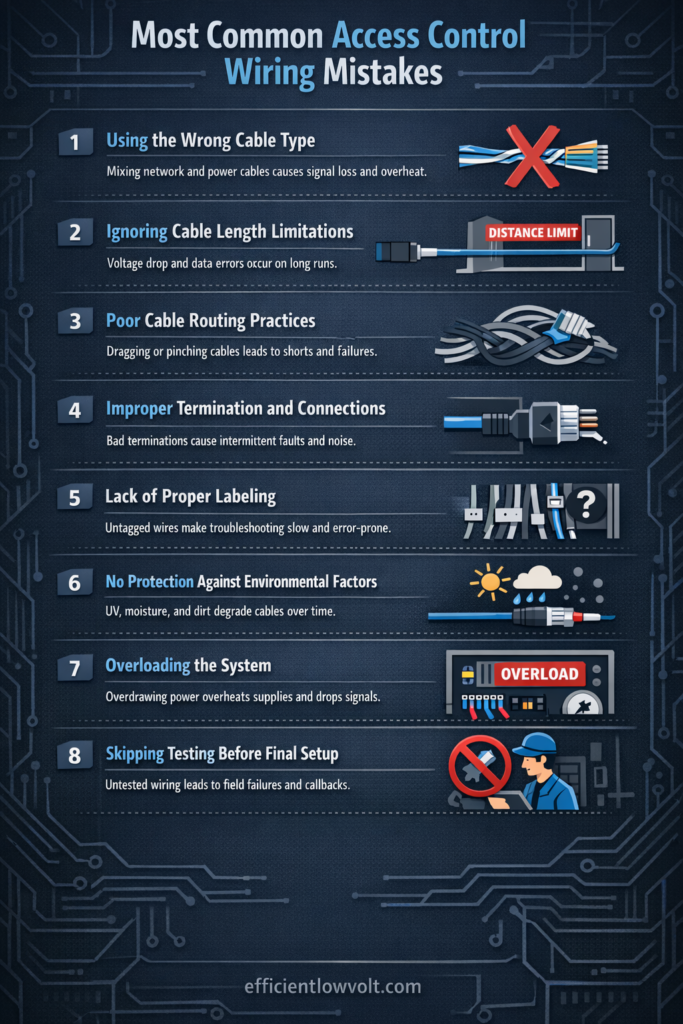
Most Common Access Control Wiring Mistakes
Understanding where things typically go wrong is the first step toward building a dependable system. Below are the most common mistakes that can compromise your access control wiring.
1. Using the Wrong Cable Type
Not all cables are created equal. Different systems require specific cable types based on voltage, data transmission, and environmental conditions.
Using low-quality or incorrect cables can result in:
- Signal loss
- Reduced performance
- Increased risk of failure over time
For example, using standard cables instead of shielded ones in high-interference environments can severely impact signal integrity.
2. Ignoring Cable Length Limitations
Every cable has a maximum effective distance. When this limit is exceeded, signal strength degrades, leading to inconsistent communication between system components.
Common issues include:
- Delayed authentication responses
- Intermittent connection failures
- Devices are not responding at all
Without proper planning, long cable runs can quickly become a major source of system instability.
3. Poor Cable Routing Practices
How cables are routed plays a significant role in system performance. Running access control wiring alongside high-voltage electrical lines or through areas with heavy interference can disrupt signal transmission.
Poor routing can lead to:
- Electrical interference (EMI)
- Signal distortion
- Increased system errors
Proper separation and routing strategies are essential to maintaining signal clarity.
4. Improper Termination and Connections
Even with the right cables, poor connections can undermine the entire system. Loose or improperly terminated wires create weak points that can cause intermittent failures.
This often results in:
- Unstable connections
- Random system glitches
- Increased maintenance needs
Reliable connections are critical for consistent performance.
5. Lack of Proper Labeling
In many installations, cables are left unlabeled, making it difficult to identify connections during maintenance or troubleshooting.
This leads to:
- Longer repair times
- Increased labor costs
- Higher risk of errors during modifications
Clear labeling is a simple yet highly effective practice that improves long-term system management.
6. No Protection Against Environmental Factors
Access control wiring is often exposed to environmental conditions such as heat, moisture, and dust, especially in outdoor or industrial environments.
Without proper protection, cables can:
- Degrade over time
- Short-circuit
- Fail prematurely
Using appropriate conduits and weather-resistant materials is essential for durability.
7. Overloading the System
Connecting too many devices to a single power source or communication line can overload the system, leading to performance issues.
Symptoms include:
- Slow response times
- System instability
- Device malfunctions
Proper load balancing ensures that the system operates efficiently.
8. Skipping Testing Before Final Setup
One of the most critical mistakes is failing to test the system thoroughly before completing the installation.
Without testing:
- Hidden issues remain undetected
- Problems appear after deployment
- Fixes become more complex and costly
Testing ensures that everything functions as intended before the system goes live.
How These Mistakes Impact System Reliability
Reliability is the backbone of any security system, and access control wiring plays a direct role in maintaining it. When wiring mistakes occur, they create a chain reaction that affects the entire system.
For instance, a weak connection or interference issue can disrupt communication between the reader and the controller, causing delays in authentication. This may result in doors failing to unlock on time or, worse, not responding at all. In high-traffic environments, even a few seconds of delay can lead to frustration, bottlenecks, and operational inefficiencies.
Inconsistent wiring can also cause intermittent failures, which are particularly difficult to diagnose because they do not occur consistently. These unpredictable issues can erode trust in the system and require frequent maintenance, increasing overall costs.
Ultimately, reliability is not just about convenience???it is about ensuring that the system performs consistently under all conditions.
Security Risks Linked to Poor Access Control Wiring
Beyond performance issues, poor access control wiring can introduce serious security risks. A system that does not function reliably cannot effectively protect restricted areas.
When access control wiring is compromised, even temporarily, it creates gaps in the system that can allow unauthorized entry, reduce monitoring accuracy, and expose sensitive areas to potential threats without immediate detection. For example, a malfunctioning door lock may remain unlocked, or a reader may fail to log access attempts.
Additionally, inconsistent data transmission can interfere with audit trails, making it difficult to track who accessed certain areas and when. This lack of visibility can be a major concern in environments where security and compliance are critical.
In short, weak wiring undermines the very purpose of an access control system.
Best Practices to Avoid Access Control Wiring Mistakes
Preventing these issues starts with following proven best practices during planning and installation.
- Use manufacturer-recommended cable types and specifications
- Follow structured cabling standards for organization and consistency
- Maintain proper separation between low-voltage and high-voltage cables
- Keep cable runs within recommended distance limits
- Label all cables clearly for easy identification
- Protect wiring with conduits or insulation in harsh environments
- Balance device loads to prevent system overload
- Conduct thorough testing before finalizing installation
By implementing these practices, you can significantly reduce the risk of errors and ensure a more reliable system.
DIY vs Professional Installation: What???s at Stake?
While some may consider a DIY approach to save costs, access control wiring requires a level of precision and expertise that goes beyond basic installation.
| Factor | DIY Approach | Professional Installation |
| Precision | Limited | High |
| Risk of errors | High | Low |
| System reliability | Inconsistent | Stable |
| Long-term cost | Higher due to fixes | More cost-efficient |
Access control systems may be low-voltage, but their impact is high. Mistakes made during installation can lead to ongoing issues that are far more expensive to fix later.
Signs Your Access Control Wiring Needs Attention
If your system is already in place, certain warning signs may indicate wiring issues:
- Doors not responding consistently
- Delayed access approvals
- System resets or unexpected glitches
- Visible wear or damage to cables
- Frequent need for maintenance or repairs
Addressing these signs early can prevent more serious problems down the line.
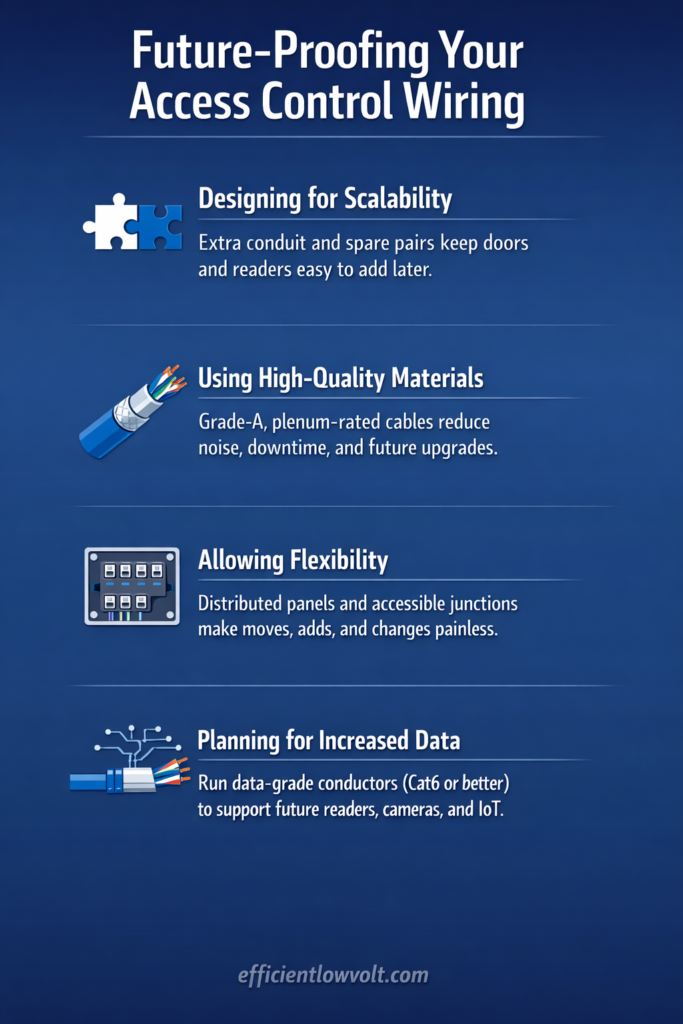
Future-Proofing Your Access Control Wiring
As technology evolves, your access control system should be able to adapt without requiring a complete overhaul.
Future-proofing strategies include:
- Designing for scalability to accommodate additional devices
- Using high-quality materials for long-term durability
- Allowing flexibility for system upgrades
- Planning for increased data and power demands
A forward-thinking approach ensures that your system remains effective as your needs grow.
Build a Security System You Can Rely On
A reliable access control system starts with a strong foundation, and that foundation is built on properly planned and executed access control wiring. By avoiding common mistakes such as incorrect cable selection, poor routing, and a lack of testing, you can ensure consistent performance, reduce downtime, and protect your space from potential security risks. Taking the time to get the wiring right from the beginning not only improves system reliability but also minimizes long-term maintenance and operational challenges.
If you???re looking to implement a dependable and scalable security solution, Efficient Low Voltage Solutions & System Integration provides expertly designed systems tailored to your environment. With a focus on precision, reliability, and advanced technology, their team ensures that every component???from wiring to final configuration???works seamlessly together to secure your space now and into the future.
Related Resources
Specific Wiring Mistakes to Avoid
Semantic Note: This article is part of our larger core curriculum. For a complete deep-dive, please refer to our master guide: The Comprehensive Guide to Access Control: Avoiding Mistakes and Choosing the Right System.
Access control systems have become a cornerstone of modern security, helping businesses and homeowners manage who can enter specific areas through technologies like biometric scanners, keycard systems, and integrated surveillance. While most people focus on selecting advanced hardware and software, one critical component is often overlooked: access control wiring. Behind every successful authentication, door unlock, and security alert is a network of cables responsible for delivering power and transmitting data between devices.
The truth is, many system failures are not caused by faulty equipment but by mistakes in wiring design and installation. Poor wiring can lead to unreliable performance, system downtime, and even serious security vulnerabilities. In this article, we???ll explore the most common access control wiring mistakes, how they impact system reliability, and what you can do to avoid them.
Why Access Control Wiring Matters More Than You Think
Access control systems rely on seamless communication between multiple components, including controllers, card readers, locks, sensors, and power supplies. Each of these elements depends on properly installed wiring to function as a unified system.
Even the most advanced access control systems can fail to perform reliably if the underlying access control wiring is poorly planned or improperly installed, as every command, authentication, and response depends on stable electrical and data transmission across the network. Without a solid wiring foundation, signals can become inconsistent, delayed, or completely lost.
Unlike visible hardware, wiring issues are often hidden behind walls or ceilings, making them harder to detect and fix. This is why proper planning and execution from the beginning are essential for long-term performance and reliability.
Most Common Access Control Wiring Mistakes
Understanding where things typically go wrong is the first step toward building a dependable system. Below are the most common mistakes that can compromise your access control wiring.
1. Using the Wrong Cable Type
Not all cables are created equal. Different systems require specific cable types based on voltage, data transmission, and environmental conditions.
Using low-quality or incorrect cables can result in:
- Signal loss
- Reduced performance
- Increased risk of failure over time
For example, using standard cables instead of shielded ones in high-interference environments can severely impact signal integrity.
2. Ignoring Cable Length Limitations
Every cable has a maximum effective distance. When this limit is exceeded, signal strength degrades, leading to inconsistent communication between system components.
Common issues include:
- Delayed authentication responses
- Intermittent connection failures
- Devices are not responding at all
Without proper planning, long cable runs can quickly become a major source of system instability.
3. Poor Cable Routing Practices
How cables are routed plays a significant role in system performance. Running access control wiring alongside high-voltage electrical lines or through areas with heavy interference can disrupt signal transmission.
Poor routing can lead to:
- Electrical interference (EMI)
- Signal distortion
- Increased system errors
Proper separation and routing strategies are essential to maintaining signal clarity.
4. Improper Termination and Connections
Even with the right cables, poor connections can undermine the entire system. Loose or improperly terminated wires create weak points that can cause intermittent failures.
This often results in:
- Unstable connections
- Random system glitches
- Increased maintenance needs
Reliable connections are critical for consistent performance.
5. Lack of Proper Labeling
In many installations, cables are left unlabeled, making it difficult to identify connections during maintenance or troubleshooting.
This leads to:
- Longer repair times
- Increased labor costs
- Higher risk of errors during modifications
Clear labeling is a simple yet highly effective practice that improves long-term system management.
6. No Protection Against Environmental Factors
Access control wiring is often exposed to environmental conditions such as heat, moisture, and dust, especially in outdoor or industrial environments.
Without proper protection, cables can:
- Degrade over time
- Short-circuit
- Fail prematurely
Using appropriate conduits and weather-resistant materials is essential for durability.
7. Overloading the System
Connecting too many devices to a single power source or communication line can overload the system, leading to performance issues.
Symptoms include:
- Slow response times
- System instability
- Device malfunctions
Proper load balancing ensures that the system operates efficiently.
8. Skipping Testing Before Final Setup
One of the most critical mistakes is failing to test the system thoroughly before completing the installation.
Without testing:
- Hidden issues remain undetected
- Problems appear after deployment
- Fixes become more complex and costly
Testing ensures that everything functions as intended before the system goes live.
How These Mistakes Impact System Reliability
Reliability is the backbone of any security system, and access control wiring plays a direct role in maintaining it. When wiring mistakes occur, they create a chain reaction that affects the entire system.
For instance, a weak connection or interference issue can disrupt communication between the reader and the controller, causing delays in authentication. This may result in doors failing to unlock on time or, worse, not responding at all. In high-traffic environments, even a few seconds of delay can lead to frustration, bottlenecks, and operational inefficiencies.
Inconsistent wiring can also cause intermittent failures, which are particularly difficult to diagnose because they do not occur consistently. These unpredictable issues can erode trust in the system and require frequent maintenance, increasing overall costs.
Ultimately, reliability is not just about convenience???it is about ensuring that the system performs consistently under all conditions.
Security Risks Linked to Poor Access Control Wiring
Beyond performance issues, poor access control wiring can introduce serious security risks. A system that does not function reliably cannot effectively protect restricted areas.
When access control wiring is compromised, even temporarily, it creates gaps in the system that can allow unauthorized entry, reduce monitoring accuracy, and expose sensitive areas to potential threats without immediate detection. For example, a malfunctioning door lock may remain unlocked, or a reader may fail to log access attempts.
Additionally, inconsistent data transmission can interfere with audit trails, making it difficult to track who accessed certain areas and when. This lack of visibility can be a major concern in environments where security and compliance are critical.
In short, weak wiring undermines the very purpose of an access control system.
Best Practices to Avoid Access Control Wiring Mistakes
Preventing these issues starts with following proven best practices during planning and installation.
- Use manufacturer-recommended cable types and specifications
- Follow structured cabling standards for organization and consistency
- Maintain proper separation between low-voltage and high-voltage cables
- Keep cable runs within recommended distance limits
- Label all cables clearly for easy identification
- Protect wiring with conduits or insulation in harsh environments
- Balance device loads to prevent system overload
- Conduct thorough testing before finalizing installation
By implementing these practices, you can significantly reduce the risk of errors and ensure a more reliable system.
DIY vs Professional Installation: What???s at Stake?
While some may consider a DIY approach to save costs, access control wiring requires a level of precision and expertise that goes beyond basic installation.
| Factor | DIY Approach | Professional Installation |
| Precision | Limited | High |
| Risk of errors | High | Low |
| System reliability | Inconsistent | Stable |
| Long-term cost | Higher due to fixes | More cost-efficient |
Access control systems may be low-voltage, but their impact is high. Mistakes made during installation can lead to ongoing issues that are far more expensive to fix later.
Signs Your Access Control Wiring Needs Attention
If your system is already in place, certain warning signs may indicate wiring issues:
- Doors not responding consistently
- Delayed access approvals
- System resets or unexpected glitches
- Visible wear or damage to cables
- Frequent need for maintenance or repairs
Addressing these signs early can prevent more serious problems down the line.
Future-Proofing Your Access Control Wiring
As technology evolves, your access control system should be able to adapt without requiring a complete overhaul.
Future-proofing strategies include:
- Designing for scalability to accommodate additional devices
- Using high-quality materials for long-term durability
- Allowing flexibility for system upgrades
- Planning for increased data and power demands
A forward-thinking approach ensures that your system remains effective as your needs grow.
Build a Security System You Can Rely On
A reliable access control system starts with a strong foundation, and that foundation is built on properly planned and executed access control wiring. By avoiding common mistakes such as incorrect cable selection, poor routing, and a lack of testing, you can ensure consistent performance, reduce downtime, and protect your space from potential security risks. Taking the time to get the wiring right from the beginning not only improves system reliability but also minimizes long-term maintenance and operational challenges.
If you???re looking to implement a dependable and scalable security solution, Efficient Low Voltage Solutions & System Integration provides expertly designed systems tailored to your environment. With a focus on precision, reliability, and advanced technology, their team ensures that every component???from wiring to final configuration???works seamlessly together to secure your space now and into the future.