Securing Ohio Healthcare: The Intersection of Access Control and Compliance
Managing security in a modern medical clinic, hospital, or assisted living facility in Ohio is a complex balancing act. Facility managers must create a welcoming, accessible environment for patients and their families while simultaneously locking down restricted areas to protect pharmaceuticals, expensive medical equipment, and highly sensitive patient data. Achieving this balance requires an enterprise-grade access control compliance that satisfies both HIPAA regulations and Joint Commission (JCAHO) standards.
At Efficient Low Voltage Solutions, we specialize in designing physical security infrastructure for the healthcare sector. Here is what Ohio medical administrators need to know about access control compliance in 2026.
1. HIPAA and Physical Safeguards
Most healthcare administrators associate HIPAA (the Health Insurance Portability and Accountability Act) strictly with cybersecurity???firewalls, encrypted emails, and strong passwords. However, the HIPAA Security Rule also mandates strict Physical Safeguards (45 CFR ?? 164.310).
If an unauthorized person can simply walk into your server room, records department, or an empty doctor’s office and steal a laptop containing unencrypted electronic Protected Health Information (ePHI), your facility is liable for massive federal fines.
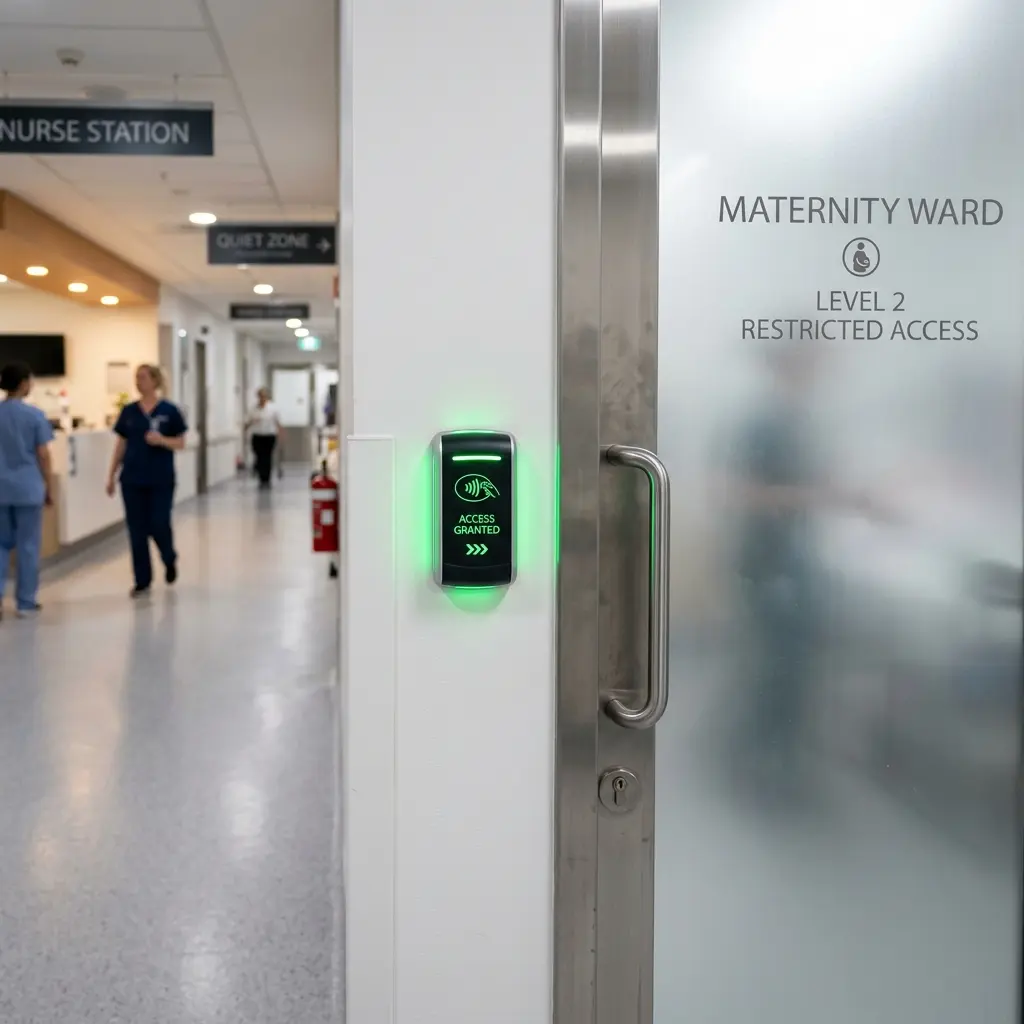
- Granular Role-Based Access: A compliant access control system abandons physical metal keys (which can be easily copied or lost) in favor of smart cards or mobile credentials. This allows you to assign role-based access. A receptionist’s badge may only unlock the front door and the breakroom, while a head nurse’s badge unlocks the medication room, and the IT director’s badge unlocks the server closet.
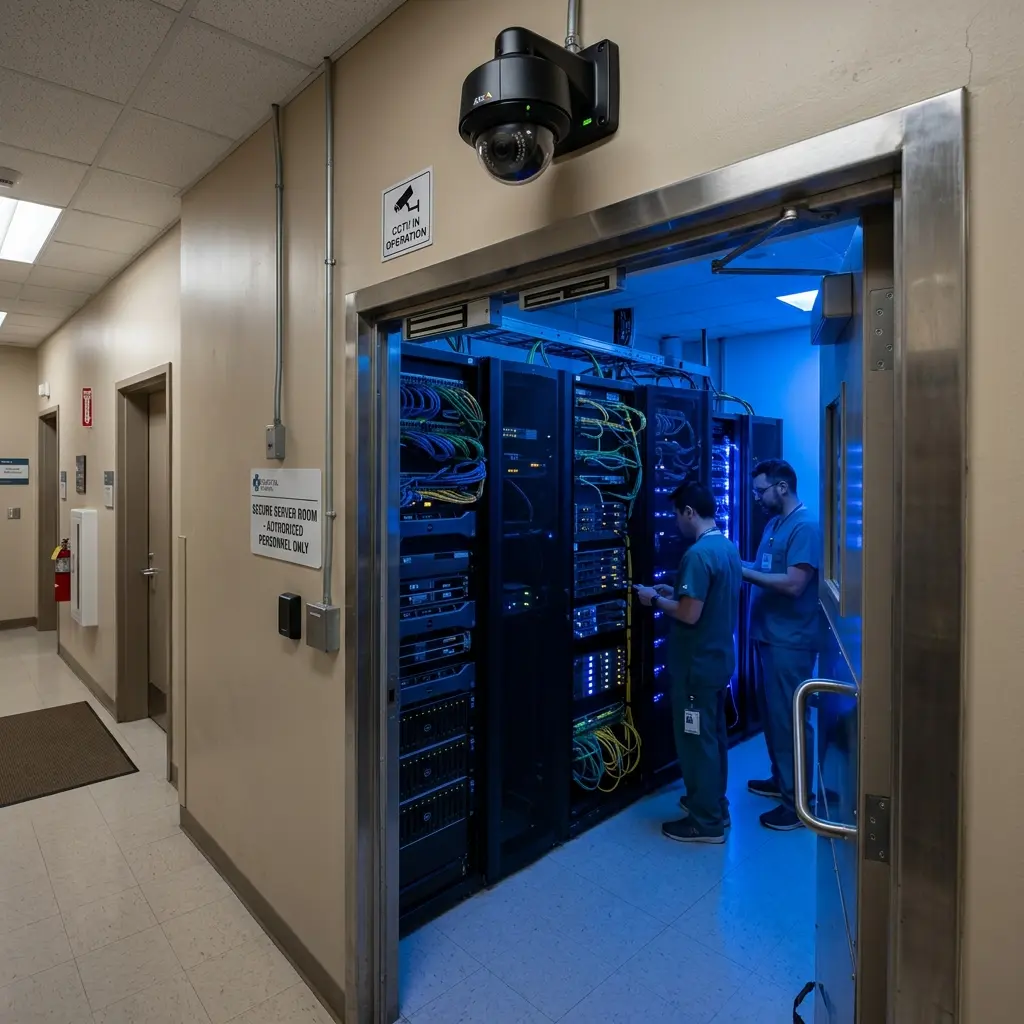
- Audit Trails: HIPAA requires covered entities to track who accesses areas containing ePHI. Modern electronic locks log every single entry event (and denied entry attempt). If a breach occurs, administrators can instantly pull a report showing exactly whose badge unlocked the door at 2:14 AM.
2. Securing Pharmacies and Medication Rooms
The Ohio State Board of Pharmacy enforces strict regulations regarding the storage of dangerous drugs and controlled substances. Medication rooms must be secured by a physical barrier with a robust locking mechanism.
- Two-Factor Authentication (2FA) at the Door: For highly restricted areas like a central pharmacy, a simple keycard tap is often insufficient. We design systems that require 2FA???for example, a clinician must tap their smart card and enter a unique PIN on a keypad, or tap their card and use a biometric fingerprint scanner. This prevents a thief from using a stolen badge to access narcotics.
- Video Integration: For total compliance, access control should be natively integrated with your CCTV surveillance system. When the pharmacy door is unlocked, the camera above the door automatically bookmarks the video, allowing auditors to verify that the person entering matches the identity of the badge used.
3. ICRA Compliance During Installation
Achieving healthcare access control compliance requires pulling low voltage cabling above drop ceilings and through walls. In a standard office building, this is routine. In an active Ohio hospital or outpatient surgery center, it is highly dangerous.
Disturbing ceiling tiles releases dust and potential airborne pathogens (like Aspergillus) that can be lethal to immunocompromised patients. Therefore, any low voltage contractor working in a medical facility must strictly adhere to Infection Control Risk Assessment (ICRA) protocols.
At Efficient Low Voltage Solutions, our technicians are trained in ICRA compliance. When installing magnetic locks, card readers, or cabling in patient care areas, we utilize HEPA-filtered mobile containment carts (often called “ante-rooms” or “dust buggies”). This ensures that all dust and debris from the installation process are completely contained, protecting patient health and passing facility inspections.
4. Lockdown Capabilities and Staff Safety
Unfortunately, healthcare workers face some of the highest rates of workplace violence of any profession. A comprehensive access control compliance strategy must protect the staff.
We deploy access control systems that feature centralized lockdown capabilities. In the event of an active threat or a violent individual in the emergency department, an administrator or security guard can press a single “panic button” (physical or on a mobile app) that instantly locks all perimeter doors, disables standard employee badges, and restricts movement throughout the facility, protecting staff until law enforcement arrives.
Upgrade Your Medical Facility’s Access Control Compliance
If your clinic is still relying on metal keys or an outdated keypad that every employee shares the code to, you are likely out of compliance with HIPAA physical safeguards. Contact Efficient Low Voltage Solutions today for a comprehensive access control compliance audit of your Ohio medical facility.