Cat6 vs. Cat6A vs. Cat8: Which Cable Offers the Best ROI for Your Business?
When designing a new IT infrastructure, selecting the right copper ethernet cable is one of the most critical decisions an organization will make. Structured cabling is hidden behind walls and above ceilings; replacing it is highly disruptive and expensive. Therefore, the goal is to install a cabling system that will remain relevant for the next 10 to 15 years.
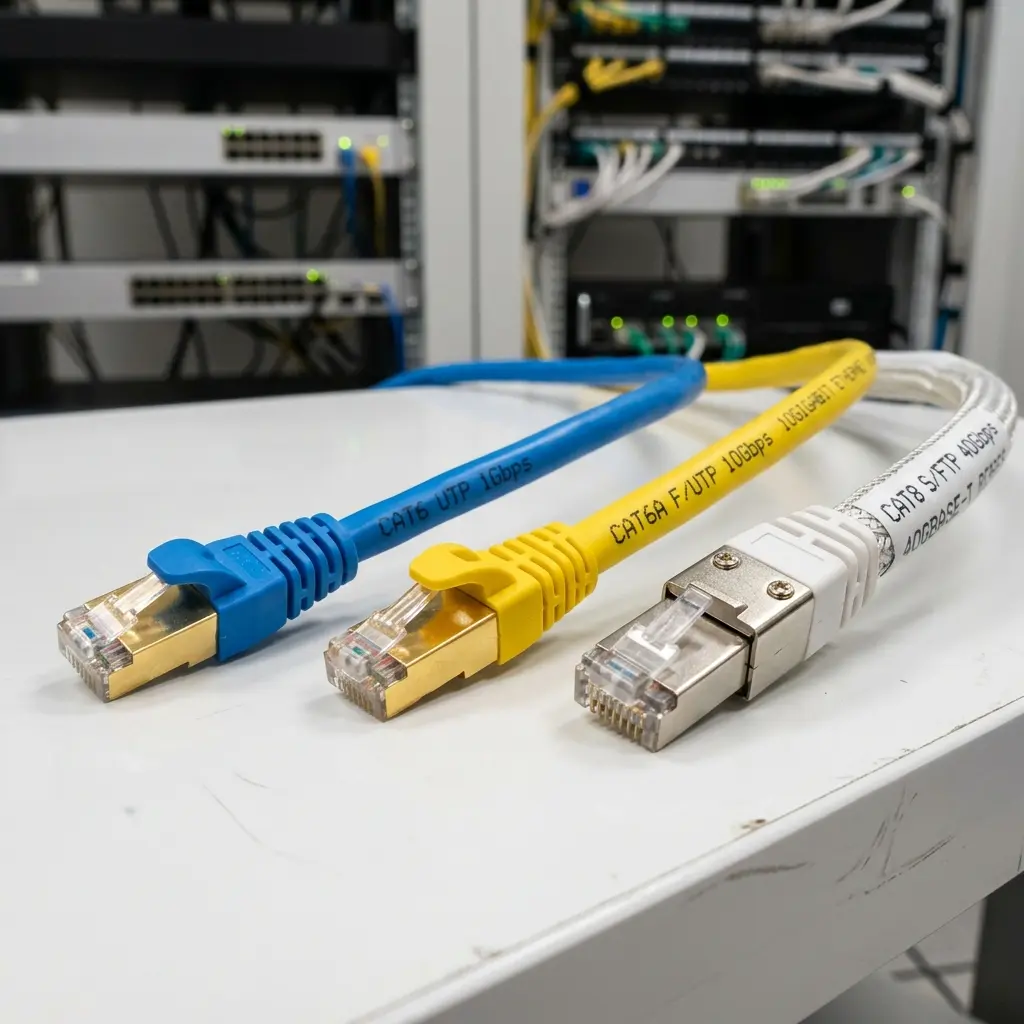
To calculate the true Return on Investment (ROI), businesses must balance upfront material and labor costs against future bandwidth requirements and Power over Ethernet (PoE) demands. Here is the definitive breakdown of Cat6, Cat6A, and Cat8.
Category 6 (Cat6): The Reliable Baseline
Cat6 is currently the minimum standard for new commercial installations. It operates at a frequency of 250 MHz and features tighter twists and a plastic spline (cross-web) to separate the wire pairs and reduce crosstalk.
- Performance: Supports 1 Gigabit per second (Gbps) up to the full 328 feet (100 meters). It can support 10 Gbps, but only over short distances (up to 180 feet / 55 meters).
- Cost: Low. It is highly affordable, flexible, and easy for technicians to pull and terminate.
- Best For: Standard office workstations, VoIP phones, basic IP security cameras, and small businesses with standard data needs.
- ROI Verdict: High ROI for standard endpoints. However, if your business plans to move heavy data (like video editing or massive database transfers), Cat6 will become a bottleneck within the next 5 years.
Category 6A (Cat6A): The Gold Standard
The “A” stands for Augmented. Cat6A operates at a frequency of 500 MHz???double that of standard Cat6. It is physically thicker, heavier, and often features superior shielding (F/UTP or S/FTP) to completely eliminate alien crosstalk (AXT).
- Performance: Supports a massive 10 Gbps over the full 328 feet (100 meters).
- Heat Dissipation (PoE++): Modern networks use the ethernet cable to send electrical power to devices (Power over Ethernet). Devices like WiFi 6 and WiFi 6E access points, Pan-Tilt-Zoom (PTZ) cameras, and smart LED lighting require high wattage (Type 3 and Type 4 PoE, up to 90 watts). This power generates heat. The thicker gauge and shielding of Cat6A dissipate this heat efficiently, preventing the cable from degrading or catching fire in large bundles.
- Cost: Moderate to High. The cable is 20-30% more expensive than Cat6, and the labor cost is higher because the thicker cable requires larger conduits, stronger J-hooks, and more time to terminate.
- Best For: Wireless Access Points (WAPs), A/V distribution (HDBaseT), healthcare imaging centers, and future-proofing corporate headquarters.
- ROI Verdict: Maximum ROI for enterprise environments. The initial cost is higher, but it guarantees that you will not need to rip and replace your cabling when you upgrade your network switches to 10G in the coming decade.
Category 8 (Cat8): The Data Center Specialist
Cat8 is the newest and fastest copper standard, operating at an astonishing 2000 MHz. However, it comes with extreme limitations.
- Performance: Supports 25 Gbps or 40 Gbps, but only up to a maximum distance of 98 feet (30 meters).
- Design: Every pair is individually shielded with foil, and the entire cable is encased in a braided shield (S/FTP). It is incredibly rigid, thick, and difficult to bend.
- Cost: Very High. The cable, the proprietary connectors, and the specialized testing equipment make Cat8 extremely expensive.
- Best For: Data Centers. It is designed exclusively for switch-to-server connections in the same rack or adjacent racks (Top-of-Rack or End-of-Row topologies).
- ROI Verdict: Negative ROI for standard offices. It is a complete waste of money to run Cat8 to a standard office desk or camera, as the distance limitations make it useless for horizontal floor runs, and no standard PC network card supports 40G base-T anyway. For data centers, it provides a cost-effective copper alternative to fiber optics for short runs.
Conclusion: Making the Right Choice
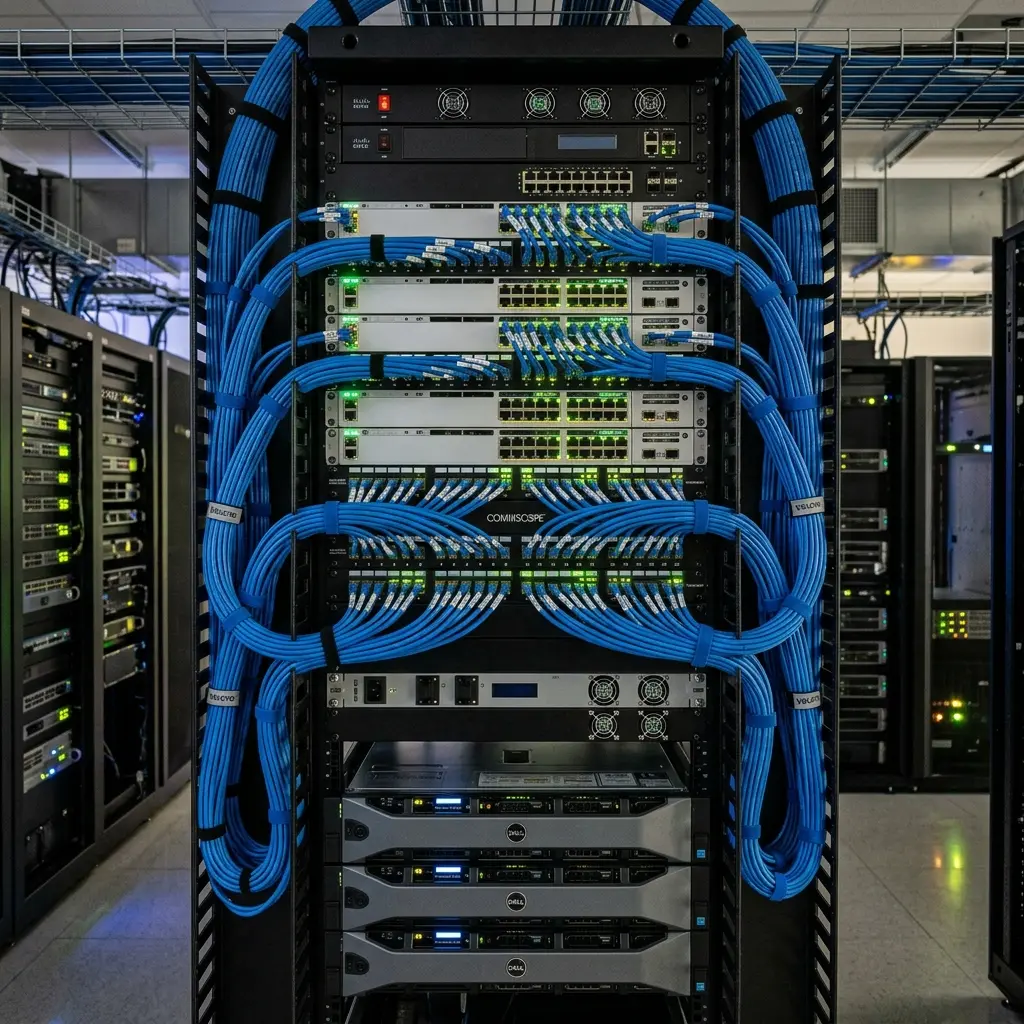
For most modern commercial build-outs, the ideal strategy is a hybrid approach. The smartest ROI is achieved by pulling Cat6 to the standard office desks and VoIP phones, and pulling Cat6A to the ceiling for all WiFi Access Points, high-end security cameras, and A/V systems.
If you are unsure which cabling infrastructure your business needs to stay competitive, contact Efficient Low Voltage Solutions. We will engineer a custom cabling matrix that balances your budget today with your bandwidth demands of tomorrow.