

Understanding Low Voltage Building Codes in Ohio: A Guide to Compliance and Safety
There is a dangerous misconception in the commercial real estate world that because network cables and security wires carry “low voltage” (typically under 50 volts), they are entirely unregulated and safe from fire hazards. This could not be further from the truth.
In the state of Ohio, installing low-voltage infrastructure???including structured cabling, access control systems, and A/V wiring???is strictly governed by the National Electrical Code (NEC), the Ohio Building Code (OBC), and local fire marshal regulations. Failing to adhere to these codes can result in failed building inspections, massive fines, denied insurance claims, and severe life-safety hazards.
The Most Critical Code: Plenum vs. Riser Cable Requirements
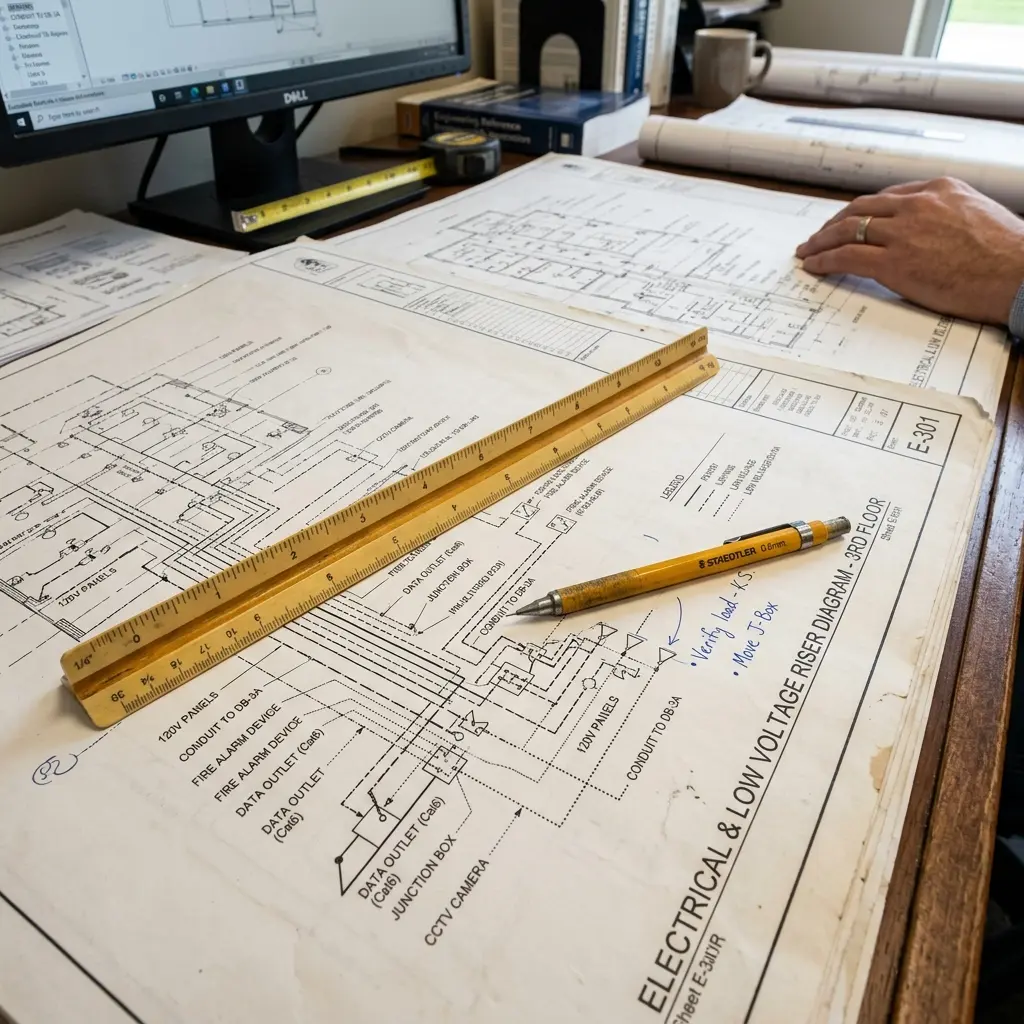
The single most enforced low-voltage code involves the fire rating of the cable jacket. The NEC dictates exactly what type of cable can be run in specific building spaces to prevent the spread of toxic smoke during a fire.
Plenum Spaces and CMP Cable
A “plenum space” is any area of a building used to facilitate air circulation for heating and air conditioning (HVAC) systems. In commercial buildings, the open space above a suspended drop ceiling or beneath a raised floor is frequently used as a return air plenum.
If you run cables in a plenum space, you are legally required to use Plenum-rated (CMP) cable. Plenum cables are jacketed with low-smoke, fire-retardant materials (like Teflon). If a fire breaks out, CMP cable burns very slowly and emits minimal toxic fumes, preventing deadly smoke from being sucked into the HVAC system and distributed throughout the building.
Riser Spaces and CMR Cable
A “riser space” is a vertical shaft used to run cables between multiple floors of a building. Here, you must use Riser-rated (CMR) cable. CMR cable is designed to prevent fire from traveling rapidly upward from floor to floor. However, CMR cable emits more toxic smoke than CMP cable and cannot legally be used in a horizontal plenum space.
Note: You can legally use CMP (Plenum) cable in a riser space (because it exceeds the fire rating), but you cannot use CMR (Riser) cable in a plenum space.
Code Violations: Abandoned Cable

One of the most heavily scrutinized areas during an Ohio fire inspection is the presence of abandoned cable. According to NEC Article 800, all accessible abandoned communications cables must be removed.
If a cable is not terminated at both ends and not tagged for future use, it is legally considered abandoned. Why? Because massive bundles of dead cables represent thousands of pounds of highly flammable plastic fuel resting above your ceiling. If you are moving into a new commercial office space in Columbus or Dublin, Ohio, you cannot simply leave the previous tenant’s dead cables in the ceiling. A licensed low-voltage contractor must perform a “cable demo” to remove the fire load before running new infrastructure.
Pathway and Support Requirements (J-Hooks and Conduit)
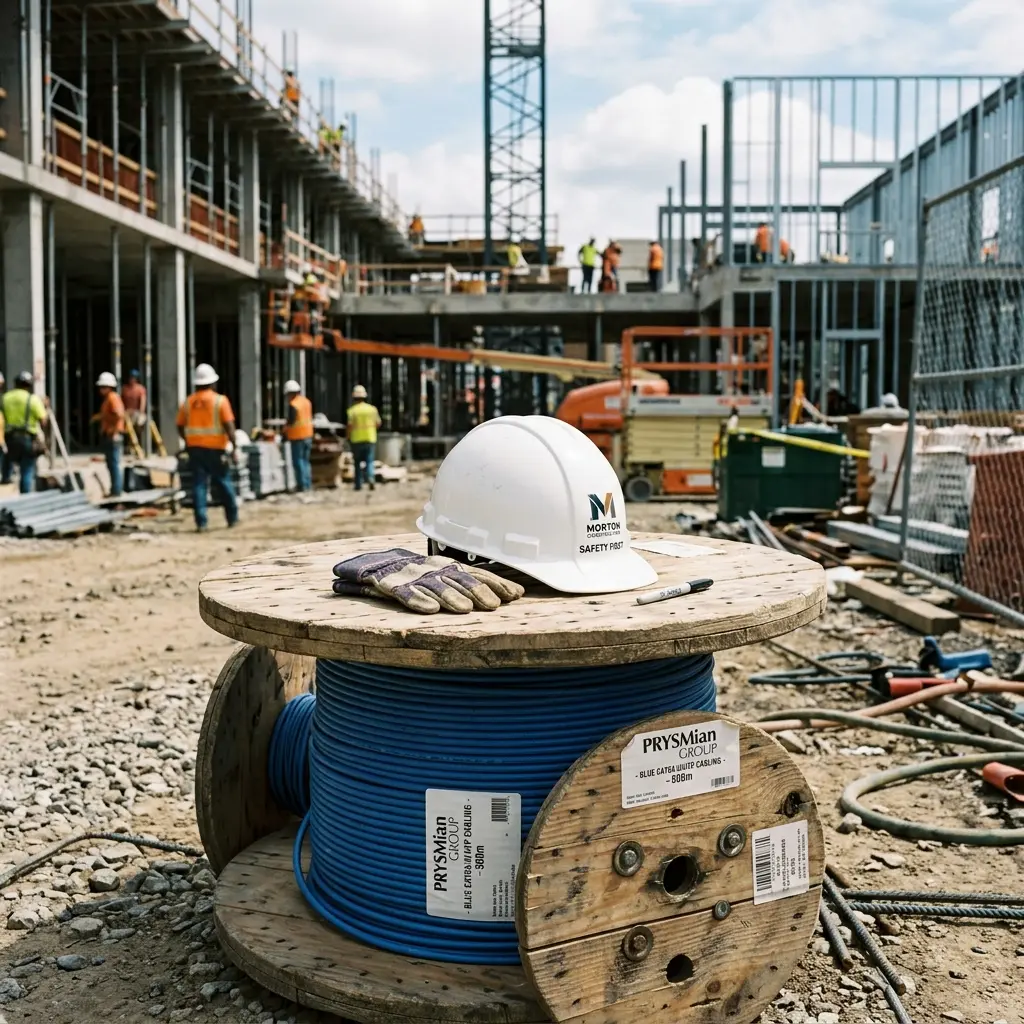
The Ohio Building Code also regulates how low-voltage cables are supported.
- No Ceiling Grid Support: It is a severe code violation to lay network cables directly on top of the acoustic ceiling tiles or tie them to the drop-ceiling support wires. Cables must have their own independent support system.
- J-Hooks and Cable Trays: Cables must be suspended using independent J-hooks, cable trays, or D-rings, typically spaced every 4 to 5 feet to prevent sagging and maintain the physical integrity of the wire.
- Firestopping: Whenever a cable penetrates a fire-rated wall or floor, the hole must be sealed with a UL-listed firestop compound (like intumescent firestop putty or caulk). This restores the fire-resistance rating of the wall and prevents flames and smoke from breaching different zones of the building.
Why You Need a Licensed Contractor
Electricians specialize in high-voltage power, but they frequently lack the specialized training required for low-voltage data standards (TIA/EIA). Conversely, many “IT guys” know how to plug in a router but have no understanding of the National Electrical Code, leading them to run cheap, non-plenum PVC cable through air returns.
At Efficient Low Voltage Solutions, we bridge the gap. Our technicians are experts in both high-performance network engineering and strict Ohio building code compliance. Whether we are installing a massive data center network or a simple camera system, we ensure the infrastructure is fast, reliable, and 100% legal.
Don’t risk your facility’s safety or compliance. Contact us today for a code-compliant low-voltage consultation.