
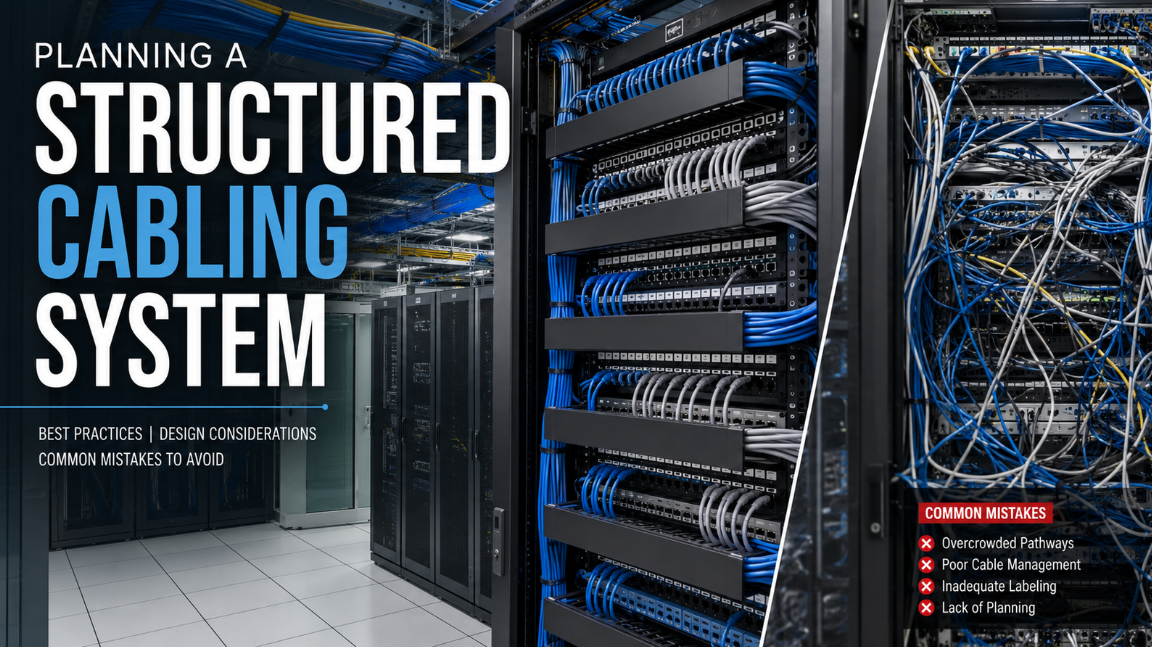
A structured cabling system serves as the foundation of modern business communications, supporting everything from internet connectivity and voice systems to cloud applications, surveillance equipment, and access control technologies. As organizations continue to rely on connected devices and data-driven operations, the importance of a reliable cabling infrastructure has never been greater. Yet many businesses focus primarily on hardware and software investments while overlooking the planning stage of their network cabling system.
Poor design decisions made before installation begins can create long-term challenges that affect network performance, scalability, maintenance costs, and overall operational efficiency. Investing time in proper planning helps businesses avoid costly rework, unexpected downtime, and future infrastructure limitations. Understanding the most common structured cabling design mistakes can help organizations build a network that supports both current needs and future growth.
Why Proper Structured Cabling Planning Matters More Than Most Businesses Realize
Structured cabling is far more than simply running cables throughout a building. It is a carefully designed framework that enables communication between devices, systems, and users across an organization. When properly planned, a structured cabling system creates a scalable, organized, and efficient infrastructure that can support evolving business requirements.
Many organizations underestimate the long-term impact of cabling decisions because the infrastructure is largely hidden behind walls, ceilings, and equipment rooms. However, these systems often remain in place for many years, making design quality a critical factor in future network performance.
Proper planning provides several important advantages:
- Supports future technology upgrades without extensive modifications
- Improves network reliability and performance
- Reduces troubleshooting and maintenance time
- Minimizes operational disruptions
- Simplifies future expansions and renovations
- Enhances business continuity and resilience
- Maximizes return on infrastructure investments
Organizations that prioritize strategic cabling design are better positioned to adapt to changing technology demands while maintaining efficient operations.
Common Design Mistakes That Can Impact Network Performance and Growth
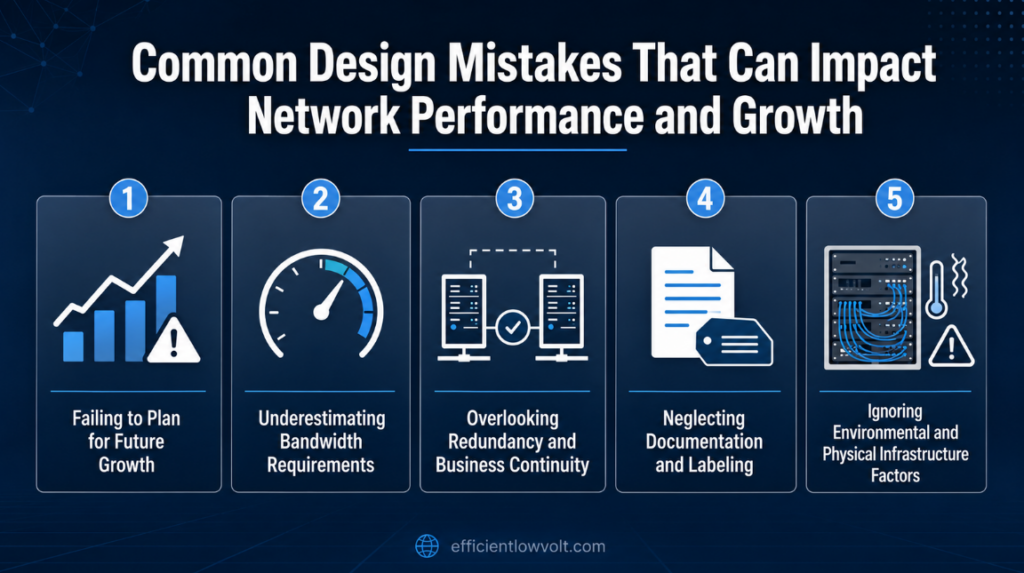
Even seemingly minor planning oversights can create significant network challenges over time. Understanding common design mistakes before installation begins allows businesses to avoid costly corrections and establish a reliable infrastructure that supports long-term performance and scalability.
1. Failing to Plan for Future Growth
One of the most common mistakes is designing a cabling system solely around current requirements. Businesses often focus on existing users, devices, and applications without considering future expansion.
As organizations grow, they may add:
- New employees
- Additional workstations
- Smart building technologies
- Security systems
- Wireless access points
- IoT devices
Without sufficient capacity built into the original design, future upgrades often require costly modifications and network disruptions.
2. Underestimating Bandwidth Requirements
Modern business applications consume significantly more bandwidth than in previous years. Cloud computing, video conferencing, large data transfers, and real-time collaboration tools place increasing demands on network infrastructure.
Choosing cable types based only on current traffic levels may limit future performance. A system that works adequately today may struggle to support emerging technologies tomorrow. Proper bandwidth forecasting helps ensure that the cabling infrastructure can accommodate future operational requirements without requiring premature replacement.
3. Overlooking Redundancy and Business Continuity
Many businesses design networks with a single point of failure. While this may reduce upfront costs, it can significantly increase operational risk.
Unexpected cable damage, equipment failures, or infrastructure issues can result in:
- Network outages
- Communication disruptions
- Productivity losses
- Customer service interruptions
- Revenue impacts
Incorporating redundancy during the planning phase helps maintain connectivity even when individual components fail.
4. Neglecting Documentation and Labeling
A poorly documented cabling system creates long-term maintenance challenges. Technicians may spend hours tracing connections, identifying cable routes, and troubleshooting issues.
Common documentation shortcomings include:
- Missing cable labels
- Incomplete network diagrams
- Unidentified patch panels
- Outdated records
- Inconsistent naming conventions
Comprehensive documentation simplifies future maintenance, upgrades, and troubleshooting while reducing operational costs.
5. Ignoring Environmental and Physical Infrastructure Factors
Environmental conditions can significantly impact cabling performance and lifespan. Unfortunately, some installations fail to account for physical infrastructure requirements during the planning phase.
Potential concerns include:
- Excessive heat exposure
- Moisture and humidity
- Electromagnetic interference
- Inadequate cable pathways
- Limited equipment room space
- Poor ventilation
Addressing these factors early helps protect network reliability and ensures compliance with industry standards.
How Poor Infrastructure Planning Affects Network Performance and Business Operations
Infrastructure planning influences every aspect of network functionality. When structured cabling systems are poorly designed, businesses often experience performance issues, operational inefficiencies, and increased maintenance costs that can affect productivity, customer satisfaction, and long-term growth objectives across multiple departments and locations.
The Poor Infrastructure Planning Affects:
- Network Speed Degradation: Insufficient cabling specifications can create bottlenecks that reduce data transmission performance and application responsiveness.
- Frequent Connectivity Issues: Poor cable routing and inadequate design practices often result in intermittent network disruptions and unstable connections.
- Increased Downtime: Infrastructure failures become more difficult to prevent when redundancy and fault tolerance are not included during planning.
- Higher Maintenance Costs: Disorganized cabling systems require more labor and resources for troubleshooting, repairs, and upgrades.
- Limited Scalability: Businesses may struggle to expand operations when their network infrastructure lacks sufficient capacity for growth.
- Reduced Employee Productivity: Slow networks and recurring connectivity issues can interrupt workflows and reduce operational efficiency.
- Compromised Technology Adoption: New technologies often require higher bandwidth and enhanced infrastructure capabilities that poorly planned systems cannot support.
- Greater Risk of Business Disruption: Infrastructure weaknesses increase vulnerability to outages that impact daily operations and customer service.
Building a Cabling Infrastructure That Supports Future Growth
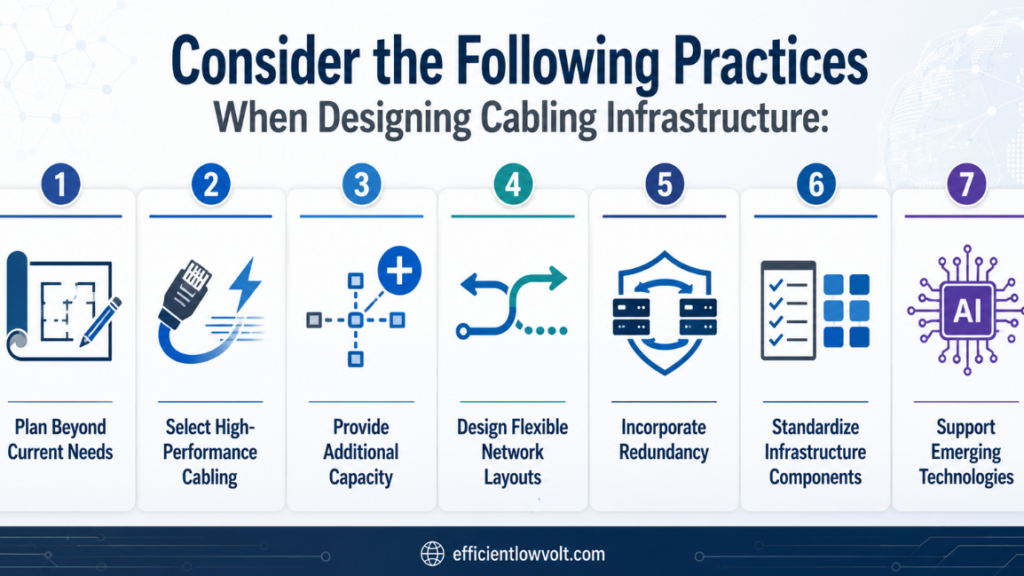
A forward-thinking structured cabling strategy helps organizations remain adaptable as technology evolves. Designing for future growth allows businesses to accommodate expanding network demands while avoiding costly redesigns and minimizing disruptions associated with infrastructure upgrades and system expansions over time.
Consider the following practices when designing cabling infrastructure:
- Plan Beyond Current Needs: Anticipate future staffing increases, technology deployments, and facility expansions when determining infrastructure requirements.
- Select High-Performance Cabling: Choose cabling solutions capable of supporting future bandwidth demands and evolving communication technologies.
- Provide Additional Capacity: Install extra cabling pathways, ports, and rack space to simplify future expansion projects.
- Design Flexible Network Layouts: Create infrastructure that can accommodate changing office configurations and operational requirements.
- Incorporate Redundancy: Build backup pathways and failover capabilities to improve reliability and support business continuity.
- Standardize Infrastructure Components: Consistent equipment and cabling standards simplify maintenance, upgrades, and system management.
- Support Emerging Technologies: Consider the infrastructure requirements of cloud services, wireless networks, IoT devices, and smart building systems.
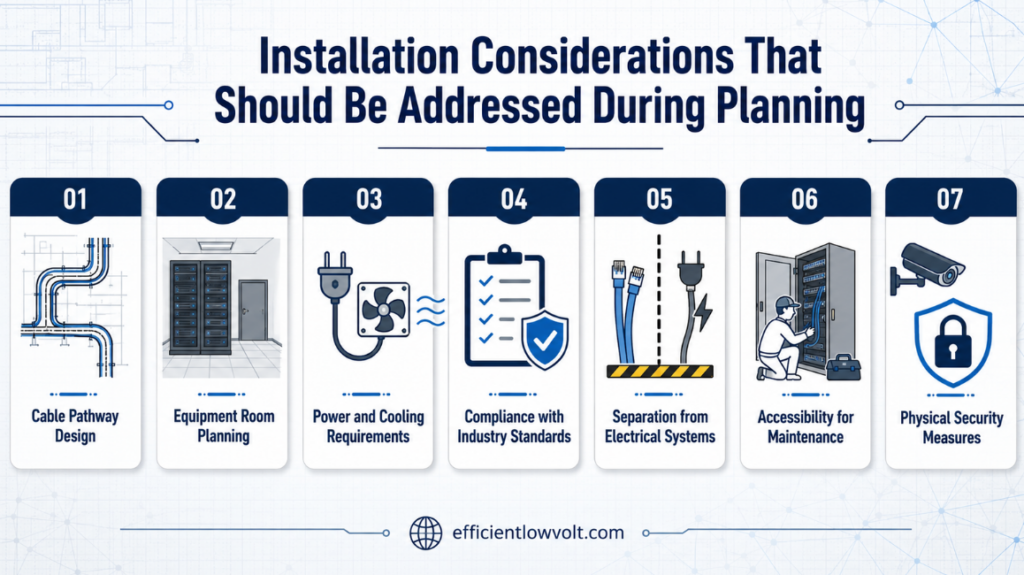
Installation Considerations That Should Be Addressed During Planning
Successful structured cabling projects require more than selecting cable types and network hardware. Installation-related considerations should be addressed early in the planning process to ensure efficient deployment, compliance with standards, and long-term system performance while minimizing potential disruptions and unexpected project challenges.
Considerations:
- Cable Pathway Design: Ensure adequate conduits, trays, and routing paths are available before installation begins.
- Equipment Room Planning: Allocate sufficient space for racks, patch panels, switches, and future equipment growth.
- Power and Cooling Requirements: Verify that network equipment areas have adequate electrical capacity and environmental controls.
- Compliance with Industry Standards: Follow recognized cabling standards to support safety, performance, and interoperability.
- Separation from Electrical Systems: Maintain appropriate distance from power cables to reduce electromagnetic interference.
- Accessibility for Maintenance: Design installations that allow technicians to access and service infrastructure efficiently.
- Physical Security Measures: Protect critical network components from unauthorized access and accidental damage.
Testing and Maintenance for Structured Cabling Systems
Even the most carefully designed cabling infrastructure requires ongoing testing and maintenance to ensure optimal performance. Regular evaluation helps identify potential issues before they become major problems, extending system lifespan while supporting reliable network operations and reducing unexpected downtime across the organization.
Tips:
- Perform Comprehensive Certification Testing: Verify cable performance and compliance before placing the network into production.
- Schedule Regular Inspections: Conduct routine assessments to identify wear, damage, or environmental concerns.
- Maintain Accurate Documentation: Update records whenever infrastructure changes are made to preserve system visibility.
- Monitor Network Performance Trends: Track connectivity and performance metrics to detect emerging issues early.
- Inspect Labels and Identification Systems: Ensure all cabling remains properly labeled and easily traceable.
- Replace Damaged Components Promptly: Address deteriorating cables, connectors, and hardware before they affect network reliability.
- Review Capacity Utilization: Evaluate available infrastructure resources regularly to support future expansion planning.
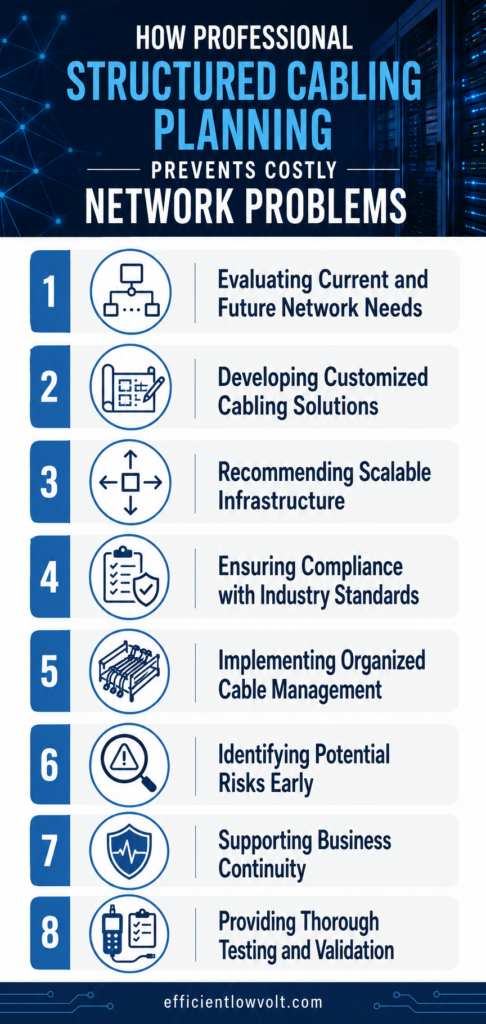
How Professional Structured Cabling Planning Prevents Costly Network Problems
Designing and installing a structured cabling system requires careful planning, technical expertise, and a thorough understanding of current and future network requirements. Professional structured cabling experts help businesses avoid common design pitfalls by developing customized infrastructure solutions that support performance, scalability, and long-term reliability. Their experience ensures that every component of the cabling system is strategically planned and properly implemented to maximize efficiency and support business growth.
Professionals can help by:
- Evaluating Current and Future Network Needs: Experts assess your existing infrastructure, operational requirements, and growth plans to design a cabling system that supports both present and future demands.
- Developing Customized Cabling Solutions: Professional installers create tailored structured cabling designs that align with your facility layout, technology requirements, and business objectives.
- Recommending Scalable Infrastructure: Experienced specialists select cabling solutions that can accommodate increasing bandwidth demands, additional devices, and emerging technologies.
- Ensuring Compliance with Industry Standards: Professionals follow recognized installation and performance standards to help improve system reliability, safety, and compatibility.
- Implementing Organized Cable Management: Proper cable routing, labeling, and documentation simplify future maintenance, troubleshooting, and system upgrades.
- Identifying Potential Risks Early: Experts can recognize infrastructure limitations, environmental concerns, and design vulnerabilities before they become costly problems.
- Supporting Business Continuity: Professional planning often includes redundancy strategies and reliability measures that help minimize network downtime.
- Providing Thorough Testing and Validation: Comprehensive testing verifies that the cabling infrastructure performs as intended and meets required performance specifications.
By partnering with experienced structured cabling professionals, businesses can build a reliable, future-ready network foundation that supports seamless connectivity, operational efficiency, and long-term success.
Final Thoughts
A well-designed structured cabling system is the foundation of a reliable, high-performing network. Throughout this article, we’ve explored how common planning mistakes???including failing to account for future growth, underestimating bandwidth demands, neglecting documentation, and overlooking redundancy???can create long-term operational challenges. By investing in proper planning, thoughtful installation strategies, ongoing testing, and scalable infrastructure design, businesses can build a network environment that supports seamless communication, improved productivity, and future technology adoption while minimizing costly disruptions.
At Efficient LowVolt Solutions, we understand that every business has unique connectivity requirements. Our structured cabling services are designed to deliver customized, future-proof infrastructure that supports your organization’s current needs while preparing for future growth. From organized cable management and optimized network layouts to scalable solutions that simplify maintenance and upgrades, our team is committed to providing reliable performance and seamless connectivity. Contact Efficient LowVolt today to learn how our structured cabling expertise can help strengthen your network infrastructure with Reliable Cabling, Every Time.