

As businesses grow more dependent on digital systems, data center management becomes a critical part of maintaining performance, security, and uptime. Whether you’re running on-premise infrastructure, using colocation, or supporting hybrid environments, how your data center is managed directly impacts your daily operations.
But here’s what many businesses overlook:
Effective data center management doesn’t start with software—it starts with infrastructure.
In real-world environments, many ongoing “management issues” are actually the result of poor initial design—especially disorganized or outdated cabling systems that make even simple changes unnecessarily complex.
If your cabling is disorganized, your cooling is inefficient, or your layout isn’t scalable, even the best management tools won’t prevent downtime or performance issues.
This guide breaks down what data center management really involves—and how to build a system that stays reliable as your business grows.
What Is Data Center Management?
Data center management refers to the process of monitoring, maintaining, and optimizing all components of a data center environment, including:
- Network infrastructure
- Power systems
- Cooling systems
- Data Center Physical Security
- Servers and storage
- Cabling and connectivity
The goal is simple:
👉 Ensure continuous uptime, efficient performance, and the ability to scale without disruption.
While many people associate management with dashboards and monitoring tools, the reality is this:
A well-managed data center is built on a well-designed physical foundation.
Why Data Center Management Matters for Business
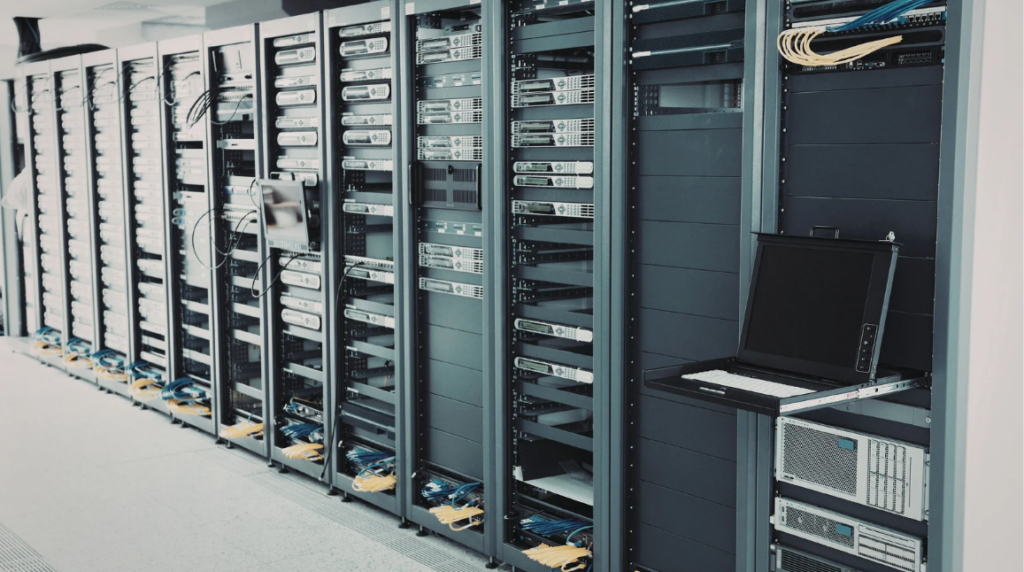
Poorly managed infrastructure doesn’t just cause technical issues—it impacts your entire business.
Key risks of weak data center management:
- Unexpected downtime and lost productivity
- Slower system performance
- Increased maintenance costs
- Security vulnerabilities
- Limited ability to scale
On the other hand, a properly managed data center allows you to:
- Maintain consistent uptime
- Support business growth
- Improve operational efficiency
- Reduce long-term costs
In short, management is what turns infrastructure into a reliable business asset—not a liability.
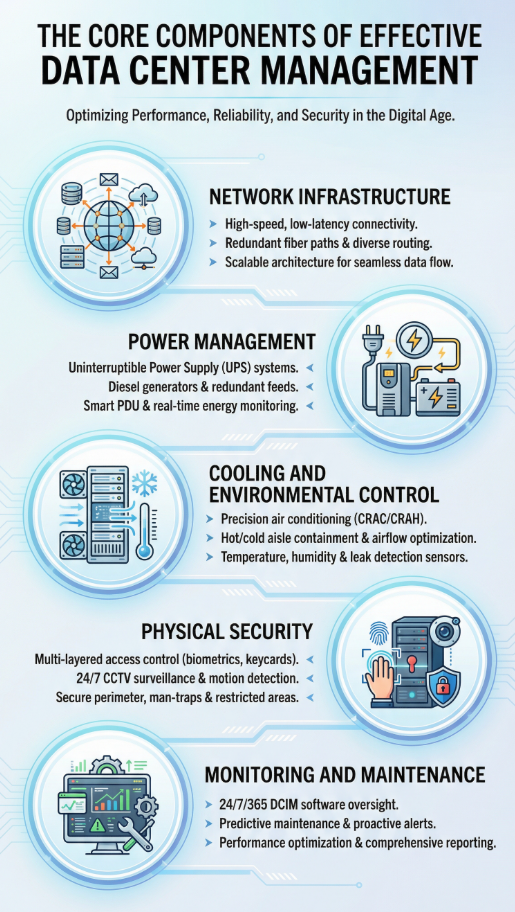
The Core Components of Effective Data Center Management
To manage a data center effectively, you need to understand its key operational layers.
1. Network Infrastructure
This includes switches, routers, and—most importantly—your structured cabling system.
A clean, organized cabling infrastructure:
- reduces troubleshooting time
- improves airflow
- supports scalability
Without it, even simple changes can become complex and risky.
2. Power Management
Reliable power systems are essential for uptime.
This includes:
- Uninterruptible Power Supplies (UPS)
- Backup generators
- Power distribution units (PDUs)
Proper management ensures systems stay online during outages and power fluctuations.
3. Cooling and Environmental Control
Heat is one of the biggest threats to data center performance.
Effective cooling strategies:
- prevent overheating
- extend equipment lifespan
- improve energy efficiency
Poor airflow or unmanaged heat zones can quickly lead to system failures.
4. Physical Security
Protecting your infrastructure physically is just as important as cybersecurity.
This includes:
- Access control systems
- Surveillance
- Secure racks and cabinets
Only authorized personnel should have access to critical systems.
5. Monitoring and Maintenance
Monitoring tools help track:
- temperature
- power usage
- network performance
But tools alone aren’t enough—regular maintenance is what keeps systems running smoothly over time.
The Role of Structured Cabling in Data Center Management
One of the most overlooked aspects of data center management is structured cabling.
It’s not just about connectivity—it directly affects:
- system performance
- airflow and cooling
- troubleshooting speed
- future scalability
Well-designed structured cabling provides:
- clear labeling and organization
- easier upgrades and expansions
- reduced risk of human error
Poor cabling, on the other hand, leads to:
- tangled infrastructure
- longer downtime during fixes
- limited flexibility as your business grows
👉 This is why structured cabling is considered the foundation of manageable infrastructure.
In many cases, what businesses identify as a performance or management issue can be traced back to cabling—because when your infrastructure isn’t organized, every upgrade, repair, or expansion becomes slower, riskier, and more expensive.
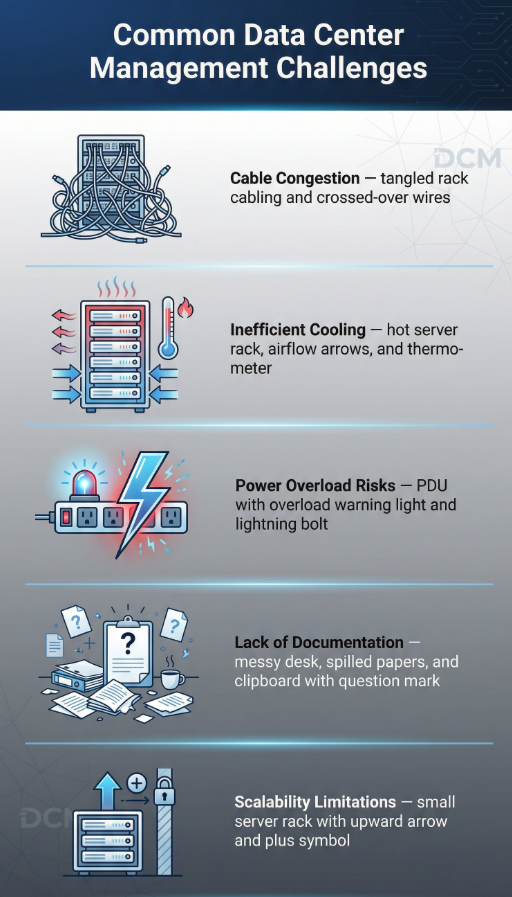
Common Data Center Management Challenges
Even well-built environments face challenges if not properly maintained.
1. Cable Congestion
Disorganized cabling restricts airflow and complicates maintenance, often making it difficult to trace connections or perform quick upgrades without disrupting other systems.
2. Inefficient Cooling
Hot spots develop when airflow is not properly managed, leading to uneven temperatures that can reduce equipment lifespan and increase the risk of unexpected shutdowns.
3. Power Overload Risks
Improper load balancing can lead to system failures, especially when circuits are pushed beyond capacity or backup systems are not properly configured to handle peak demand.
4. Lack of Documentation
Without proper labeling and records, troubleshooting becomes time-consuming, increasing downtime as technicians spend valuable time identifying connections and system dependencies.
5. Scalability Limitations
Infrastructure that wasn’t designed for growth quickly becomes outdated, making expansions more complex, costly, and disruptive than necessary.
Most of these issues trace back to one root cause:
👉 Poor planning during the initial infrastructure setup.
Best Practices for Effective Data Center Management
To maintain a reliable and scalable data center, follow these proven strategies that help prevent issues before they start and keep operations running smoothly over time:
1. Design for Scalability from the Start
Plan infrastructure that can grow with your business—not just meet current needs—so you can expand capacity without major redesigns or costly disruptions later on.
2. Invest in Structured Cabling
Organized cabling simplifies management and reduces long-term costs by making it easier to trace connections, perform upgrades, and maintain consistent performance across your network.
3. Separate Hot and Cold Air Paths
Improve cooling efficiency with proper airflow design, reducing heat buildup and ensuring equipment operates within safe temperature ranges.
4. Implement Proactive Monitoring
Identify issues before they become critical problems by continuously tracking system performance, temperature, and power usage in real time.
5. Maintain Clear Documentation
Label everything and keep records updated for faster troubleshooting, allowing your team to quickly locate connections and resolve issues with minimal downtime.
6. Schedule Regular Maintenance
Routine inspections prevent unexpected failures by catching wear, inefficiencies, or risks early before they impact operations.
The Link Between Infrastructure and Long-Term Performance
Here’s the reality most businesses discover too late:
You can’t “manage your way out” of poor infrastructure.
This is why companies that invest in properly designed structured cabling from the start experience fewer disruptions, faster troubleshooting, and significantly more predictable growth over time.
No software or monitoring tool can fix:
- messy cabling
- poor layout design
- inadequate cooling
- limited capacity planning
That’s why successful data center management always starts with:
👉 Proper design, installation, and organization
When your infrastructure is built correctly, management becomes easier, faster, and more predictable.
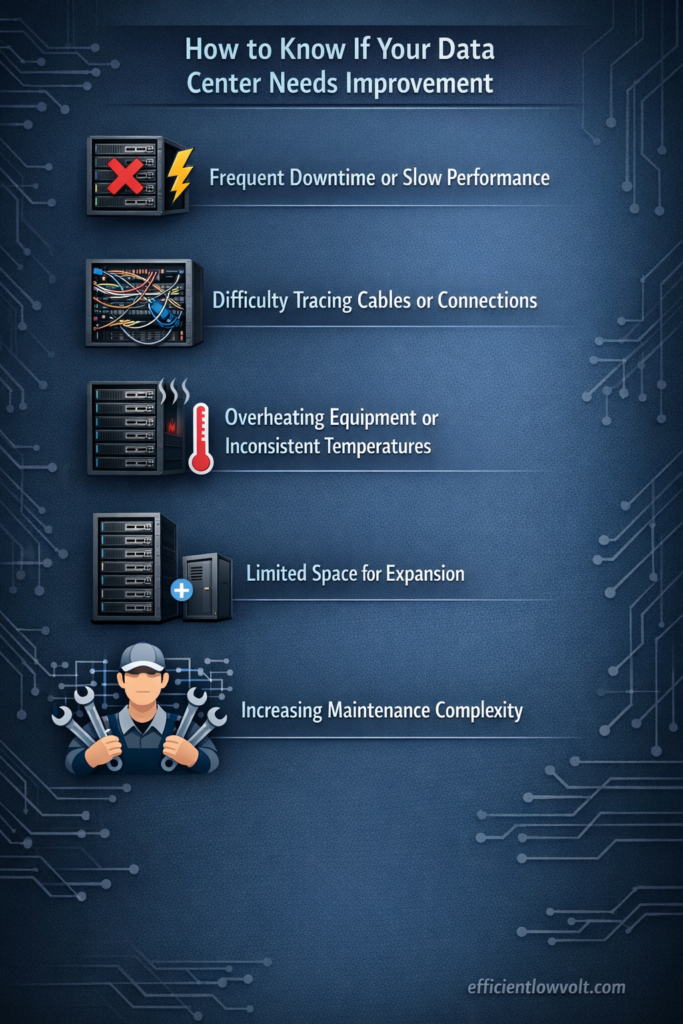
How to Know If Your Data Center Needs Improvement
You may need to reassess your data center setup if you notice recurring performance, organization, or scalability issues that suggest underlying infrastructure limitations:
- Frequent downtime or slow performance – Systems experience interruptions or lag that impact productivity, often pointing to underlying infrastructure strain rather than isolated software issues.
- Difficulty tracing cables or connections – Troubleshooting becomes time-consuming because cable paths are unclear, unorganized, or poorly labeled, slowing down even simple maintenance tasks.
- Overheating equipment or inconsistent temperatures – Certain areas of the data center run hotter than others, indicating poor airflow design or inadequate cooling distribution.
- Limited space for expansion – Physical or logical layout constraints make it difficult to add new equipment without reorganizing existing systems.
- Increasing maintenance complexity – Routine tasks take longer and require more effort due to lack of structure, documentation, or standardized installation practices.
These are signs that your infrastructure—and not just your management—needs attention.
Summary and Next Steps
Effective data center management is not just about monitoring systems—it is about building and maintaining an infrastructure that supports reliability, scalability, and long-term performance. From structured cabling and power distribution to cooling and security, every component must work together to create a stable and efficient environment that can grow with your business.
3–5 realistic next steps you can take
- Evaluate your current infrastructure layout and identify inefficiencies
- Assess your cabling organization and scalability readiness
- Review cooling and airflow performance
- Ensure proper documentation and labeling are in place
- Consult with infrastructure experts before scaling or upgrading
In the end, strong data center management starts with a solid foundation. If your infrastructure is built right, everything else becomes easier to maintain and scale. Efficient Lowvolt Solutions specializes in structured cabling and data infrastructure systems designed for performance, organization, and long-term growth—helping your business eliminate downtime risks and build a data environment that’s ready for what’s next.