
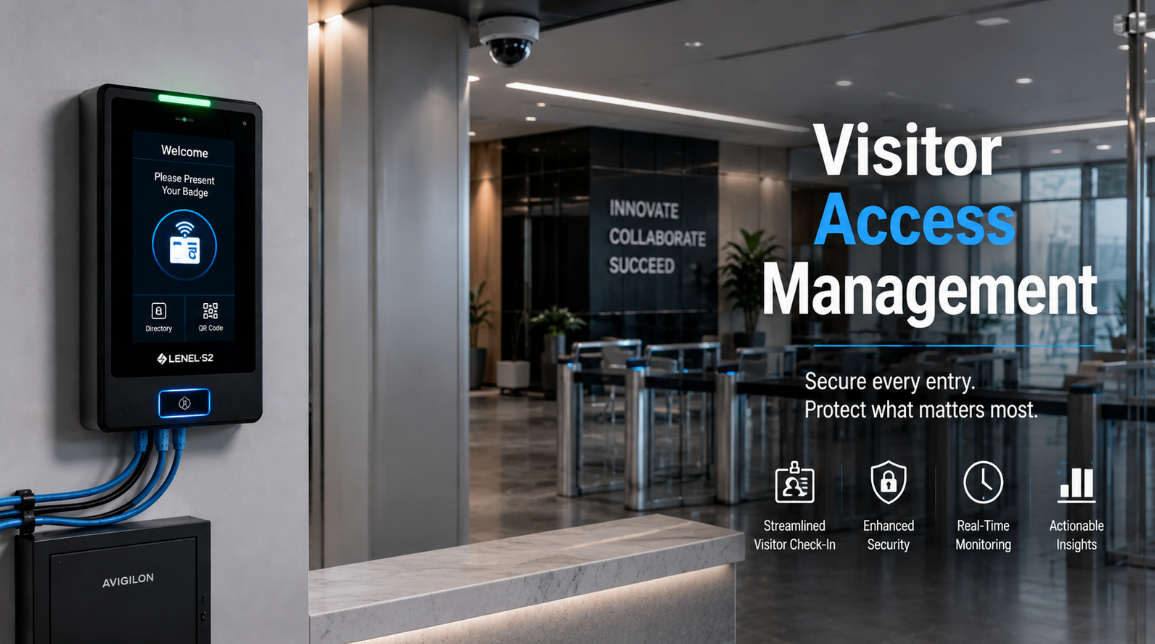
Business security has evolved significantly over the past decade. Organizations are no longer focused solely on protecting buildings from external threats; they are also working to control who enters their facilities, where visitors can go, and how access is monitored. As workplaces become more connected and security concerns continue to grow, visitor access management has emerged as an important part of a comprehensive security strategy. From corporate offices and healthcare facilities to educational institutions and industrial sites, businesses are placing greater emphasis on managing visitor access to protect people, property, and sensitive information.
Traditional visitor sign-in books and manual check-in processes are becoming less effective in today’s security landscape. Businesses need better visibility into who is entering their facilities and whether visitors have permission to access specific areas. Modern visitor access management helps organizations improve accountability, strengthen physical security, and support safer environments. When combined with access control systems, biometric authentication, keycard entry solutions, and surveillance cameras, visitor access management becomes a powerful tool for reducing security risks and maintaining control over facility access.
Visitor Access Management in Modern Security Environments
Visitor access management is the process of identifying, authorizing, tracking, and controlling visitors entering and moving throughout a facility. While many people associate visitor management with a reception desk or sign-in process, modern visitor access management extends far beyond administrative tasks. It plays a vital role in physical security by helping organizations determine who can enter a building, where visitors are allowed to go, and how long access permissions remain active.
Today???s businesses often integrate visitor access management with broader security infrastructure, including access control systems, keycard credentials, biometric authentication, and surveillance technologies. This integration allows organizations to maintain greater visibility into visitor activity while reducing opportunities for unauthorized access.
By treating visitor access management as part of a larger security strategy, businesses can better protect employees, assets, and restricted areas while maintaining a professional and organized visitor experience.
Why Businesses Can No Longer Rely on Traditional Visitor Logs
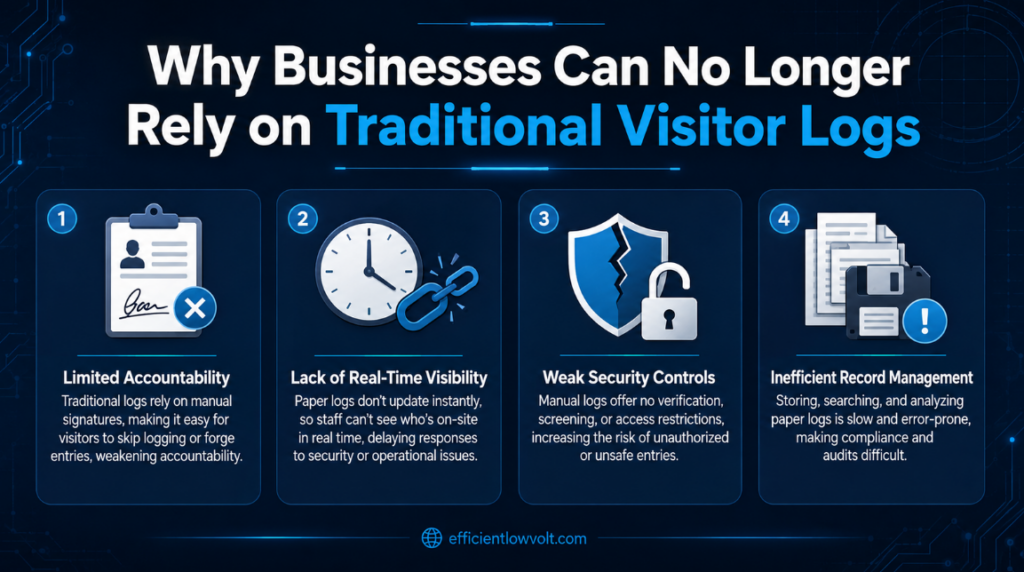
For many years, paper sign-in sheets served as the primary method of tracking visitors. While these systems may seem simple and cost-effective, they create several security challenges that can leave organizations vulnerable.
1. Limited Accountability
Manual sign-in logs depend entirely on visitors providing accurate information. Names may be illegible, incomplete, or intentionally incorrect, making it difficult to verify identities when security concerns arise.
2. Lack of Real-Time Visibility
Traditional logs provide little insight into where visitors are located after entering a building. Security personnel may struggle to determine who is on-site during emergencies or incidents.
3. Weak Security Controls
Paper records do not prevent visitors from accessing unauthorized areas. Without access control measures, businesses may have limited oversight over visitor movement throughout a facility.
4. Inefficient Record Management
Searching through paper records can be time-consuming and ineffective when investigating security incidents, compliance issues, or access concerns.
As security requirements become more complex, visitor access management provides a more reliable way to monitor visitors while supporting stronger facility security.
The Growing Security Risks Facing Modern Businesses
Organizations face a wide range of physical security challenges that make visitor access management increasingly important.
1. Unauthorized Access to Restricted Areas
Visitors who gain access to areas beyond their authorization can create serious security risks. Sensitive locations such as server rooms, executive offices, equipment storage areas, and employee-only workspaces require stronger protection.
Without proper visitor access management and access control systems, businesses may struggle to prevent unauthorized entry.
2. Data Security Concerns
Physical access often creates opportunities for information exposure. Visitors who enter restricted areas may gain access to confidential documents, proprietary systems, or sensitive business information.
3. Contractor and Vendor Access Risks
Many organizations regularly welcome contractors, vendors, delivery personnel, and temporary workers. While these individuals often require access to specific areas, unrestricted movement can increase security vulnerabilities.
4. Workplace Safety Challenges
Employee safety remains a top priority for businesses across industries. Knowing who is present within a facility helps organizations respond more effectively during emergencies, evacuations, or security incidents.
5. Compliance and Regulatory Requirements
Many industries must maintain accurate access records for compliance purposes. Visitor access management supports these efforts by creating detailed documentation of visitor activity and access permissions.
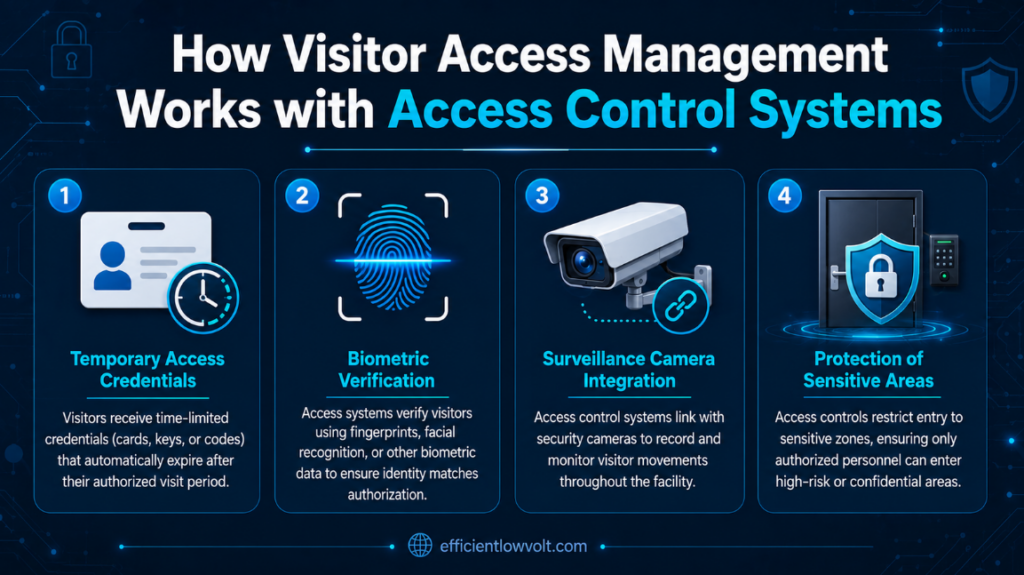
How Visitor Access Management Works with Access Control Systems
Visitor access management becomes significantly more effective when integrated with access control technologies. Together, these solutions help businesses regulate entry, monitor movement, and protect sensitive areas throughout a facility.
1. Temporary Access Credentials
Rather than granting unrestricted access, organizations can issue temporary credentials that limit where visitors can go and how long access remains active.
Examples include:
- Temporary keycards
- Mobile access credentials
- Visitor badges linked to access systems
- Time-restricted entry permissions
These credentials help maintain security while ensuring visitors can access approved locations when necessary.
2. Biometric Verification
Some facilities use biometric authentication to strengthen visitor identity verification.
Common methods include:
- Fingerprint recognition
- Facial recognition
- Multi-factor authentication
Biometric systems help ensure that credentials are used only by authorized individuals.
3. Surveillance Camera Integration
Security cameras add another layer of protection by providing visual oversight of visitor activity. When integrated with visitor access management and access control systems, surveillance technologies help organizations:
- Monitor visitor movement
- Verify access events
- Investigate incidents
- Improve accountability
4. Protection of Sensitive Areas
Not every visitor requires access to every part of a building. Access control systems allow organizations to restrict visitor movement while protecting:
- Data centers
- Equipment rooms
- Executive offices
- Inventory storage areas
- Employee-only zones
This approach helps businesses maintain tighter security controls while reducing unnecessary risks.
How Visitor Access Management Strengthens Security
Visitor access management contributes to stronger facility security by providing organizations with greater visibility and control over building access.
1. Identity Verification
Visitor identities can be verified before access is granted. This process may involve government-issued identification, credential validation, biometric authentication, or pre-registration procedures.
Identity verification reduces the likelihood of unauthorized individuals entering secured facilities.
2. Controlled Access Permissions
Visitor access management enables organizations to assign specific access privileges based on operational needs.
Benefits include:
- Restricted area access
- Time-based permissions
- Visitor-specific credentials
- Automatic credential expiration
These controls help prevent visitors from accessing unauthorized locations.
3. Preventing Tailgating and Unauthorized Entry
One common security concern involves unauthorized individuals following employees or visitors through secured entrances. Visitor access management, combined with access control systems and monitored entry points, helps reduce opportunities for tailgating while improving accountability.
4. Real-Time Monitoring
Modern systems allow security personnel to monitor visitor activity as it occurs. Real-time visibility enables faster responses to unusual activity or potential security concerns.
5. Digital Audit Trails
Electronic records create detailed histories of visitor activity, helping organizations support investigations, compliance audits, and security reviews.
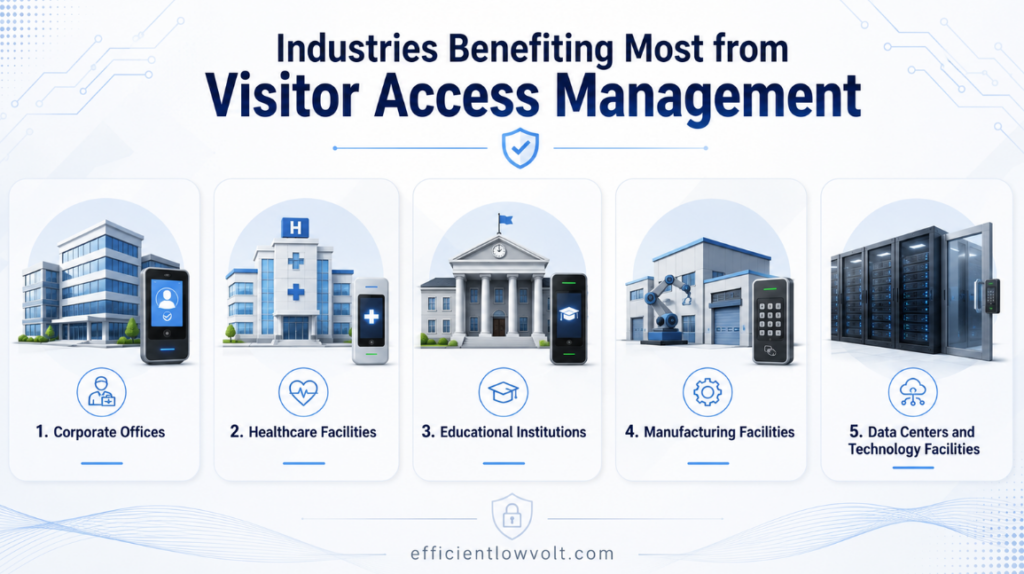
Industries Benefiting Most from Visitor Access Management
While visitor access management provides value across many industries, certain environments face particularly high security demands.
- Corporate Offices: Businesses often host clients, consultants, vendors, and job candidates. Managing visitor access helps protect confidential information and maintain workplace security.
- Healthcare Facilities: Hospitals and medical centers must balance visitor access with patient privacy and safety requirements. Strong visitor access management helps support both objectives.
- Educational Institutions: Schools and universities increasingly rely on visitor access management to enhance campus security and improve accountability.
- Manufacturing Facilities: Manufacturing environments often contain expensive equipment, proprietary processes, and restricted operational areas that require controlled access.
- Data Centers and Technology Facilities: Data centers rely heavily on access control and visitor access management to protect critical infrastructure and sensitive information.
Importance of a Professional Visitor Access Management Strategy
Technology alone cannot solve every security challenge. Businesses achieve the best results when visitor access management is supported by a well-defined strategy.
1. Consistent Security Procedures
Standardized visitor policies help ensure that every visitor follows established security protocols.
Examples include:
- Identity verification procedures
- Badge requirements
- Escort policies
- Restricted area guidelines
- Emergency response procedures
2. Reduced Human Error
Clear procedures help minimize mistakes that can occur when visitor management is handled inconsistently.
3. Improved Emergency Preparedness
Accurate visitor records allow organizations to account for everyone within a facility during emergencies and evacuations.
4. Scalability for Future Growth
A professional visitor access management strategy can adapt as businesses expand, open new locations, or face changing security requirements.
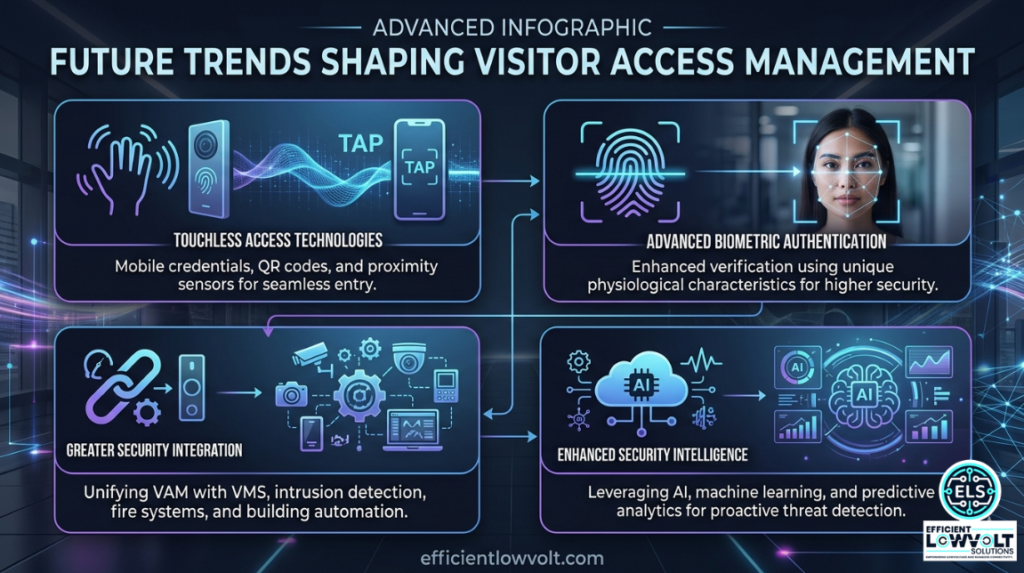
Future Trends Shaping Visitor Access Management
As physical security technologies continue to advance, visitor access management is becoming more intelligent and integrated.
- Touchless Access Technologies: Businesses are increasingly adopting touchless credentials and mobile access solutions to improve convenience and security.
- Advanced Biometric Authentication: Biometric systems continue to evolve, providing faster and more accurate identity verification.
- Greater Security Integration: Future visitor access management platforms will likely integrate more closely with surveillance cameras, access control systems, analytics platforms, and building security technologies.
- Enhanced Security Intelligence: Organizations are using data and analytics to identify access trends, improve security policies, and strengthen facility protection.
Why Visitor Access Management Deserves More Attention Than Ever
Visitor access management has become a critical component of modern business security. As organizations work to protect employees, sensitive information, valuable assets, and restricted areas, controlling visitor access is no longer a secondary concern. Modern visitor access management solutions provide stronger accountability, improved visibility, and better integration with access control systems, biometric authentication, and surveillance technologies. Together, these tools help businesses reduce risks while creating safer and more secure environments.
Businesses seeking to strengthen their physical security infrastructure should consider how visitor access management fits within a broader security and access control strategy. Efficient LowVolt Solutions provides advanced Security & Access Control solutions that help organizations enhance facility protection, manage access effectively, and support long-term security objectives through reliable, scalable technologies.