
Access control systems have become a cornerstone of modern security, helping businesses and homeowners manage who can enter specific areas through technologies like biometric scanners, keycard systems, and integrated surveillance. While most people focus on selecting advanced hardware and software, one critical component is often overlooked: access control wiring. Behind every successful authentication, door unlock, and security alert is a network of cables responsible for delivering power and transmitting data between devices.
The truth is, many system failures are not caused by faulty equipment but by mistakes in wiring design and installation. Poor wiring can lead to unreliable performance, system downtime, and even serious security vulnerabilities. In this article, we’ll explore the most common access control wiring mistakes, how they impact system reliability, and what you can do to avoid them.
Why Access Control Wiring Matters More Than You Think
Access control systems rely on seamless communication between multiple components, including controllers, card readers, locks, sensors, and power supplies. Each of these elements depends on properly installed wiring to function as a unified system.
Even the most advanced access control systems can fail to perform reliably if the underlying access control wiring is poorly planned or improperly installed, as every command, authentication, and response depends on stable electrical and data transmission across the network. Without a solid wiring foundation, signals can become inconsistent, delayed, or completely lost.
Unlike visible hardware, wiring issues are often hidden behind walls or ceilings, making them harder to detect and fix. This is why proper planning and execution from the beginning are essential for long-term performance and reliability.
Most Common Access Control Wiring Mistakes
Understanding where things typically go wrong is the first step toward building a dependable system. Below are the most common mistakes that can compromise your access control wiring.
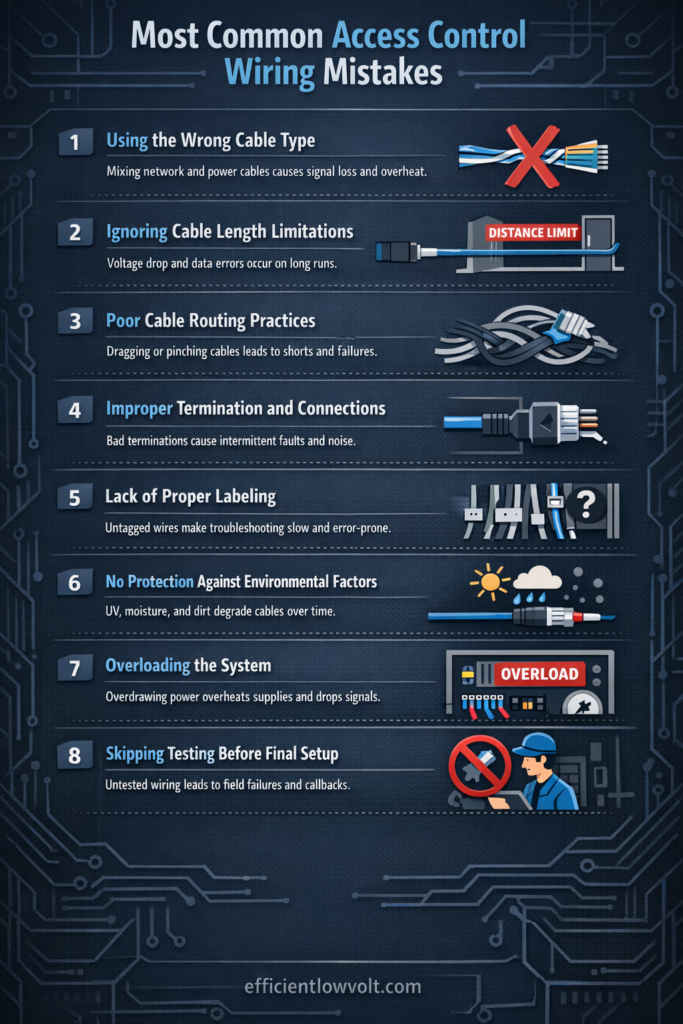
1. Using the Wrong Cable Type
Not all cables are created equal. Different systems require specific cable types based on voltage, data transmission, and environmental conditions.
Using low-quality or incorrect cables can result in:
- Signal loss
- Reduced performance
- Increased risk of failure over time
For example, using standard cables instead of shielded ones in high-interference environments can severely impact signal integrity.
2. Ignoring Cable Length Limitations
Every cable has a maximum effective distance. When this limit is exceeded, signal strength degrades, leading to inconsistent communication between system components.
Common issues include:
- Delayed authentication responses
- Intermittent connection failures
- Devices are not responding at all
Without proper planning, long cable runs can quickly become a major source of system instability.
3. Poor Cable Routing Practices
How cables are routed plays a significant role in system performance. Running access control wiring alongside high-voltage electrical lines or through areas with heavy interference can disrupt signal transmission.
Poor routing can lead to:
- Electrical interference (EMI)
- Signal distortion
- Increased system errors
Proper separation and routing strategies are essential to maintaining signal clarity.
4. Improper Termination and Connections
Even with the right cables, poor connections can undermine the entire system. Loose or improperly terminated wires create weak points that can cause intermittent failures.
This often results in:
- Unstable connections
- Random system glitches
- Increased maintenance needs
Reliable connections are critical for consistent performance.
5. Lack of Proper Labeling
In many installations, cables are left unlabeled, making it difficult to identify connections during maintenance or troubleshooting.
This leads to:
- Longer repair times
- Increased labor costs
- Higher risk of errors during modifications
Clear labeling is a simple yet highly effective practice that improves long-term system management.
6. No Protection Against Environmental Factors
Access control wiring is often exposed to environmental conditions such as heat, moisture, and dust, especially in outdoor or industrial environments.
Without proper protection, cables can:
- Degrade over time
- Short-circuit
- Fail prematurely
Using appropriate conduits and weather-resistant materials is essential for durability.
7. Overloading the System
Connecting too many devices to a single power source or communication line can overload the system, leading to performance issues.
Symptoms include:
- Slow response times
- System instability
- Device malfunctions
Proper load balancing ensures that the system operates efficiently.
8. Skipping Testing Before Final Setup
One of the most critical mistakes is failing to test the system thoroughly before completing the installation.
Without testing:
- Hidden issues remain undetected
- Problems appear after deployment
- Fixes become more complex and costly
Testing ensures that everything functions as intended before the system goes live.
How These Mistakes Impact System Reliability
Reliability is the backbone of any security system, and access control wiring plays a direct role in maintaining it. When wiring mistakes occur, they create a chain reaction that affects the entire system.
For instance, a weak connection or interference issue can disrupt communication between the reader and the controller, causing delays in authentication. This may result in doors failing to unlock on time or, worse, not responding at all. In high-traffic environments, even a few seconds of delay can lead to frustration, bottlenecks, and operational inefficiencies.
Inconsistent wiring can also cause intermittent failures, which are particularly difficult to diagnose because they do not occur consistently. These unpredictable issues can erode trust in the system and require frequent maintenance, increasing overall costs.
Ultimately, reliability is not just about convenience—it is about ensuring that the system performs consistently under all conditions.
Security Risks Linked to Poor Access Control Wiring
Beyond performance issues, poor access control wiring can introduce serious security risks. A system that does not function reliably cannot effectively protect restricted areas.
When access control wiring is compromised, even temporarily, it creates gaps in the system that can allow unauthorized entry, reduce monitoring accuracy, and expose sensitive areas to potential threats without immediate detection. For example, a malfunctioning door lock may remain unlocked, or a reader may fail to log access attempts.
Additionally, inconsistent data transmission can interfere with audit trails, making it difficult to track who accessed certain areas and when. This lack of visibility can be a major concern in environments where security and compliance are critical.
In short, weak wiring undermines the very purpose of an access control system.
Best Practices to Avoid Access Control Wiring Mistakes
Preventing these issues starts with following proven best practices during planning and installation.
- Use manufacturer-recommended cable types and specifications
- Follow structured cabling standards for organization and consistency
- Maintain proper separation between low-voltage and high-voltage cables
- Keep cable runs within recommended distance limits
- Label all cables clearly for easy identification
- Protect wiring with conduits or insulation in harsh environments
- Balance device loads to prevent system overload
- Conduct thorough testing before finalizing installation
By implementing these practices, you can significantly reduce the risk of errors and ensure a more reliable system.
DIY vs Professional Installation: What’s at Stake?
While some may consider a DIY approach to save costs, access control wiring requires a level of precision and expertise that goes beyond basic installation.
| Factor | DIY Approach | Professional Installation |
| Precision | Limited | High |
| Risk of errors | High | Low |
| System reliability | Inconsistent | Stable |
| Long-term cost | Higher due to fixes | More cost-efficient |
Access control systems may be low-voltage, but their impact is high. Mistakes made during installation can lead to ongoing issues that are far more expensive to fix later.
Signs Your Access Control Wiring Needs Attention
If your system is already in place, certain warning signs may indicate wiring issues:
- Doors not responding consistently
- Delayed access approvals
- System resets or unexpected glitches
- Visible wear or damage to cables
- Frequent need for maintenance or repairs
Addressing these signs early can prevent more serious problems down the line.
Future-Proofing Your Access Control Wiring
As technology evolves, your access control system should be able to adapt without requiring a complete overhaul.
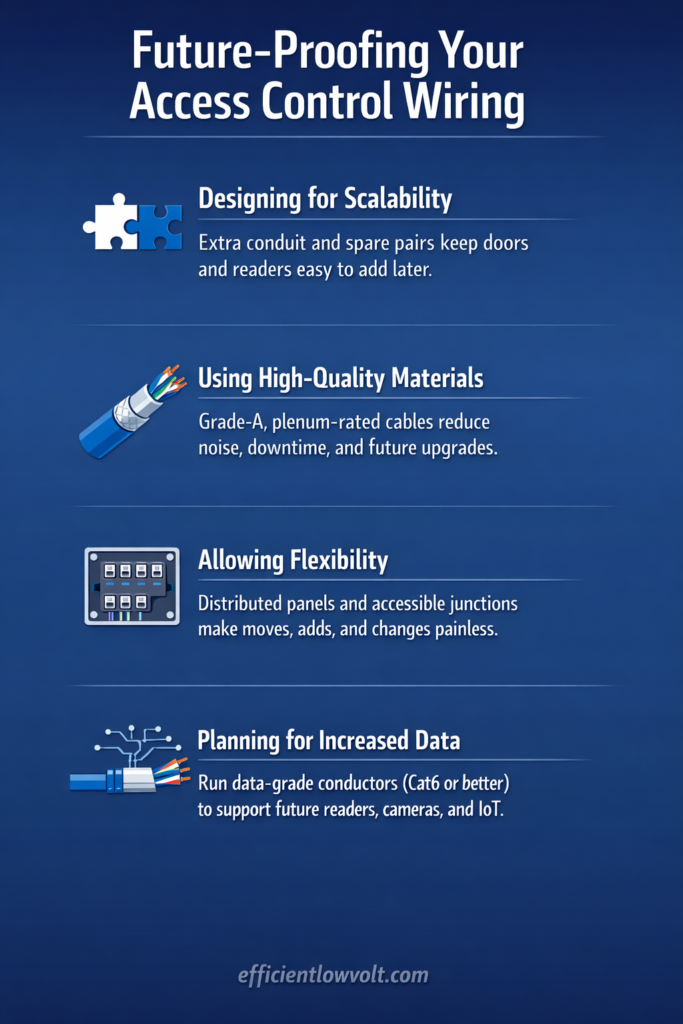
Future-proofing strategies include:
- Designing for scalability to accommodate additional devices
- Using high-quality materials for long-term durability
- Allowing flexibility for system upgrades
- Planning for increased data and power demands
A forward-thinking approach ensures that your system remains effective as your needs grow.
Build a Security System You Can Rely On
A reliable access control system starts with a strong foundation, and that foundation is built on properly planned and executed access control wiring. By avoiding common mistakes such as incorrect cable selection, poor routing, and a lack of testing, you can ensure consistent performance, reduce downtime, and protect your space from potential security risks. Taking the time to get the wiring right from the beginning not only improves system reliability but also minimizes long-term maintenance and operational challenges.
If you’re looking to implement a dependable and scalable security solution, Efficient Lowvolt Solutions provides expertly designed systems tailored to your environment. With a focus on precision, reliability, and advanced technology, their team ensures that every component—from wiring to final configuration—works seamlessly together to secure your space now and into the future.