
Every modern network depends on a reliable cabling infrastructure. Whether supporting office computers, security systems, wireless access points, VoIP phones, or data center equipment, the way cables are designed and organized plays a major role in network performance and long-term efficiency. While many organizations focus on networking hardware and internet speeds, the cabling foundation often determines how easily a network can grow, adapt, and remain reliable over time.
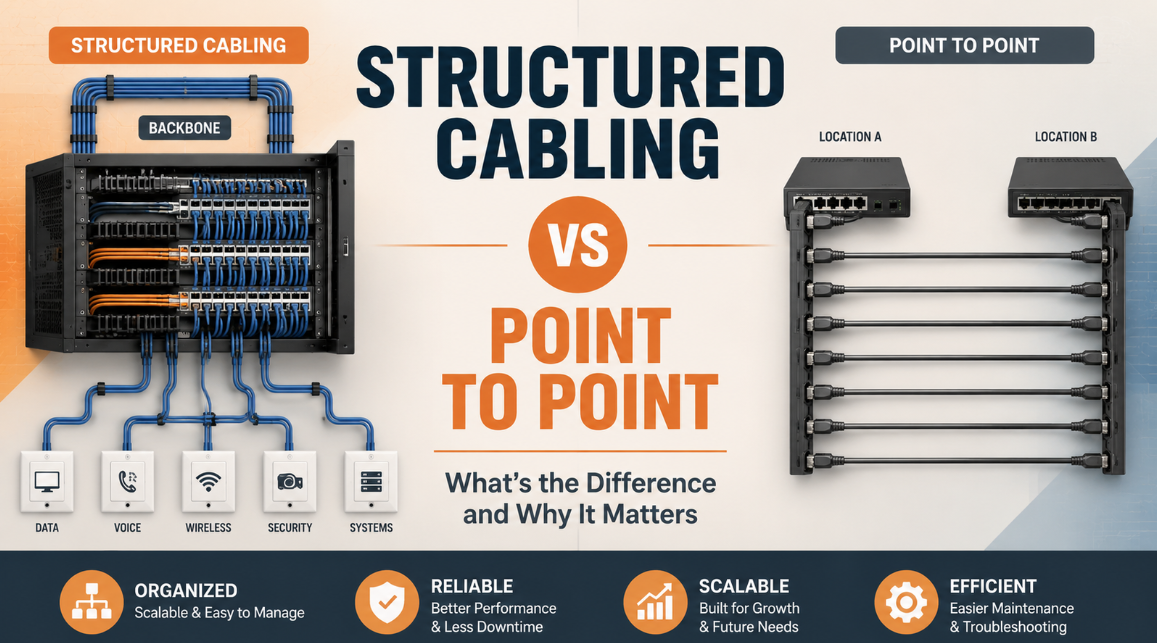
One of the most common discussions in network infrastructure planning is structured cabling vs point to point. At first glance, both approaches appear to accomplish the same goal: connecting devices so they can communicate. However, the differences become much more apparent as networks expand and operational demands increase. Understanding structured cabling vs point to point helps organizations make informed decisions that support scalability, maintenance, performance, and future growth.
What Is a Structured Cabling System?
A structured cabling system is a standardized approach to designing and organizing network infrastructure. Instead of creating direct cable connections between every device, structured cabling uses a centralized architecture that allows devices to connect through organized pathways and distribution points.
The goal is to create a network environment that is:
- Organized
- Scalable
- Flexible
- Easy to maintain
- Ready for future technologies
Structured cabling follows industry standards that promote consistency and simplify network management.
Main Components of Structured Cabling
A structured cabling system commonly includes:
- Horizontal cabling
- Backbone cabling
- Patch panels
- Telecommunications rooms
- Equipment rooms
- Network racks
- Cable management systems
- Work area outlets
Each component serves a specific purpose, creating a cohesive infrastructure that supports efficient communication throughout a building or campus.
Why Structured Cabling Became the Industry Standard
As businesses became more dependent on technology, network complexity increased dramatically. Managing hundreds or thousands of direct cable connections became inefficient and difficult to maintain.
Structured cabling emerged as a solution because it provides:
- Better cable organization
- Easier troubleshooting
- Faster upgrades
- Improved scalability
- Reduced downtime
These advantages have made structured cabling the preferred choice for many commercial environments.
What Is Point-to-Point Cabling?
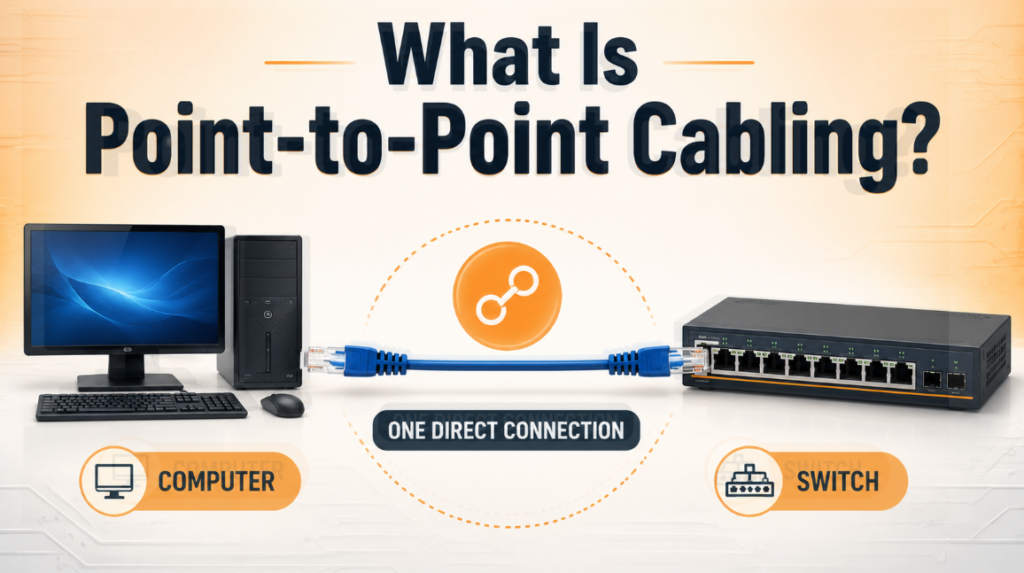
Point-to-point cabling is a simpler approach that connects one device directly to another using a dedicated cable. Rather than routing connections through patch panels or centralized infrastructure, each cable serves a specific connection between two endpoints.
Examples include:
- Computer to switch
- Camera to recorder
- Server to network appliance
- Controller to industrial equipment
The concept is straightforward and often works well for small installations.
How Point-to-Point Networks Are Built
Each time a new device is added, another cable is installed between the device and its destination.
This often results in:
- Large cable bundles
- Multiple cable pathways
- Increased cable density
- Limited organization
While manageable in smaller environments, complexity can increase quickly as additional devices are added.
Structured Cabling vs Point to Point: Understanding the Fundamental Difference
The primary difference in structured cabling vs point to point is the overall design philosophy.
Structured cabling focuses on creating an organized infrastructure capable of supporting growth and changes over time.
Point-to-point cabling focuses on creating direct device connections with minimal supporting infrastructure.
Structured Cabling Approach
Characteristics include:
- Centralized network design
- Standardized installation methods
- Organized cable routing
- Easy expansion capabilities
- Simplified management
Point-to-Point Approach
Characteristics include:
- Direct device connections
- Limited infrastructure requirements
- Fast deployment
- Lower initial setup complexity
- Greater management challenges as networks grow
The distinction becomes increasingly important as network demands evolve.
Structured Cabling vs Point to Point: Installation Considerations
Installation requirements vary significantly between the two approaches.
Structured Cabling Installation Process
Structured cabling projects often involve:
- Site assessments
- Infrastructure planning
- Cable pathway design
- Rack installation
- Patch panel configuration
- Cable labeling
- Documentation
The process requires careful planning but results in a highly organized network environment.
Point-to-Point Installation Process
Point-to-point installations generally involve:
- Running direct cable connections
- Connecting endpoints
- Testing connectivity
The process is straightforward and often requires less upfront planning.
Which Installation Method Is Simpler?
For very small networks, point-to-point installation is usually simpler.
However, as device counts increase, structured cabling often becomes easier to manage because future additions can be integrated without extensive rewiring.
Structured Cabling vs Point to Point: Scalability and Growth
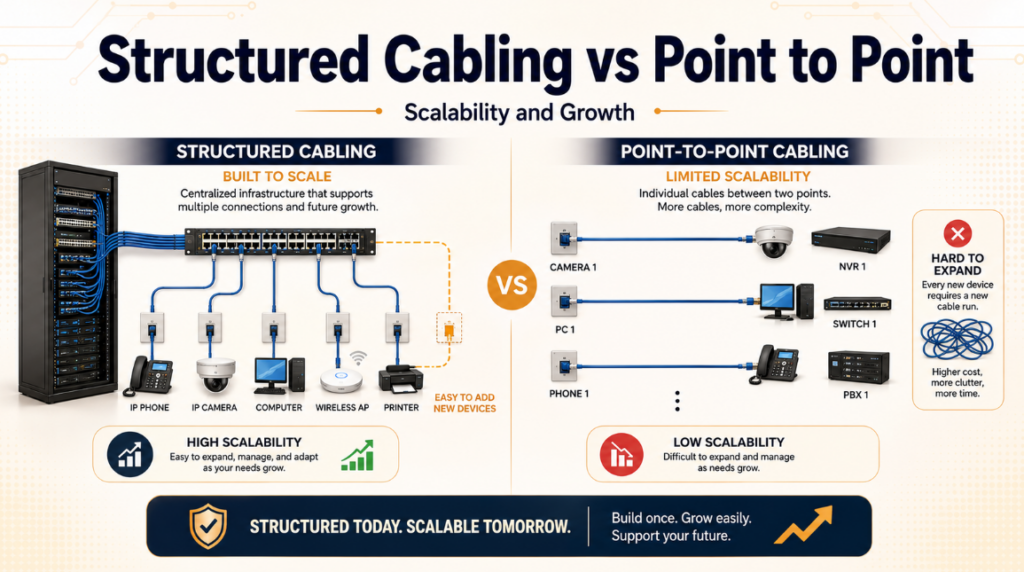
Scalability is one of the most significant factors when evaluating structured cabling vs point to point.
Structured Cabling Supports Expansion
A structured cabling system is designed with future growth in mind.
Benefits include:
- Easy addition of new users
- Faster deployment of new technologies
- Simplified office expansions
- Reduced disruption during upgrades
Organizations can often expand their networks without redesigning the entire infrastructure.
Point-to-Point Challenges During Growth
As point-to-point networks expand, several challenges may emerge:
- Cable congestion
- Increased installation time
- Difficult cable tracing
- Reduced visibility
- Greater risk of errors
What begins as a simple network can eventually become difficult to manage.
H4: Why Growth Planning Matters
Network requirements rarely remain static. Businesses frequently add employees, devices, applications, and security systems. Choosing a cabling strategy that accommodates growth can prevent costly redesigns later.
Structured Cabling vs Point to Point: Maintenance and Troubleshooting
Maintaining a network becomes easier when infrastructure is organized and well documented.
Structured Cabling Maintenance Advantages
Structured cabling offers several maintenance benefits:
- Clearly labeled cables
- Organized patch panels
- Centralized network equipment
- Standardized layouts
- Easier documentation
These features help technicians identify and resolve issues quickly.
Point-to-Point Maintenance Challenges
Point-to-point systems may become difficult to troubleshoot because:
- Cables may not be labeled consistently
- Connections can be difficult to trace
- Cable bundles can become crowded
- Documentation may be limited
As networks grow, locating a single faulty cable may require considerable effort.
Structured Cabling vs Point to Point: Cable Management Differences
Cable management is often overlooked until network changes become necessary.
Organized Infrastructure with Structured Cabling
Structured cabling promotes:
- Neat cable routing
- Consistent labeling
- Better airflow around equipment
- Cleaner equipment rooms
- Improved accessibility
A well-organized environment reduces confusion and simplifies future modifications.
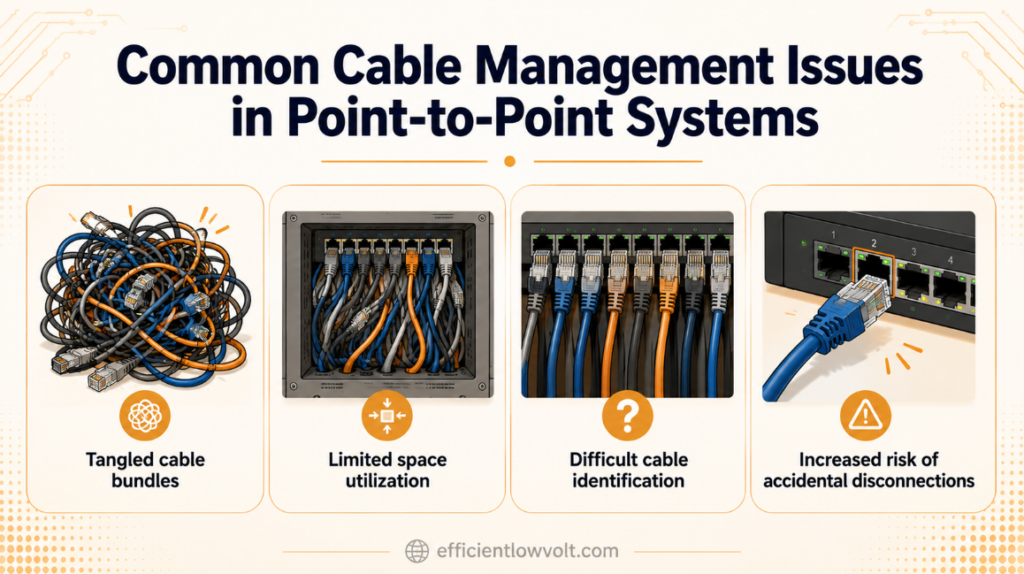
Common Cable Management Issues in Point-to-Point Systems
Without centralized organization, point-to-point installations can experience:
- Tangled cable bundles
- Limited space utilization
- Difficult cable identification
- Increased risk of accidental disconnections
These issues can become more noticeable as additional equipment is added.
Structured Cabling vs Point to Point: Cost Comparison
Cost is often a deciding factor when selecting a cabling strategy.
Initial Investment
Point-to-point cabling often requires:
- Fewer components
- Less planning
- Faster deployment
As a result, upfront costs are typically lower.
Structured cabling generally requires:
- Patch panels
- Racks
- Cable management systems
- Design planning
- Documentation
These elements increase the initial investment.
Long-Term Financial Impact
Although structured cabling may cost more initially, long-term savings often result from:
- Easier maintenance
- Faster troubleshooting
- Simplified upgrades
- Reduced labor costs
Point-to-point systems may become more expensive over time as network complexity increases.
Looking Beyond Installation Costs
Evaluating only upfront expenses can be misleading. Total ownership costs often provide a more accurate picture of long-term value.
Structured Cabling vs Point to Point: Performance and Reliability
Network performance depends on many factors, including equipment quality, installation practices, and cable standards.
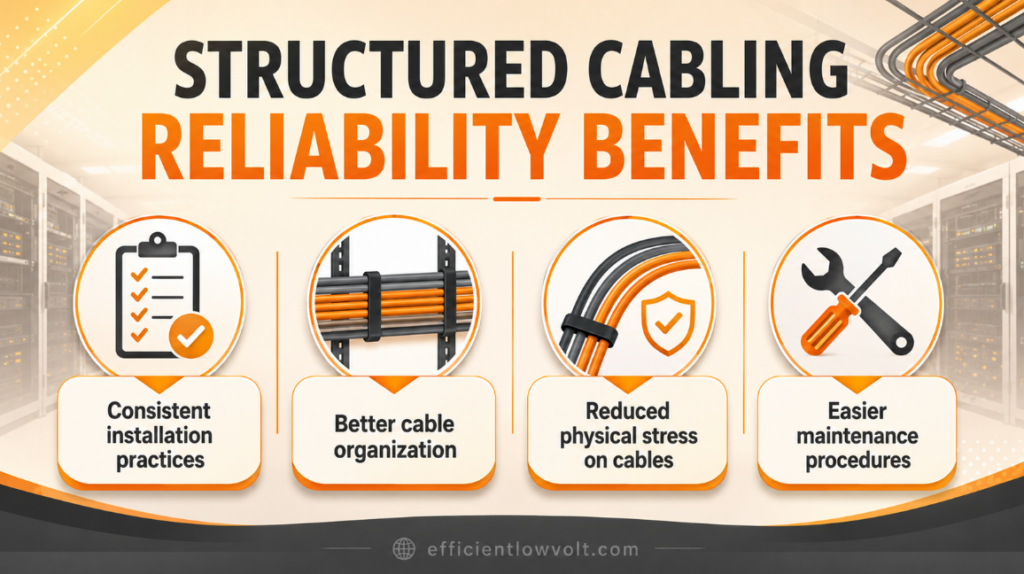
Structured Cabling Reliability Benefits
Structured cabling can improve reliability through:
- Consistent installation practices
- Better cable organization
- Reduced physical stress on cables
- Easier maintenance procedures
These factors help maintain stable network performance.
Point-to-Point Performance Considerations
Point-to-point connections can deliver excellent performance in smaller environments.
However, larger installations may experience challenges related to cable management, maintenance efficiency, and network modifications.
When Structured Cabling Is the Better Choice
Structured cabling is often ideal when:
- Long-term growth is expected
- Multiple departments share network resources
- Downtime must be minimized
- Network changes occur regularly
- Future technology upgrades are anticipated
These environments benefit from the flexibility and organization that structured cabling provides.
When Point-to-Point Cabling May Still Be Useful
Point-to-point cabling remains suitable for certain situations.
Examples include:
- Small offices
- Temporary facilities
- Single-purpose systems
- Industrial equipment connections
- Limited-scale installations
In these scenarios, the simplicity of direct connections may outweigh scalability concerns.
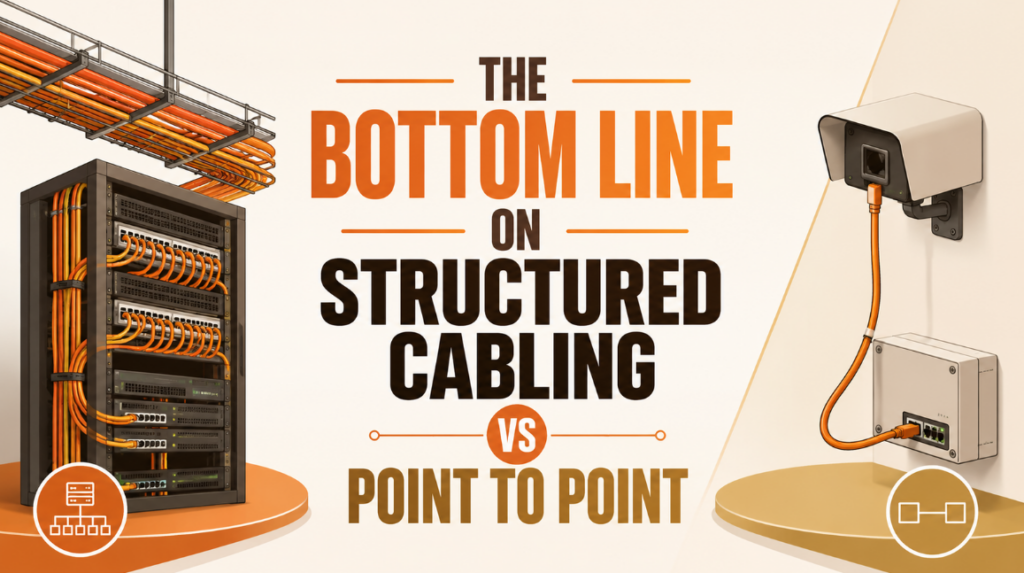
The Bottom Line on Structured Cabling vs Point to Point
When comparing structured cabling vs point to point, the right choice depends largely on network size, future growth expectations, and operational requirements. Point-to-point cabling offers simplicity and lower initial costs, making it practical for smaller environments. Structured cabling, on the other hand, provides a standardized framework that simplifies maintenance, supports expansion, and improves long-term network management. As networks become more complex, the advantages of structured cabling become increasingly valuable.
Build a Network That Supports Tomorrow’s Demands
Understanding the differences between structured cabling vs point to point can help organizations avoid costly infrastructure challenges in the future. A well-designed cabling system contributes to reliability, scalability, and easier maintenance, all of which play important roles in supporting modern technology environments. Evaluating current needs alongside future growth plans is essential when selecting the most effective cabling strategy.
For organizations seeking dependable structured cabling solutions, Efficient LowVolt Solutions provides professional expertise in designing and implementing organized network infrastructures that support long-term performance, flexibility, and business growth. A properly planned cabling system today can help create a stronger and more adaptable network for years to come.