
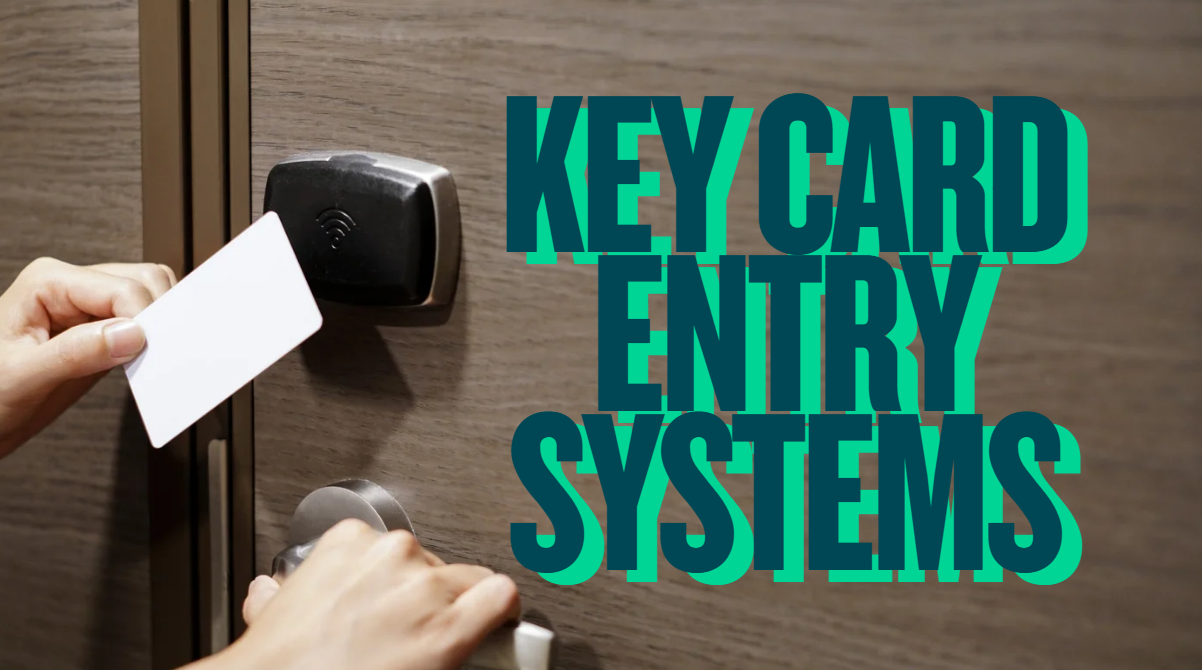
In a world where security and convenience are paramount, key card entry systems have become one of the most popular and effective solutions for controlling access to buildings, rooms, and restricted areas. Whether you’re managing a busy office or securing a modern smart home, these systems offer a blend of technology and practicality that traditional locks and keys simply can’t match.
A key card entry system replaces the need for physical keys with electronic credentials stored on cards or digital devices. Each card grants or denies access based on permissions configured in the system’s software. This not only simplifies entry for authorized users but also enables property owners and managers to track, monitor, and manage who enters and exits at any given time.
What Is a Key Card Entry System and How Does It Work?
A key card entry system is an electronic access control solution that uses encoded cards to allow or restrict entry through a door or gate. Instead of using mechanical keys, users present a card, fob, or mobile credential to a reader, which communicates with a control unit to verify permissions.
Core Components Include:
- Access Card or Credential: This may be a magnetic stripe card, proximity (RFID) card, smart card, or digital credential stored on a mobile phone.
- Card Reader: The reader detects the credential’s signal and transmits it to the controller.
- Access Controller: The “brain” of the system that checks the card’s validity against a database.
- Electric Lock or Strike: The mechanism that unlocks the door when authorization is granted.
How It Works (Step-by-Step):
- The user taps or swipes their card at the reader.
- The reader sends the card’s unique code to the access controller.
- The controller verifies the data and determines whether access is granted.
- If valid, the electric lock disengages—allowing entry; if not, access is denied.
There are two main setups:
- Offline Systems: Operate independently without internet access; typically used in small offices or homes.
- Online or Cloud-Based Systems: Managed remotely via software, enabling administrators to grant or revoke access, review logs, or monitor entry in real time.
Types of Key Card Entry Systems

Key card systems come in several varieties, each suited to different levels of security, convenience, and budget. Understanding their differences helps you choose the right solution for your property’s unique needs.
1. Magnetic Stripe Cards
Store data on a magnetic strip, similar to a credit or debit card. The information is encoded on the stripe and read when the card is physically swiped through a magnetic reader.
Because the reader must make direct contact with the card’s surface, the system relies on friction to read the data—making it a simple yet mechanical process.
- Hotels and hospitality facilities for guest room access
- Older office buildings with legacy security systems
- Budget-friendly access control setups
- Properties requiring quick turnover or short-term access credentials
Pros: Inexpensive, easy to replace, and compatible with most legacy systems.
Cons: Wear out over time, require physical contact, and are more vulnerable to duplication or demagnetization.
2. Proximity (RFID) Cards
Use Radio Frequency Identification (RFID) technology to communicate wirelessly with a reader. The card contains a small embedded chip and antenna that transmit data via short-range radio waves.Unlike swipe cards, proximity cards don’t need to be inserted or touched to the reader—reducing wear and making them faster to use.
- Users simply hold the card near the reader for instant, contactless access, which improves efficiency in high-traffic areas.
Pros: Durable, reliable, and easy to use with minimal maintenance.
Cons: Older models may be susceptible to cloning if the data isn’t encrypted or if the system lacks modern security protocols.
3. Smart Cards (NFC-Enabled)
Contain an embedded microprocessor that stores and processes encrypted data, allowing for complex security authentication. Unlike RFID cards, they can perform mutual authentication, meaning both the card and the reader verify each other’s legitimacy.
These cards can store multiple credentials—such as employee ID, access permissions, or even payment functionality—making them highly versatile for integrated security environments.
Common Applications:
- Government offices
- Hospitals and healthcare facilities
- Modern corporate buildings
- Financial institutions or research centers where data security is critical
Pros: Highly secure, supports encryption, and integrates with digital systems.
Cons: Slightly higher upfront cost and requires compatible card readers.
4. Mobile Key Access Systems
Replace physical cards with digital keys stored securely on smartphones, tablets, or smartwatches. Users gain access through a mobile app or digital credential that communicates directly with the access control system.
These systems allow administrators to issue, modify, or revoke access instantly from anywhere, improving convenience and reducing card management costs.
Use Bluetooth Low Energy (BLE) or Near Field Communication (NFC) for wireless communication between the device and the reader, ensuring quick and secure entry.
Ideal For:
- Smart homes
- Tech-forward businesses
- Co-working spaces or shared offices
- Hospitality and short-term rental properties (for contactless check-ins)
Pros: Eco-friendly (no plastic cards), flexible, and convenient remote management.
Cons: Dependent on mobile battery life and network connectivity.
Benefits of Key Card Entry Systems for Offices and Homes
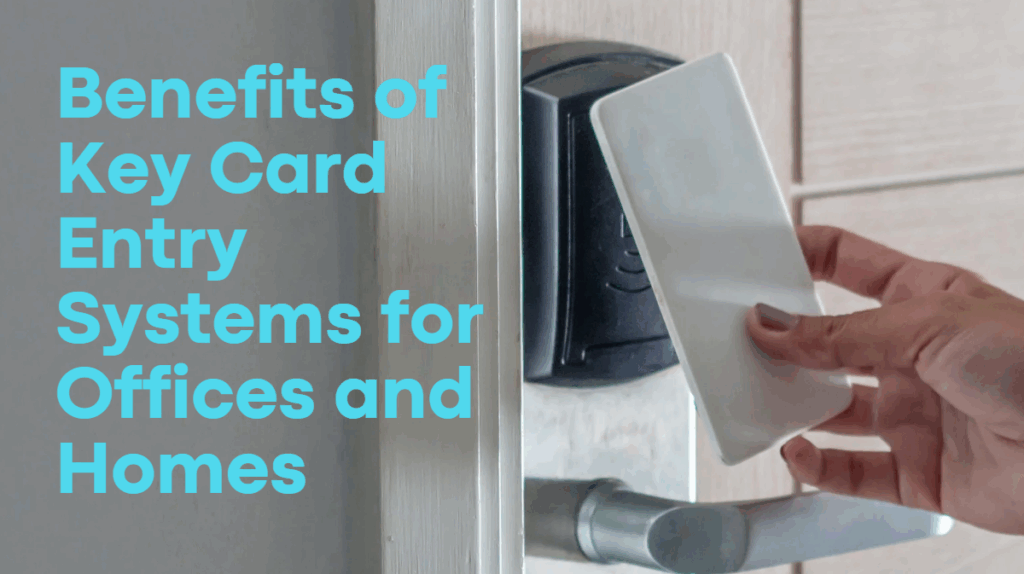
The advantages of key card systems extend well beyond convenience. They offer tangible security, operational, and financial benefits:
1. Enhanced Security
Cards can be easily deactivated when lost or stolen—unlike physical keys that require rekeying locks. This ensures that unauthorized individuals cannot gain entry.
2. Access Tracking & Audit Trails
Every entry and exit is logged, providing a digital record of activity. For businesses, this supports compliance and helps in investigations. For homeowners, it adds peace of mind.
3. Customizable Access Levels
Administrators can assign specific access permissions based on user roles, times, or areas—ideal for managing employees, tenants, or household helpers.
4. Convenience and Efficiency
Users no longer need to carry bulky keyrings or worry about forgotten keys. A simple card tap or phone tap grants entry.
5. Integration with Other Systems
Modern access control systems integrate with CCTV, alarms, fire systems, and HR databases, offering a unified security infrastructure.
6. Cost-Effectiveness
While initial setup costs may be higher, long-term savings are achieved through reduced rekeying, minimal lock replacement, and remote management.
7. Remote Access Management
Cloud-based solutions allow property owners to grant, monitor, or revoke access remotely—a powerful feature for landlords, property managers, and traveling homeowners.
Key Components and Technologies Behind the System

To understand how robust these systems are, let’s explore the technology and hardware that make them work.
- Card Readers: The interface between the user and the system. These can be wall-mounted, standalone, or integrated into intercom units.
- Controllers: Process authorization requests. Some systems use decentralized controllers for each door; others use centralized networked controllers.
- Electronic Locks: Include magnetic locks, electric strikes, or smart locks—each offering varying levels of security and convenience.
- Credential Technology:
- RFID (125 kHz or 13.56 MHz): The industry standard for proximity cards.
- NFC: Enables mobile access with tap-to-enter convenience.
- BLE (Bluetooth Low Energy): Allows unlocking via smartphones at short distances.
- Software Platform: The management console for adding users, generating reports, and configuring access levels. Modern systems leverage cloud technology for real-time updates.
In a typical office, the system may be connected to employee directories or HR databases. In a home, it could integrate with smart assistants like Alexa or Google Home for automated control.
Applications: Where Key Card Entry Systems Make the Most Impact
Key card systems are now seen across nearly every industry and environment.
- Corporate Offices: Control who enters specific departments or floors, track employee attendance, and secure server rooms.
- Residential Buildings: Simplify access for tenants and maintenance staff while improving property value.
- Hospitals and Healthcare: Protect restricted areas like pharmacies or labs while maintaining regulatory compliance.
- Educational Institutions: Manage student dorm access and safeguard facilities.
- Hospitality (Hotels & Rentals): Offer a frictionless guest experience and quick room reassignment.
- Smart Homes: Integrate key card access with automation systems to unlock doors, turn on lights, or adjust temperature upon entry.
How to Choose the Right Key Card System for Your Needs

Selecting the right system involves more than comparing prices—it requires understanding your security requirements, scalability goals, and management preferences.
1. Assess Security Requirements
Identify which areas need protection, how many users require access, and what level of control is needed.
2. Determine Budget and ROI
Consider not only installation costs but also ongoing maintenance, software subscriptions, and potential long-term savings.
3. Evaluate Scalability
Choose a system that can grow with your needs—especially for expanding businesses or residential complexes.
4. Integration Capabilities
Opt for systems that can link with your existing surveillance, alarm, or HR systems for unified control.
5. Ease of Management
Cloud-based dashboards allow you to modify access in real time and generate reports from anywhere.
6. Vendor Reputation and Support
Work only with certified access control providers who offer robust technical support and warranty coverage.
7. Compliance and Standards
Ensure the system meets UL, ISO/IEC, and local data protection regulations such as GDPR for user privacy.
Quick Checklist:
- Does it support both card and mobile credentials?
- Can it integrate with my current systems?
- Is there remote management capability?
- How easy is it to add or remove users?
- What are the warranty and service options?
Installation and Maintenance Tips
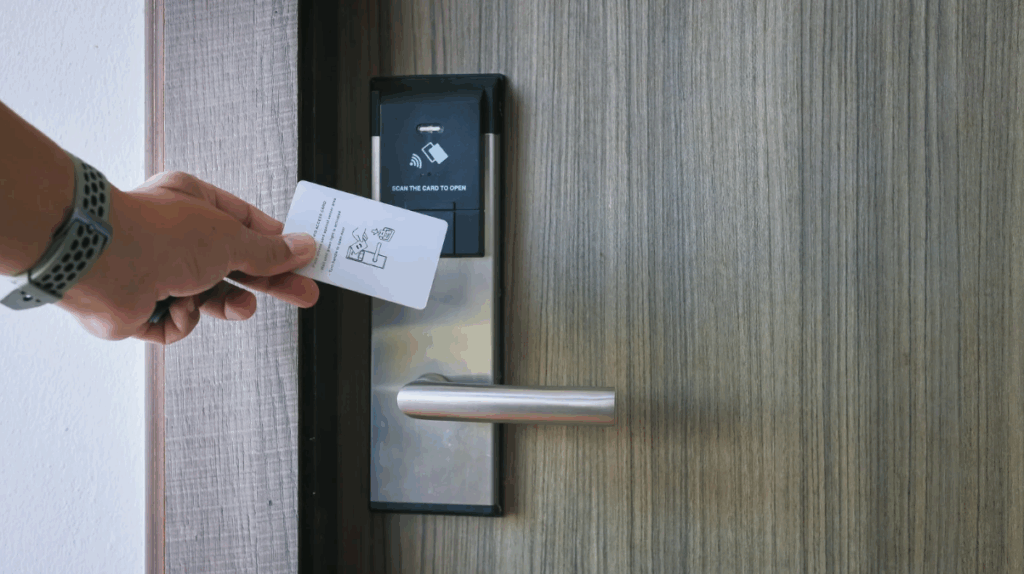
Installing a key card entry system requires precision and planning. Follow these best practices for optimal performance:
- Hire Certified Technicians: Proper wiring, mounting, and programming prevent malfunctions and ensure compliance.
- Perform System Testing: Regularly test readers, locks, and controllers to confirm reliability.
- Schedule Routine Maintenance: Replace worn cards, check batteries on locks, and update firmware frequently.
- Implement Backup Solutions: Ensure power backup or battery redundancy to maintain access during outages.
- User Training: Educate users about card handling, lost-card reporting, and basic troubleshooting.
Routine maintenance not only extends system lifespan but also strengthens overall security integrity.
Conclusion: Smart Security for a Smarter World
Key card entry systems are no longer reserved for large corporations—they’ve become accessible, scalable, and incredibly user-friendly. They offer an ideal balance of convenience and protection, making them suitable for offices, apartment buildings, and even private homes. As technology continues to evolve, key card systems stand out as a smart, future-proof investment in safety and control.
Before choosing a system, take time to assess your property’s unique needs and consult with security professionals to ensure the best setup for long-term reliability. Efficient Lowvolt Solutions specializes in delivering tailored Security & Access Control systems that provide robust protection for your premises—ensuring only authorized individuals gain entry to sensitive areas. From advanced key card entry systems to fully integrated security solutions, they are dedicated to helping you create a safer, smarter environment designed around your specific needs.