
Every property, whether commercial, industrial, multi-family, or residential, faces unique security challenges. While access control systems are often viewed as a solution to unauthorized entry, selecting a system without first understanding existing risks can leave critical gaps in protection. Investing in technology before identifying weaknesses may result in unnecessary expenses, incomplete coverage, and ongoing security concerns.
Understanding security vulnerabilities is the foundation of any effective security strategy. Before choosing biometric readers, keycard systems, mobile credentials, or integrated access control platforms, property owners and managers should evaluate how people enter, move through, and interact with a facility. Identifying security vulnerabilities early helps ensure that any security investment addresses real risks rather than perceived threats.
Why Identifying Security Vulnerabilities Matters
An access control system is only as effective as the security plan behind it. Many organizations focus on purchasing the latest technology without fully understanding where their weaknesses exist.
When security vulnerabilities go unnoticed, organizations may experience:
- Unauthorized access to sensitive areas
- Increased risk of theft or vandalism
- Employee safety concerns
- Data and asset protection issues
- Compliance violations
- Reduced effectiveness of security investments
A thorough understanding of security vulnerabilities helps decision-makers select access control features that directly address identified risks.
Technology Alone Cannot Solve Every Problem
Modern security technology offers impressive capabilities, but even advanced systems can fall short if they are installed without proper planning.
For example:
- A biometric reader may secure a main entrance while side entrances remain vulnerable.
- Electronic credentials may be implemented while visitor access remains unmanaged.
- Security cameras may record incidents but fail to prevent unauthorized entry.
Identifying security vulnerabilities first ensures that technology is deployed strategically rather than reactively.
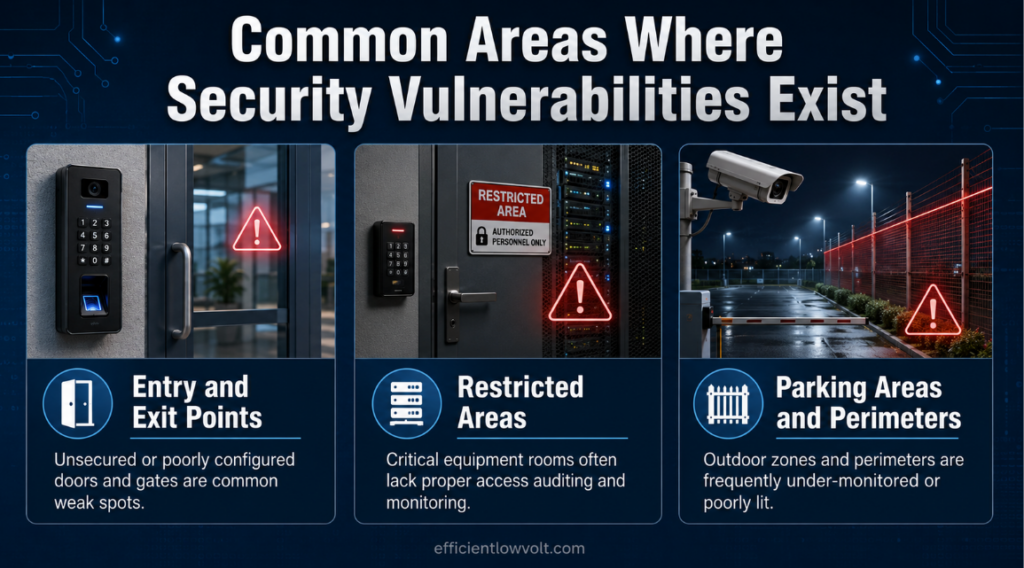
Common Areas Where Security Vulnerabilities Exist
Security vulnerabilities often appear in locations that receive little attention during daily operations.
1. Entry and Exit Points
Doors, gates, loading docks, and service entrances frequently become targets for unauthorized access.
Potential concerns include:
- Unlocked secondary entrances
- Damaged door hardware
- Shared access credentials
- Tailgating incidents
- Poorly monitored exits
Evaluating these areas helps determine what type of access control system may be necessary.
2. Restricted Areas
Certain sections of a property require additional protection because they contain valuable assets, sensitive information, or critical infrastructure.
Examples include:
- Server rooms
- Equipment rooms
- Executive offices
- Inventory storage areas
- Financial records departments
Identifying security vulnerabilities within these spaces helps establish appropriate access permissions and monitoring requirements.
3. Parking Areas and Perimeters
Many security incidents begin outside the building.
Common concerns include:
- Uncontrolled vehicle access
- Poor lighting
- Limited surveillance coverage
- Open perimeter fencing
- Unsecured pedestrian entrances
An effective security strategy considers both internal and external security vulnerabilities.
Conducting a Security Vulnerability Assessment
Before choosing an access control system, a structured assessment should be performed.
1. Evaluate Existing Security Measures
Begin by reviewing current protections.
Questions to consider include:
- How is access currently managed?
- Who has access to sensitive areas?
- Are keys being tracked effectively?
- Are visitor procedures documented?
- Are surveillance systems functioning properly?
The answers often reveal security vulnerabilities that have developed over time.
2. Analyze Traffic Patterns
Understanding how individuals move throughout a facility is critical.
Observe:
- Employee movement patterns
- Visitor traffic flow
- Contractor access requirements
- Delivery schedules
- Emergency evacuation routes
Traffic analysis helps determine where access restrictions may be required and where security vulnerabilities are most likely to occur.
3. Review Incident History
Past incidents frequently provide valuable insight into future risks.
Review records related to:
- Unauthorized entry attempts
- Theft incidents
- Property damage
- Lost credentials
- Security policy violations
Patterns may reveal recurring security vulnerabilities that require attention.
Physical Security Weaknesses That Affect Access Control Performance
Access control systems depend on strong physical infrastructure.
1. Poor Door and Lock Conditions
Even sophisticated access control systems can be compromised if doors or frames are damaged.
Issues may include:
- Worn door hardware
- Misaligned doors
- Weak strike plates
- Broken hinges
- Inadequate locking mechanisms
Physical weaknesses often create security vulnerabilities regardless of the technology installed.
2. Inadequate Lighting
Poor visibility creates opportunities for unauthorized activity.
Well-lit environments help:
- Improve surveillance effectiveness
- Increase employee safety
- Deter criminal behavior
- Enhance identification capabilities
Lighting assessments should be part of any security vulnerability evaluation.
3. Blind Spots in Surveillance Coverage
Access control and surveillance systems often work together.
When camera coverage contains gaps, organizations may struggle to:
- Verify incidents
- Monitor entry points
- Investigate security breaches
- Identify unauthorized individuals
These blind spots represent significant security vulnerabilities that should be addressed during planning.
Human Factors That Create Security Vulnerabilities
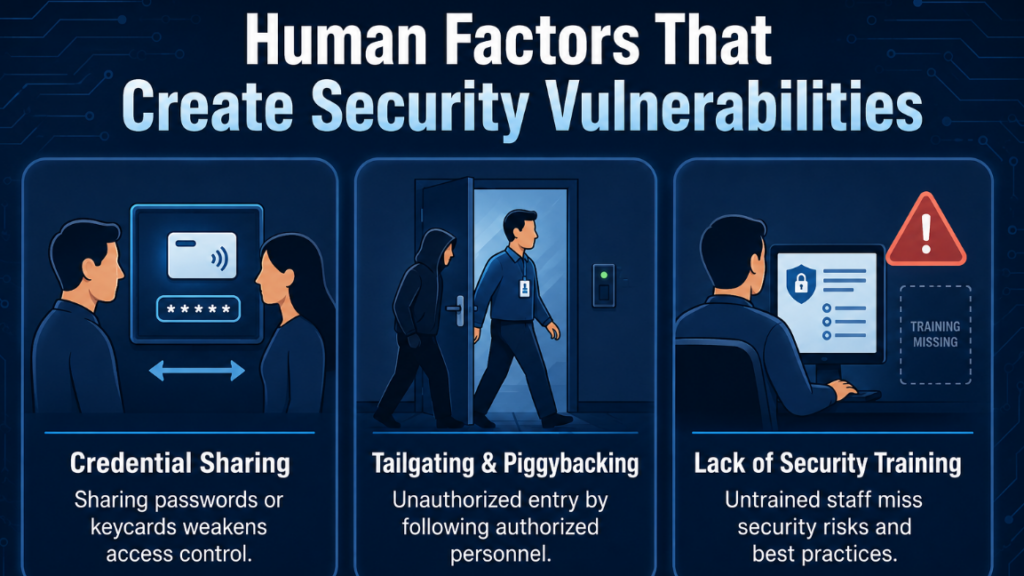
Technology cannot eliminate risks caused by human behavior.
1. Credential Sharing
Employees sometimes share access cards or credentials for convenience.
This practice can:
- Reduce accountability
- Increase unauthorized access risks
- Complicate investigations
- Create compliance concerns
Access control systems should support policies that discourage credential sharing.
2. Tailgating and Piggybacking
Tailgating occurs when an unauthorized individual follows an authorized person into a secure area.
Common causes include:
- Courtesy behaviors
- Lack of employee awareness
- Insufficient monitoring
- Inadequate visitor procedures
Many organizations underestimate how frequently these security vulnerabilities occur.
3. Lack of Security Training
Even the best access control system cannot compensate for poor security awareness.
Training should address:
- Access procedures
- Visitor management
- Credential protection
- Incident reporting
- Emergency response
Employees play a critical role in reducing security vulnerabilities.
Matching Access Control Features to Identified Risks
After security vulnerabilities have been identified, organizations can evaluate solutions more effectively.
1. Keycard Access Systems
Keycard systems provide controlled access while simplifying credential management.
They may be suitable for:
- Office buildings
- Educational facilities
- Apartment communities
- Healthcare environments
These systems can help address security vulnerabilities related to traditional keys.
2. Biometric Access Control
Biometric technologies use unique physical characteristics for authentication.
Examples include:
- Fingerprint recognition
- Facial recognition
- Iris scanning
These solutions can reduce security vulnerabilities associated with lost, stolen, or shared credentials.
3. Mobile Access Credentials
Mobile credentials allow users to access secure areas through smartphones.
Benefits may include:
- Simplified credential management
- Reduced replacement costs
- Improved convenience
- Enhanced security controls
Organizations seeking flexible access solutions often consider mobile technologies after evaluating security vulnerabilities.
The Role of Integration in Reducing Security Vulnerabilities
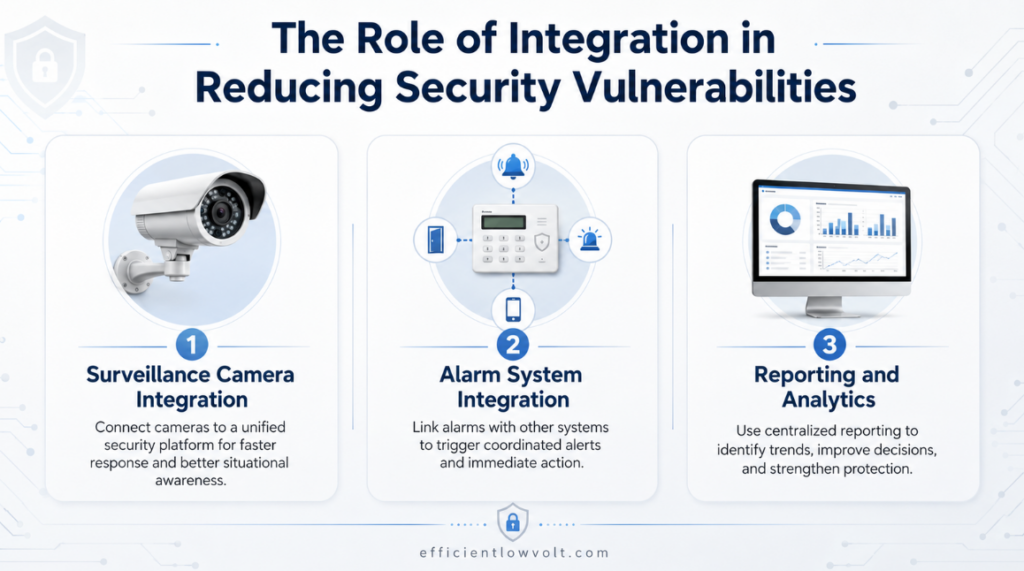
Access control systems become more effective when integrated with other security technologies.
1. Surveillance Camera Integration
Combining access control with video monitoring provides additional visibility.
Benefits include:
- Event verification
- Improved investigations
- Enhanced monitoring
- Increased accountability
Integration helps organizations identify and respond to security vulnerabilities more efficiently.
2. Alarm System Integration
Access control systems can work alongside intrusion detection systems.
This combination allows organizations to:
- Receive alerts
- Monitor unusual activity
- Automate responses
- Improve incident management
Integrated security environments create multiple layers of protection.
3. Reporting and Analytics
Modern systems generate valuable data.
Analytics may help identify:
- Frequent access attempts
- Unusual activity patterns
- Access violations
- Operational inefficiencies
These insights support ongoing efforts to reduce security vulnerabilities.
Importance of a Professional Security Assessment Before System Selection
A professional security assessment provides an objective evaluation of existing conditions and future security needs.
Experienced low-voltage security professionals understand how physical infrastructure, operational procedures, access control technologies, and surveillance systems work together. Their expertise helps identify hidden security vulnerabilities that may not be obvious during internal reviews.
Professional assessments typically evaluate:
- Building layout
- Entry points
- Existing security infrastructure
- User access requirements
- Regulatory considerations
- Future growth plans
This process helps ensure that selected access control systems align with actual risks rather than assumptions.
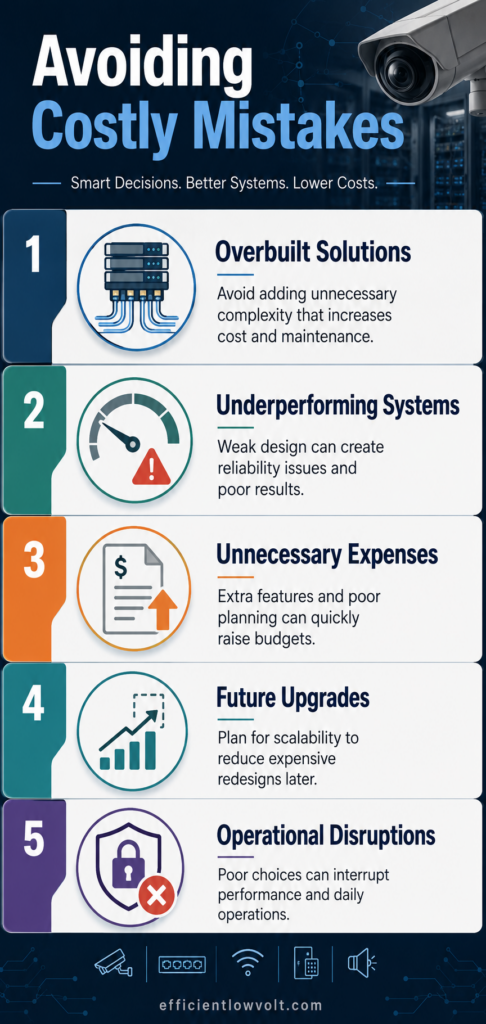
Avoiding Costly Mistakes
Choosing an access control system without understanding security vulnerabilities can lead to:
- Overbuilt solutions
- Underperforming systems
- Unnecessary expenses
- Future upgrades
- Operational disruptions
A professional evaluation helps organizations make informed decisions that support long-term security objectives.
Discover the Security Gaps Before They Become Serious Problems
Choosing an access control system should never begin with technology alone. The most effective security strategies start by identifying security vulnerabilities across facilities, operations, infrastructure, and daily procedures. Understanding these risks allows organizations to implement solutions that address actual threats while improving efficiency, accountability, and protection. By evaluating entry points, physical security conditions, human factors, and operational workflows, property owners can make smarter decisions about access control investments and long-term security planning.
Efficient LowVolt Solutions provides advanced protection solutions designed to help commercial and residential properties strengthen access management and overall security. From biometric access systems and keycard entry solutions to surveillance camera integration and scalable low-voltage security infrastructure, the team works closely with clients to implement technologies that align with their unique operational and protection requirements.