
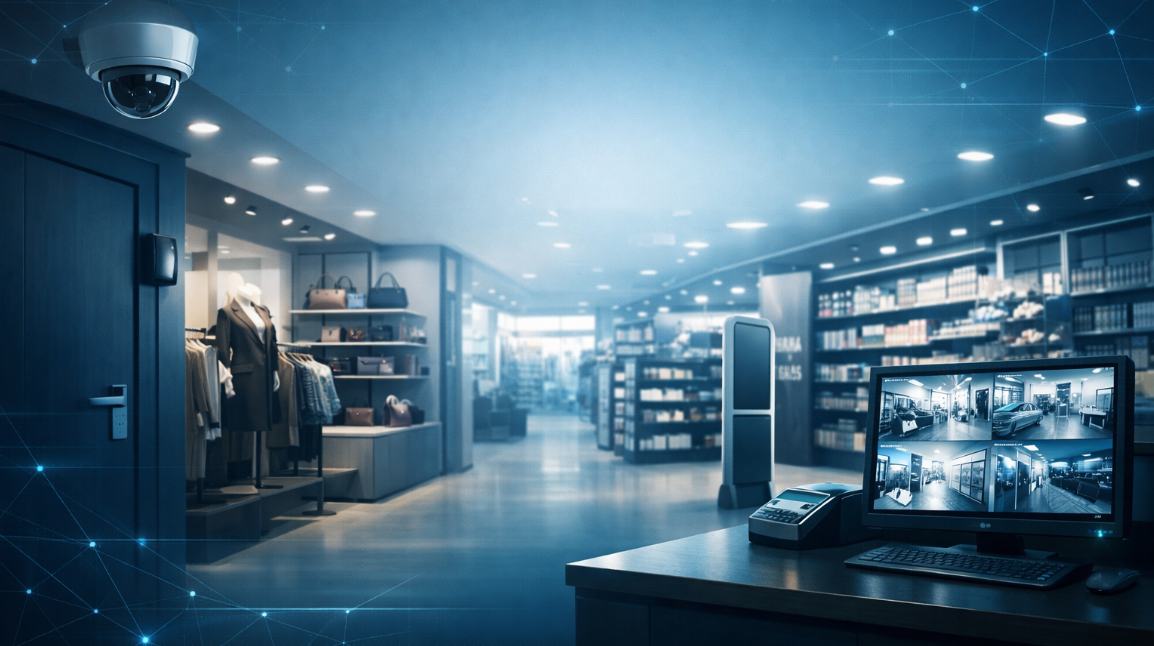
Retail businesses face a unique set of security challenges. From shoplifting and employee theft to unauthorized access and after-hours break-ins, store owners must constantly think about how to protect their merchandise, staff, and customers. Whether you operate a small boutique or manage a large retail chain, having the right security measures in place is essential for maintaining a safe and successful business.
Modern retail security systems go far beyond simple locks and alarms. Today’s solutions combine advanced surveillance technology, access control, and smart monitoring tools to create a comprehensive security strategy that protects every aspect of your store. Understanding how these systems work—and why they matter—can help business owners make informed decisions that reduce risk and improve overall store operations.
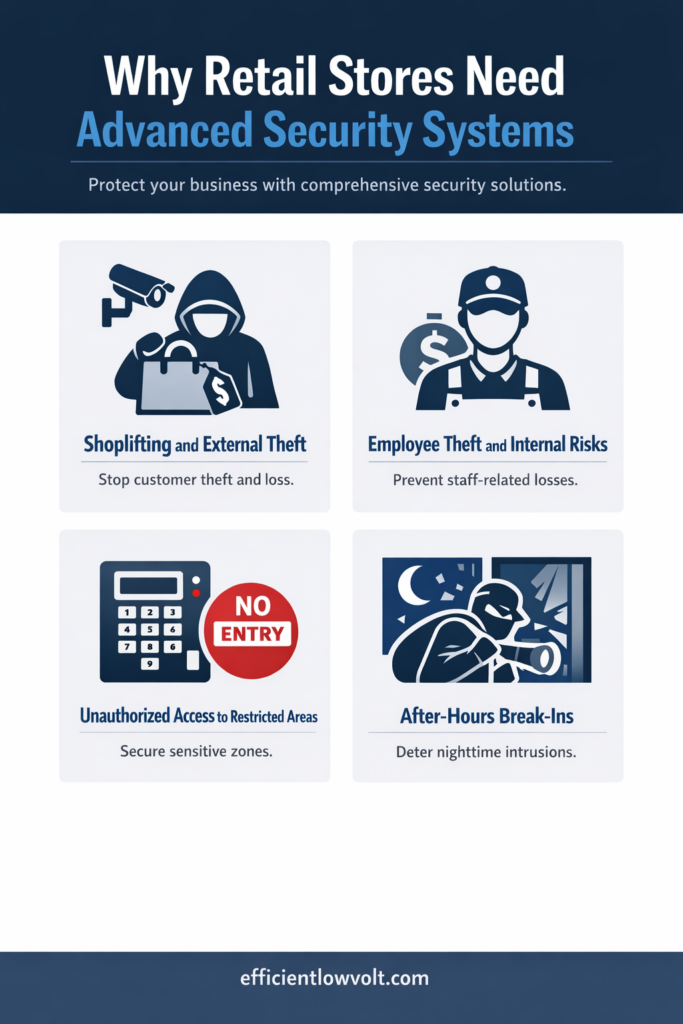
Why Retail Stores Need Advanced Security Systems

Retail stores are highly attractive targets for theft because they contain valuable merchandise and often have constant customer traffic. Without proper security measures, businesses may experience losses that impact profitability and long-term growth.
1. Shoplifting and External Theft
Shoplifting remains one of the most common challenges for retailers. Individuals may attempt to conceal merchandise or leave the store without paying. Over time, even small incidents can lead to significant financial losses.
Retail security systems help deter shoplifters by increasing visibility and accountability within the store. Surveillance cameras and monitoring systems make it clear that activity is being recorded, which discourages potential theft.
2. Employee Theft and Internal Risks
While external theft is a concern, internal theft can also affect retail businesses. Employees may have access to cash registers, inventory rooms, and sensitive areas, making it important to implement proper access control and monitoring.
Security systems help reduce internal risks by tracking activity and limiting access to authorized personnel. When employees know that systems are in place, they are more likely to follow proper procedures.
3. Unauthorized Access to Restricted Areas
Stockrooms, offices, and storage areas often contain valuable inventory or confidential information. Without access control systems, unauthorized individuals may enter these areas without permission.
Retail security solutions allow business owners to restrict entry using keycards, biometric scanners, or access codes. This ensures that only approved staff members can access sensitive areas.
4. After-Hours Break-Ins
Retail stores are especially vulnerable when the business is closed. Criminals may target locations during the night or early morning when there are fewer people around.
Security systems that include alarms, cameras, and remote monitoring can alert owners or security personnel if suspicious activity occurs after hours.
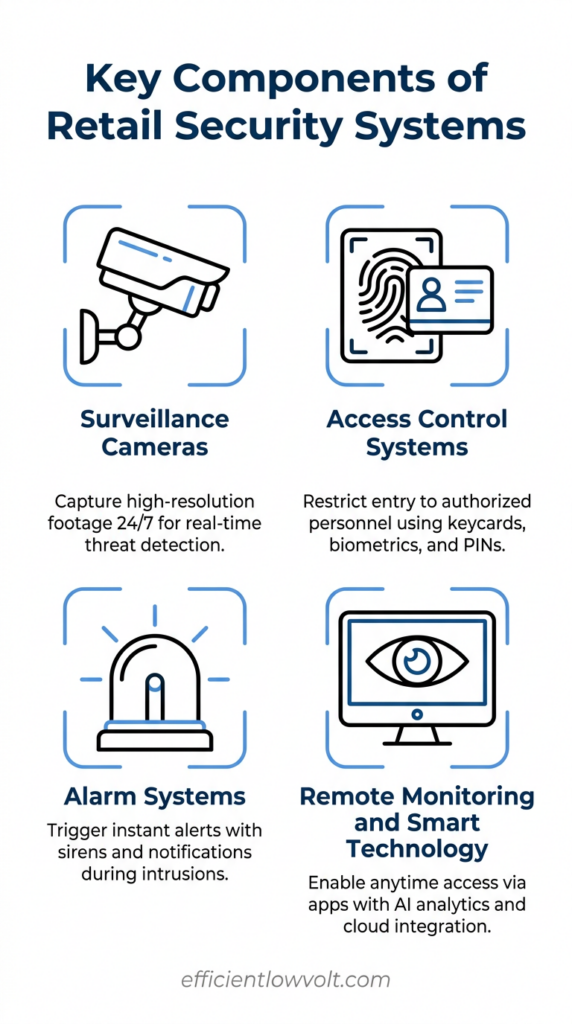
Key Components of Retail Security Systems
A comprehensive retail security system typically combines several technologies that work together to protect the store environment. These components create multiple layers of protection that reduce the chances of theft or unauthorized access.
Surveillance Cameras
Video surveillance is one of the most important elements of any retail security system. Cameras allow store owners to monitor activity in real time and review recorded footage if an incident occurs.
Common camera placements include:
- Store entrances and exits
- Checkout counters
- High-value merchandise displays
- Stockrooms and storage areas
- Parking lots and exterior areas
Modern surveillance systems often provide high-definition video and remote viewing capabilities, allowing business owners to monitor their stores from smartphones or computers.
Access Control Systems
Access control systems regulate who can enter specific areas of a retail store. Instead of relying solely on traditional keys, these systems use electronic methods to grant or restrict access.
Examples of access control technology include:
- Keycard or key fob entry systems
- Biometric authentication such as fingerprint scanners
- PIN code access panels
- Mobile-based access systems
By controlling access to restricted areas, retailers can better protect inventory, financial records, and employee workspaces.
Alarm Systems
Alarm systems provide an additional layer of security by alerting business owners or monitoring services when suspicious activity occurs. These systems can detect unauthorized entry, broken windows, or forced doors.
When an alarm is triggered, notifications can be sent immediately to the owner, security personnel, or local authorities. This rapid response helps prevent theft or property damage.
Remote Monitoring and Smart Technology
Many modern retail security systems include remote monitoring features that allow business owners to check on their stores from anywhere. Using a smartphone or computer, they can:
- View live camera feeds
- Review recorded footage
- Receive security alerts
- Monitor access logs
Smart technology provides convenience and peace of mind, especially for owners who manage multiple locations.
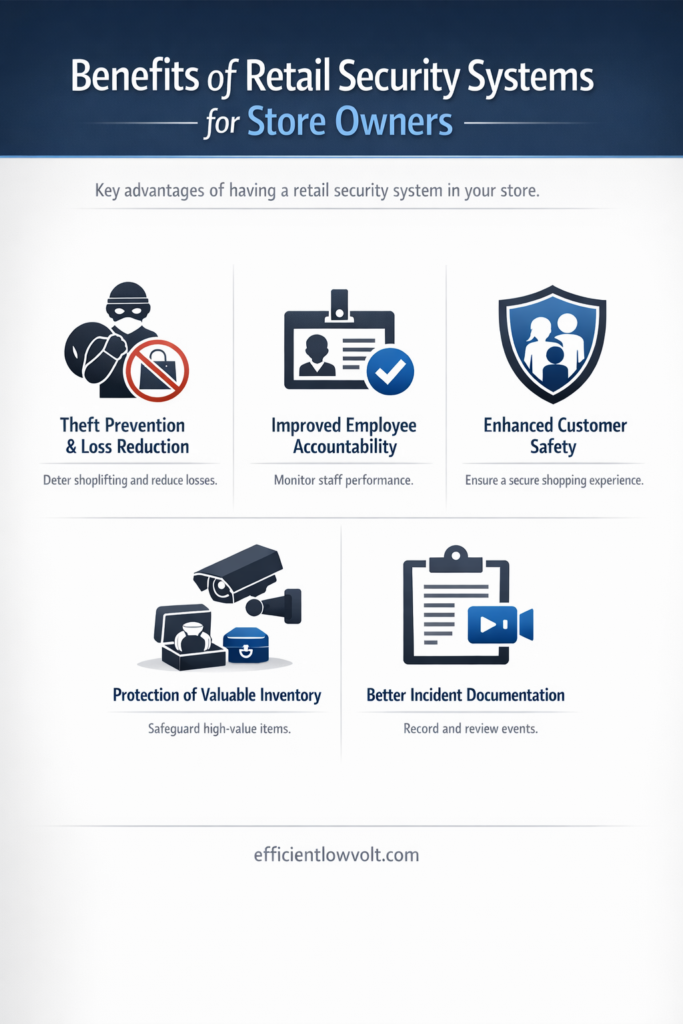
Benefits of Retail Security Systems for Store Owners
Implementing a reliable retail security system provides more than just protection against theft. It also improves operational efficiency and creates a safer environment for employees and customers.
1. Theft Prevention and Loss Reduction
Visible security systems discourage criminal activity. When individuals see cameras and controlled entry points, they are less likely to attempt theft. This helps reduce shrinkage and protect the store’s bottom line.
2. Improved Employee Accountability
Security systems encourage employees to follow company policies and procedures. Monitoring tools provide transparency and help managers ensure that operations are running smoothly.
3. Enhanced Customer Safety
Customers feel more comfortable shopping in environments where security measures are clearly in place. A safe and secure retail space helps build trust and improves the overall shopping experience.
4. Protection of Valuable Inventory
Retail stores often carry expensive or high-demand products. Security systems help protect these assets by monitoring displays, storage areas, and points of sale.
5. Better Incident Documentation
If a dispute or security incident occurs, recorded footage and access logs provide valuable documentation. This information can help resolve conflicts, support investigations, and provide evidence if needed.
Security Considerations for Small Retail Stores
Small retail businesses may assume that advanced security systems are only necessary for large corporations, but this is not the case. Smaller stores can also benefit greatly from implementing effective security solutions.
For small retailers, the focus is often on cost-effective systems that provide strong protection without unnecessary complexity.
Important considerations for small stores include:
- Installing surveillance cameras in key locations
- Using alarm systems for after-hours protection
- Securing storage areas with simple access control systems
- Monitoring entrances and exits
Even a modest security system can significantly reduce the risk of theft and improve store management.
Security Considerations for Large Retail Stores
Large retail stores, department stores, and multi-location businesses require more advanced security solutions. These environments often have larger inventories, more employees, and higher customer traffic.
Key security priorities for larger retailers include:
- Comprehensive surveillance coverage across large floor areas
- Integrated access control for multiple restricted zones
- Advanced monitoring systems with centralized management
- Scalable security infrastructure for multiple locations
Large retailers may also benefit from systems that integrate security data across several stores, allowing managers to oversee operations more efficiently.
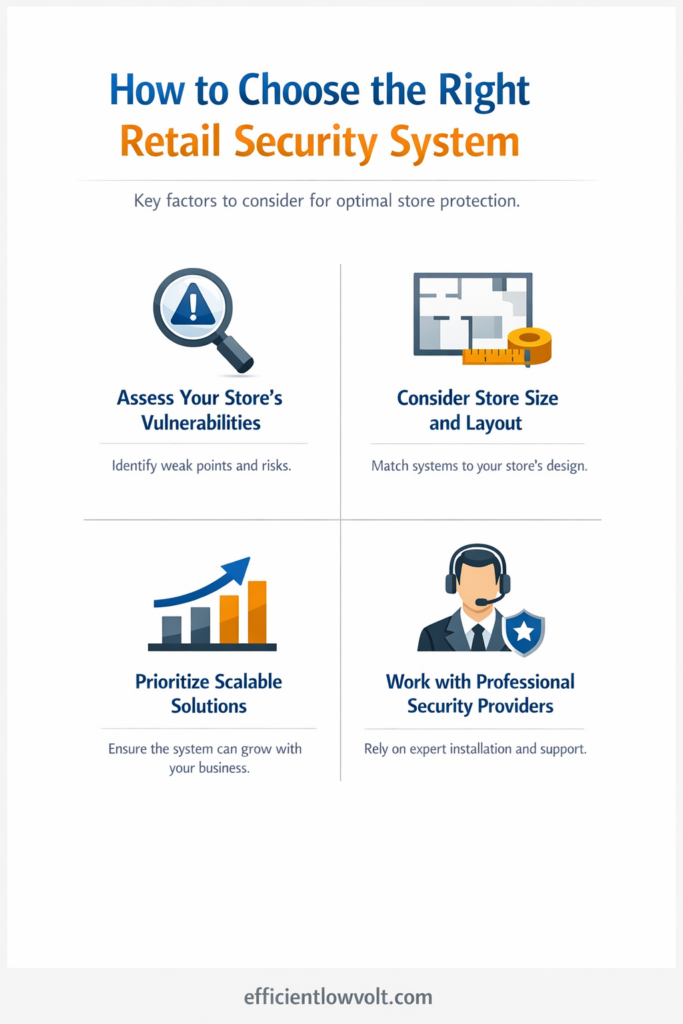
How to Choose the Right Retail Security System
Selecting the right retail security system depends on several factors, including store size, layout, and operational needs. Business owners should evaluate their specific security challenges before choosing a solution.
1. Assess Your Store’s Vulnerabilities
Start by identifying areas where theft or unauthorized access is most likely to occur. Common risk areas include entrances, checkout counters, and storage rooms.
Understanding these vulnerabilities helps determine where cameras, alarms, and access control systems should be installed.
2. Consider Store Size and Layout
A small retail shop may require only a few cameras and basic access control features, while larger stores may need extensive coverage and multiple security layers.
The layout of the store also influences camera placement and monitoring strategies.
3. Prioritize Scalable Solutions
As a retail business grows, security needs may change. Choosing scalable systems allows owners to expand their security infrastructure without replacing existing equipment.
Scalable solutions are particularly useful for businesses planning to open additional locations.
4. Work with Professional Security Providers
Professional security providers can assess your store’s environment and recommend solutions that meet your specific needs. Expert installation ensures that systems are configured correctly and provide maximum protection.
Working with experienced technicians also ensures that security systems remain reliable and up to date.
The Role of Integrated Security Solutions
Many modern retail businesses benefit from integrated security systems that combine surveillance, access control, and alarm monitoring into a single platform. Integration allows store owners to manage security operations more efficiently.
Benefits of integrated systems include:
- Centralized control of all security components
- Simplified monitoring and reporting
- Faster response to incidents
- Improved coordination between security technologies
An integrated approach helps create a comprehensive security strategy that protects every aspect of the retail environment.
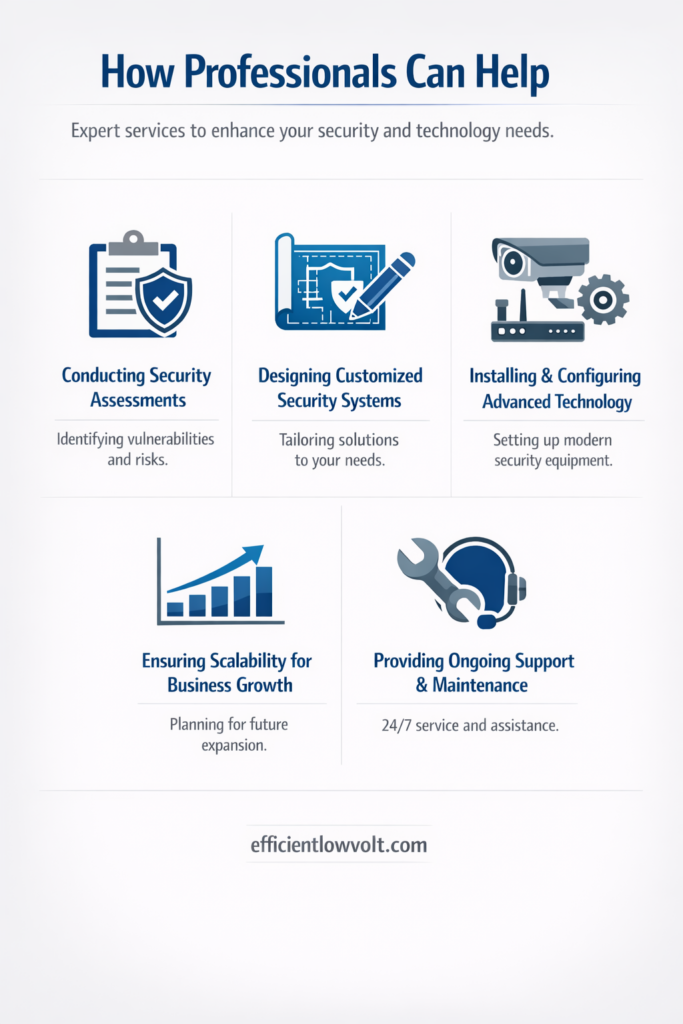
How Professionals Can Help
Implementing the right retail security system often requires expert guidance. Security professionals can assess your store, identify vulnerabilities, and design a solution that fits your unique needs.
They can help by:
1. Conducting Security Assessments
Experts evaluate entrances, exits, inventory areas, and high-traffic locations to determine where security equipment should be placed. Proper camera positioning and access control installation are essential for effective monitoring.
2. Designing Customized Security Systems
Every retail business operates differently. Security professionals design systems tailored to the specific needs of each store, ensuring that the technology supports daily operations without creating unnecessary complexity.
3. Installing and Configuring Advanced Technology
Professional installation ensures that surveillance cameras, access control systems, and alarms are set up correctly. This improves reliability and ensures that security systems function as intended.
4. Ensuring Scalability for Business Growth
As retail businesses expand, their security needs may evolve. Professionals can design scalable systems that allow additional cameras, access points, or monitoring tools to be added as the business grows.
5. Providing Ongoing Support and Maintenance
Security technology requires regular updates and maintenance to remain effective. Professional providers offer ongoing support to ensure that systems continue operating at optimal performance.
A Smarter Approach to Retail Security
Retail security systems are essential for protecting merchandise, employees, and customers in today’s fast-paced business environment. Whether you operate a small boutique or manage a large retail chain, implementing the right combination of surveillance cameras, access control systems, alarm monitoring, and integrated security tools can significantly reduce risks and improve operational efficiency.
This guide provides a helpful overview of how retail security systems work and why they matter for businesses of all sizes. However, choosing the right solution and implementing it effectively often requires the expertise of experienced professionals.
By partnering with a trusted security provider like Efficient Lowvolt Solutions, retail business owners can gain access to advanced Security & Access Control Solutions designed specifically for commercial environments. Their team works closely with businesses to assess security needs, design customized systems, and install scalable solutions that grow with your store.