
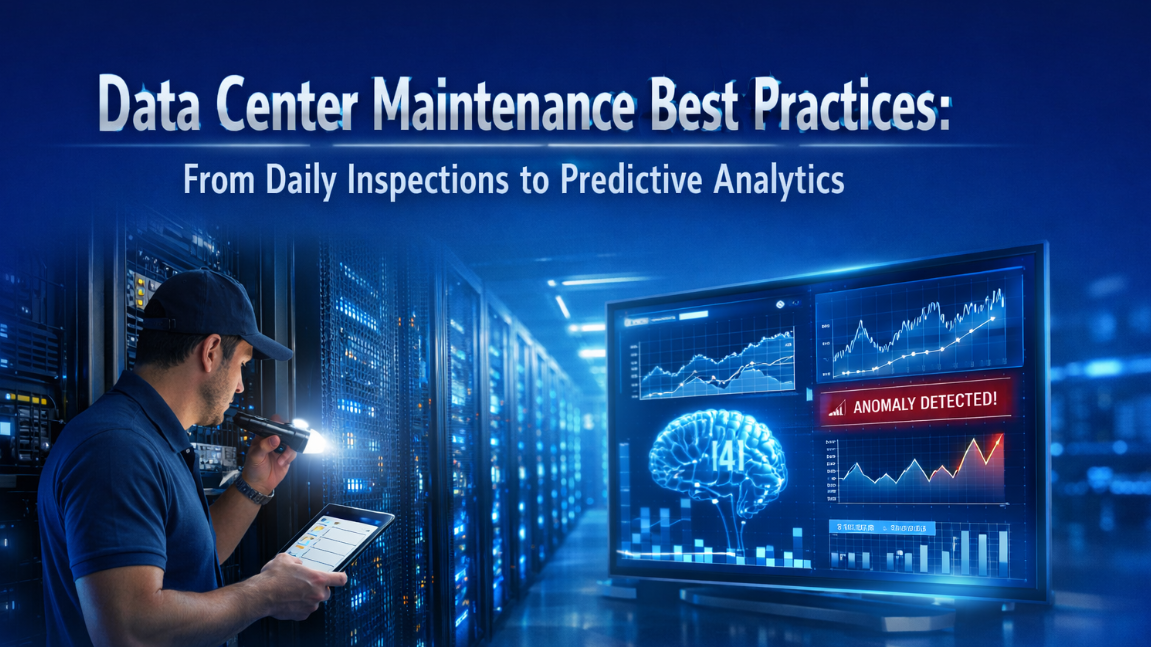
Reliable data center operations don’t happen by chance—they are the result of consistent maintenance, proactive monitoring, and strategic planning.
For businesses that rely on data centers to support critical operations, downtime is more than an inconvenience. It can lead to financial losses, operational disruptions, and reputational damage. As organizations increasingly depend on digital infrastructure, maintaining a resilient and efficient data center environment has become a top priority for business owners and IT leaders alike.
Effective maintenance goes beyond simply fixing issues when they arise. Modern data centers require structured maintenance routines, real-time monitoring, and advanced technologies such as predictive analytics to anticipate potential failures before they impact operations.
This guide explores data center maintenance best practices—from daily inspections to predictive maintenance strategies—to help business owners keep their infrastructure reliable, secure, and operating at peak performance.
Why Data Center Maintenance Is Critical for Business Continuity
Data centers support a wide range of critical business functions, including:
- Application hosting
- Data storage and backup
- Cloud services
- Security and surveillance systems
- Communication platforms
When these systems fail, the consequences can be severe.
Poorly maintained data centers may experience:
- Unexpected equipment failure
- Network interruptions
- Data loss
- Increased operational costs
- Reduced system performance
By implementing a structured maintenance plan, businesses can reduce risks, extend equipment lifespan, and maintain consistent service availability.
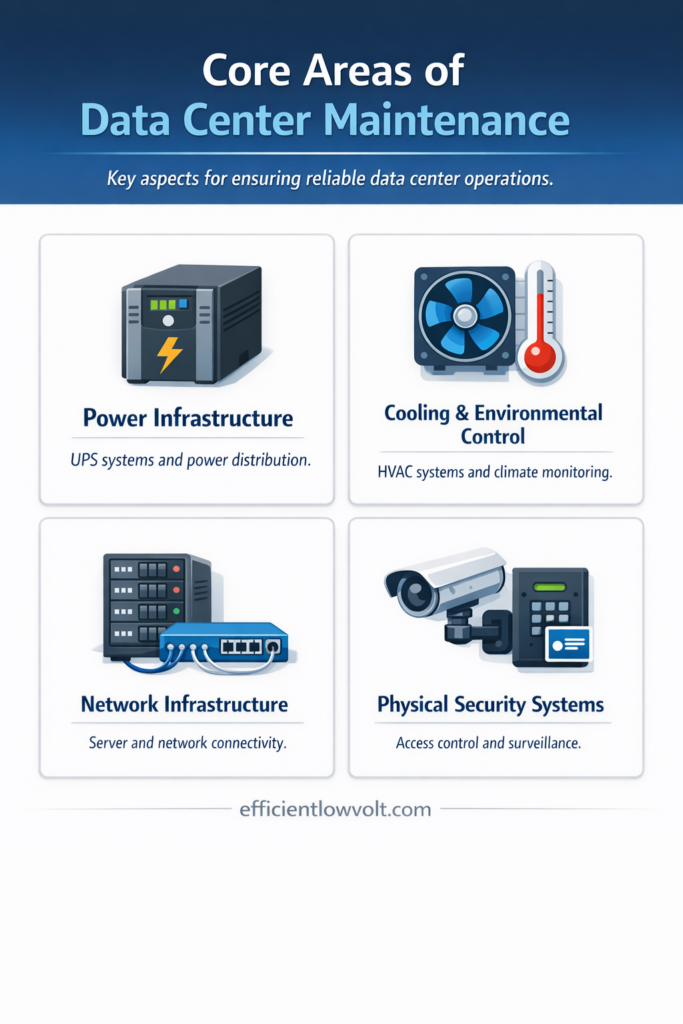
Core Areas of Data Center Maintenance

A comprehensive maintenance program should cover several key infrastructure components.
Power Infrastructure
Power systems are the backbone of every data center. Even brief interruptions can cause significant disruptions.
Critical power components include:
- Uninterruptible Power Supply (UPS) systems
- Power Distribution Units (PDUs)
- Backup generators
- Electrical panels and circuit breakers
Routine maintenance ensures these systems can handle sudden power fluctuations and outages.
Cooling and Environmental Control
Servers generate significant heat during operation. Without proper cooling, hardware components may overheat, leading to failures or performance degradation.
Cooling maintenance should include:
- Inspection of CRAC and CRAH units
- Airflow management within server racks
- Monitoring of temperature and humidity levels
- Cleaning filters and ventilation systems
Maintaining optimal environmental conditions helps protect hardware investments and maintain operational efficiency.
Network Infrastructure
Data center networks enable communication between servers, applications, and external users.
Maintenance tasks should focus on:
- Structured cabling inspections
- Switch and router performance checks
- Network redundancy verification
- Bandwidth monitoring
A well-maintained network infrastructure ensures consistent connectivity and minimal latency.
Physical Security Systems
Security is another essential aspect of data center maintenance.
Protective measures may include:
- Access control systems
- Surveillance cameras
- Biometric authentication systems
- Environmental monitoring sensors
Regular testing ensures these systems function correctly and prevent unauthorized access.
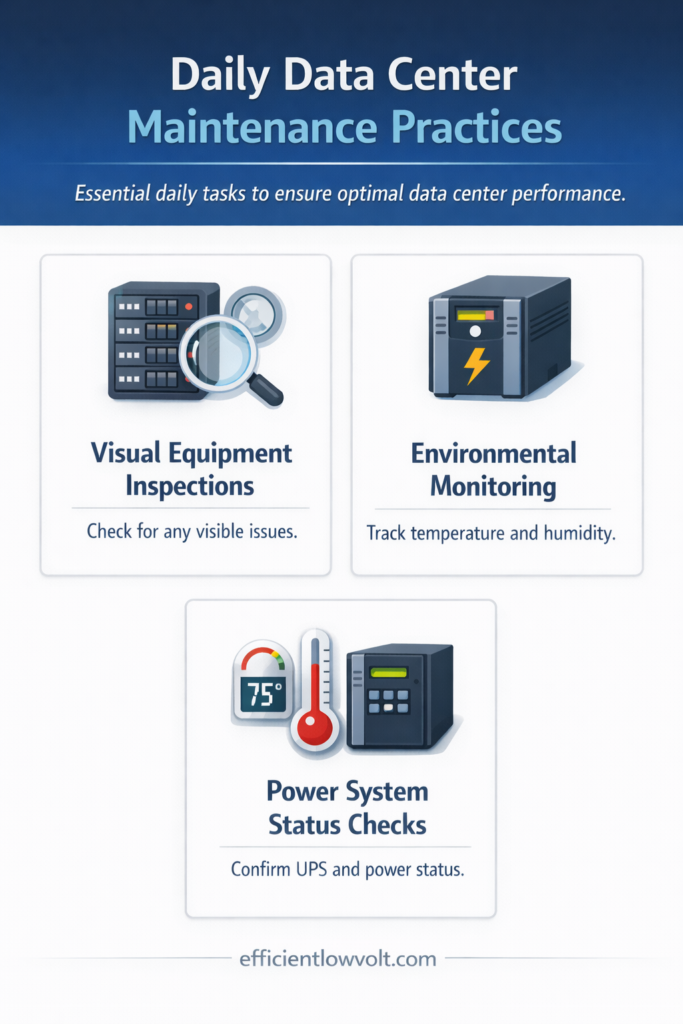
Daily Data Center Maintenance Practices
Daily maintenance activities play a crucial role in detecting potential issues early.
These routine checks may seem simple, but they help prevent small problems from escalating into major outages.
1. Visual Equipment Inspections
Technicians should perform quick visual inspections of critical equipment each day.
Look for:
- Warning lights on servers or network equipment
- Unusual sounds from cooling systems
- Loose cables or damaged connectors
- Signs of overheating
Even minor irregularities may indicate larger underlying problems.
2. Environmental Monitoring
Maintaining stable environmental conditions is vital for data center reliability.
Daily monitoring should include:
- Temperature readings across server racks
- Humidity levels
- Airflow patterns
- Detection of potential hot spots
Many modern data centers use automated monitoring tools that alert technicians when conditions exceed acceptable thresholds.
3. Power System Status Checks
Daily checks should verify that power systems remain stable and operational.
This includes reviewing:
- UPS battery status
- Generator readiness
- Power load distribution
- Electrical alarms or fault notifications
These quick checks help ensure that backup systems will function properly in the event of a power disruption.
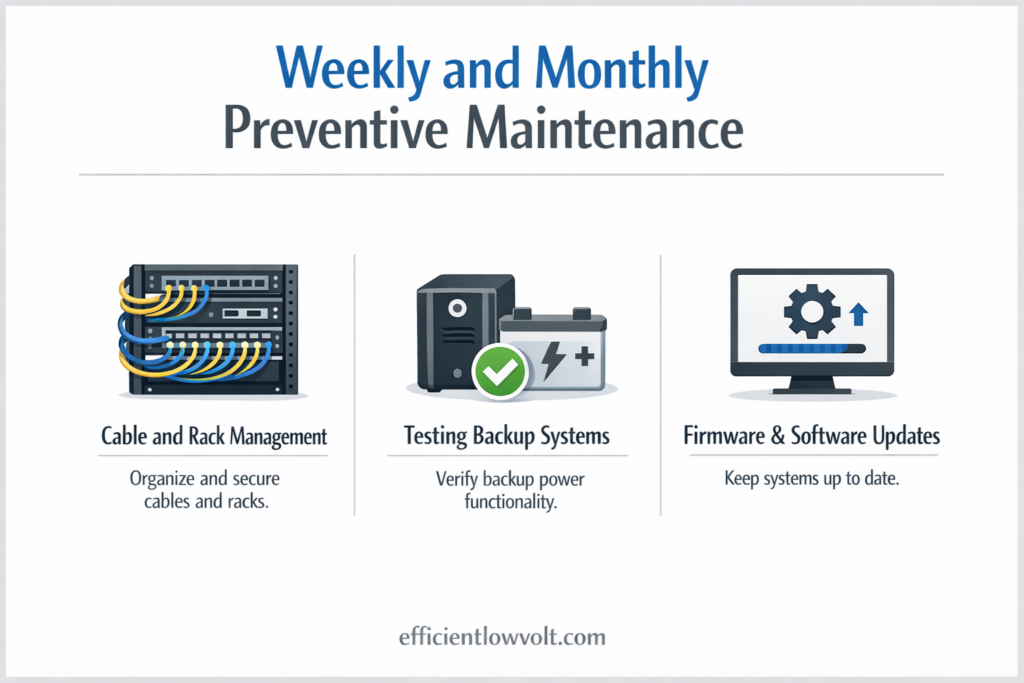
Weekly and Monthly Preventive Maintenance
While daily checks focus on immediate operational health, weekly and monthly maintenance tasks provide deeper system validation.
1. Cable and Rack Management
Organized cabling helps prevent network issues and simplifies troubleshooting.
Best practices include:
- Verifying cable labeling and documentation
- Securing loose cables
- Ensuring proper airflow around racks
- Removing unused or obsolete connections
Proper cable management also improves airflow efficiency, which supports cooling performance.
2. Testing Backup Systems
Backup systems must be ready to perform at any moment.
Routine testing should include:
- Generator startup tests
- UPS failover simulations
- Power transfer switch verification
These tests ensure that emergency systems operate correctly when needed.
3. Firmware and Software Updates
Outdated firmware can introduce security vulnerabilities and performance issues.
Maintenance teams should regularly update:
- Server firmware
- Network switch software
- Security systems
- Monitoring tools
Updates should be carefully scheduled to avoid operational disruptions.
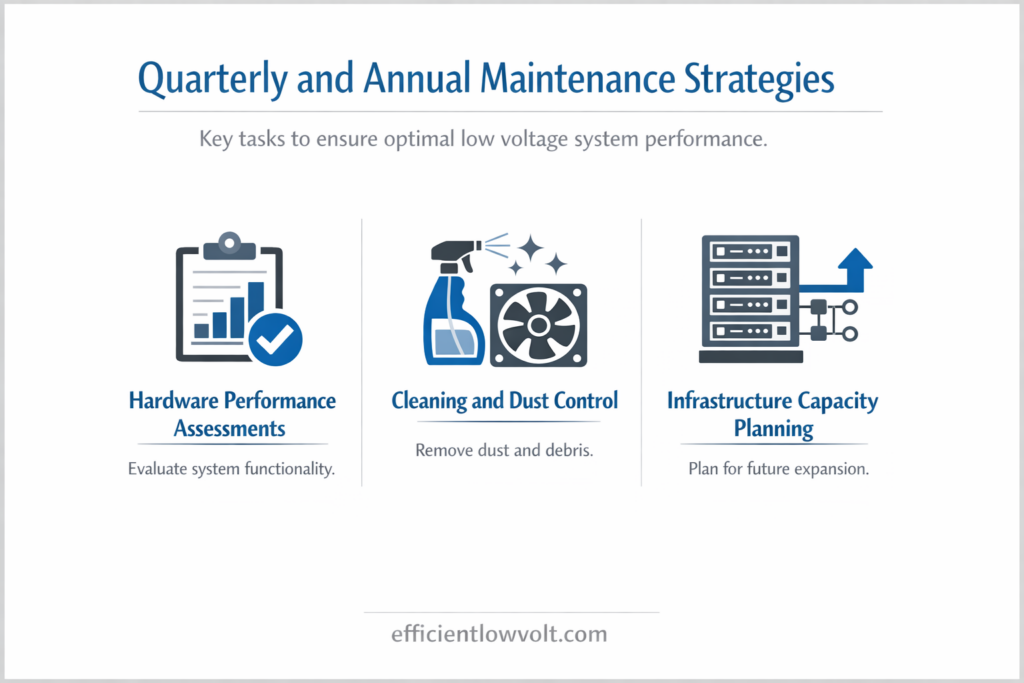
Quarterly and Annual Maintenance Strategies
Long-term maintenance activities focus on deep inspections, system optimization, and hardware lifecycle management.
1. Hardware Performance Assessments
Over time, hardware components naturally degrade.
Quarterly inspections should evaluate:
- Disk health and storage performance
- Processor and memory utilization
- Network throughput capacity
- Cooling system efficiency
This helps identify aging equipment that may require replacement.
2. Cleaning and Dust Control
Dust accumulation is a common but often overlooked risk in data centers.
Maintenance teams should:
- Clean air filters and vents
- Inspect raised floor areas
- Remove dust buildup from server components
- Verify that airflow pathways remain unobstructed
Even small dust particles can restrict airflow and lead to overheating.
3. Infrastructure Capacity Planning
Business growth often increases demand on data center infrastructure.
Annual planning should evaluate:
- Storage capacity needs
- Network bandwidth requirements
- Power and cooling expansion
- Rack space utilization
This proactive planning prevents capacity shortages that could disrupt operations.
The Role of Monitoring Systems in Data Center Maintenance
Modern data centers rely heavily on monitoring technologies to maintain operational visibility.
Monitoring systems provide real-time insights into infrastructure performance.
Common monitoring capabilities include:
- Power consumption tracking
- Temperature and humidity sensors
- Network traffic analysis
- Equipment health diagnostics
These systems allow IT teams to detect abnormalities early and take corrective action quickly.
Real-time monitoring also enables automated alerts, ensuring that maintenance teams can respond immediately when issues arise.
Moving Beyond Preventive Maintenance with Predictive Analytics
Traditional maintenance models rely on scheduled inspections and routine servicing.
However, emerging technologies now allow organizations to adopt predictive maintenance strategies that anticipate failures before they occur.
What Is Predictive Maintenance?
Predictive maintenance uses data analysis, sensors, and machine learning algorithms to identify patterns that signal potential equipment failures.
Instead of waiting for systems to break or relying solely on scheduled servicing, predictive maintenance enables businesses to repair components only when necessary—before they fail.
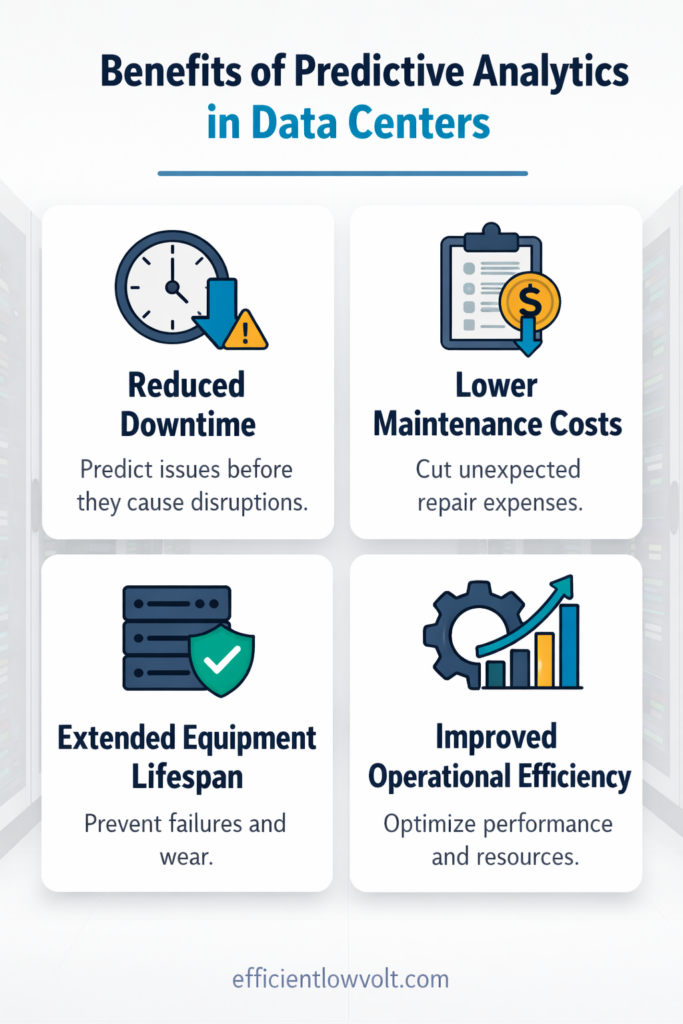
Benefits of Predictive Analytics in Data Centers
Adopting predictive maintenance strategies can offer several advantages.
1. Reduced Downtime
Predictive tools identify early warning signs of hardware issues, allowing technicians to resolve problems before they disrupt operations.
2. Lower Maintenance Costs
By focusing maintenance efforts where they are needed most, businesses can reduce unnecessary servicing and equipment replacement.
3. Extended Equipment Lifespan
Proactive maintenance prevents excessive wear and stress on infrastructure components.
4. Improved Operational Efficiency
Data-driven insights help IT teams make smarter decisions about infrastructure management.
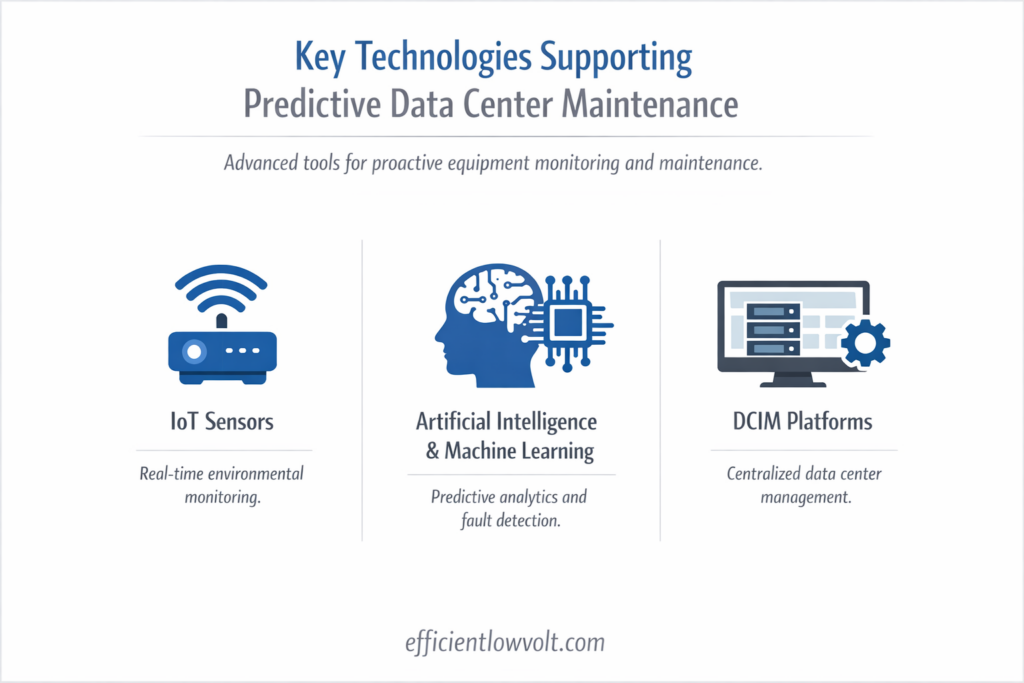
Key Technologies Supporting Predictive Data Center Maintenance
Several technologies support predictive maintenance initiatives.
IoT Sensors
Internet of Things (IoT) sensors collect real-time data from equipment across the data center.
These sensors monitor:
- Temperature fluctuations
- Power consumption
- Vibration levels
- Environmental conditions
Continuous data collection allows organizations to detect abnormalities before failures occur.
Artificial Intelligence and Machine Learning
AI-powered analytics platforms process massive volumes of operational data.
Machine learning algorithms can:
- Identify performance trends
- Predict component failure timelines
- Detect anomalies in system behavior
These insights allow IT teams to take proactive maintenance actions.
Data Center Infrastructure Management (DCIM) Platforms
DCIM platforms provide centralized visibility across the entire data center environment.
They allow teams to:
- Track equipment performance
- Monitor capacity utilization
- Analyze energy efficiency
- Manage maintenance schedules
When integrated with predictive analytics, DCIM systems provide powerful insights for long-term infrastructure management.
Building a Data Center Maintenance Plan
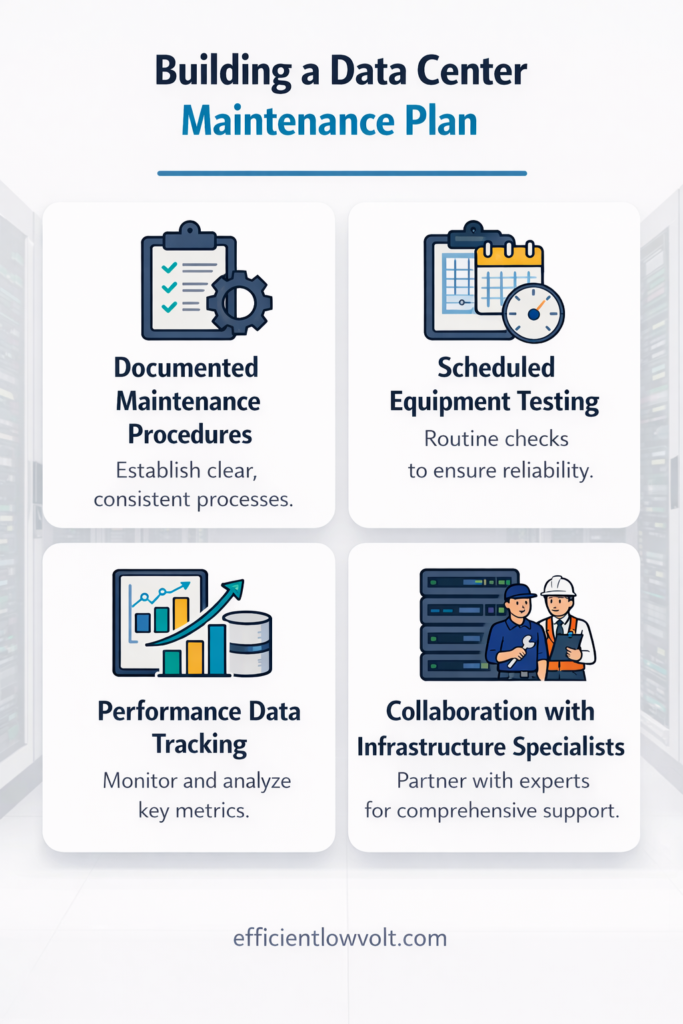
To maximize reliability, businesses should develop a structured maintenance framework that includes both routine procedures and advanced monitoring strategies.
A comprehensive maintenance plan should include:
1. Documented Maintenance Procedures
Clear documentation ensures consistency in maintenance activities.
Maintenance plans should outline:
- Daily, weekly, and monthly tasks
- Equipment inspection checklists
- Emergency response procedures
2. Scheduled Equipment Testing
Regular testing verifies that critical systems remain operational.
Testing schedules may include:
- Power failover drills
- Cooling system stress tests
- Network redundancy validation
3. Performance Data Tracking
Tracking operational data helps teams identify patterns and trends over time.
Key metrics to monitor include:
- Energy consumption
- Equipment temperature levels
- Network latency
- System uptime statistics
4. Collaboration with Infrastructure Specialists
Working with experienced infrastructure professionals helps businesses implement advanced maintenance strategies while ensuring compliance with industry standards.
Professional partners can also assist with:
- Infrastructure assessments
- system upgrades
- monitoring solutions
- long-term maintenance planning
Common Data Center Maintenance Mistakes to Avoid
Even well-managed data centers can encounter challenges if maintenance practices are inconsistent.
Common mistakes include:
- Ignoring small warning signs from equipment
- Delaying firmware or security updates
- Overloading power circuits or racks
- Poor cable management practices
- Inadequate environmental monitoring
Addressing these issues early helps maintain system reliability and reduces the risk of unexpected failures.
Building a Resilient Data Center Through Proactive Maintenance
Maintaining a reliable data center requires more than occasional inspections—it demands a comprehensive and proactive maintenance strategy.
By combining daily operational checks, scheduled preventive maintenance, and advanced predictive analytics, businesses can significantly reduce downtime risks while improving system performance and longevity.
However, implementing these best practices effectively often requires specialized expertise and infrastructure support.
That’s where partnering with experienced professionals becomes essential.
While the steps above provide a clear roadmap for improving data center maintenance, working with a trusted infrastructure solutions provider can make the process more efficient and scalable.
At Efficient Lowvolt Solutions, we help businesses strengthen their data center environments through advanced infrastructure support, including network systems, power management, monitoring solutions, and security technologies designed to keep mission-critical operations running smoothly.
If your organization is looking to improve data center reliability, enhance infrastructure performance, and minimize downtime risks, our team is ready to help.
Contact Efficient Lowvolt Solutions today to learn how professional data center infrastructure support can help safeguard your operations and support your long-term business growth.