
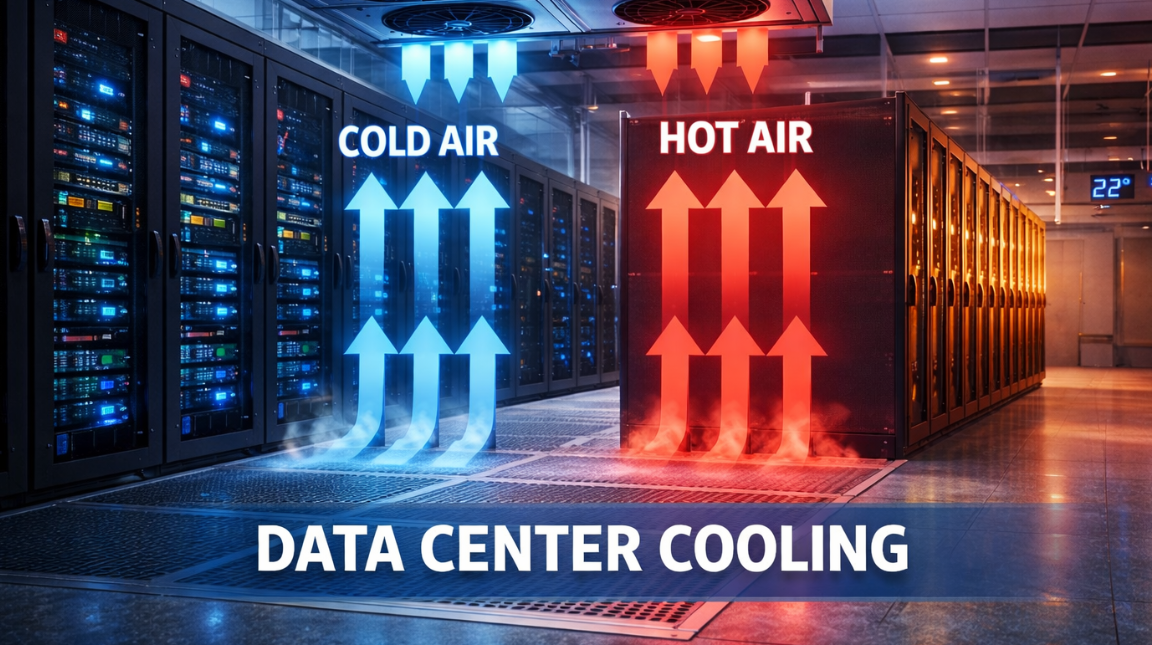
In today’s digital era, businesses rely heavily on data centers to manage, store, and process critical information. These high-performance environments house servers, storage systems, and networking equipment that operate around the clock. While much attention is often given to the hardware and software within these facilities, one crucial component that directly affects performance, reliability, and energy efficiency is data center cooling. Proper cooling ensures that servers and other IT infrastructure maintain optimal operating temperatures, preventing equipment failure, reducing energy consumption, and safeguarding business continuity.
This article explores the importance of data center cooling, the challenges associated with it, common cooling solutions, and best practices for maintaining a reliable IT environment.
Why Data Center Cooling Matters
Data centers generate substantial amounts of heat due to densely packed servers and continuous computational activity. Without effective cooling systems, equipment temperatures can quickly exceed safe operating limits. Overheating not only reduces the lifespan of servers and storage devices but also increases the risk of system downtime, which can have costly consequences for businesses.
Some of the key risks associated with inadequate data center cooling include:
- Equipment Overheating: Servers that operate above recommended temperatures are prone to failure, which can result in unexpected downtime.
- Reduced Hardware Lifespan: Persistent high temperatures accelerate wear and tear on components, requiring more frequent replacements and increasing operational costs.
- Increased Energy Costs: Inefficient cooling systems may consume excessive energy while failing to maintain consistent temperatures, leading to higher utility bills.
- Data Loss or Corruption: Overheated systems may malfunction, compromising critical data integrity and causing business disruptions.
By implementing proper cooling strategies, organizations can mitigate these risks and maintain a stable and secure IT infrastructure.
Signs Your Data Center May Be Overheating
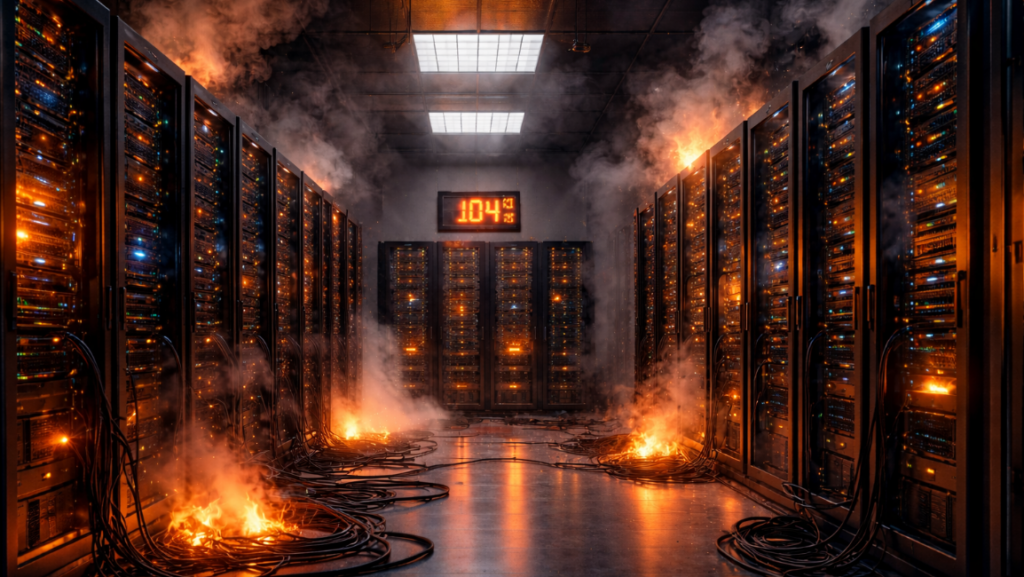
Even a well-designed data center can experience cooling issues if not monitored properly. Recognizing the early signs of overheating is crucial to prevent equipment failure, downtime, and costly repairs. Some common indicators include:
- Frequent System Crashes or Slowdowns: Overheated servers may throttle performance or shut down unexpectedly to prevent damage, impacting business operations.
- Unusual Fan Activity: Loud or constantly running server fans often indicate that systems are struggling to maintain optimal temperatures.
- Temperature Spikes in Server Racks: Uneven cooling or hot spots can cause certain racks to become significantly warmer than others, putting hardware at risk.
- Rising Energy Costs: Inefficient cooling systems often consume excessive energy, which can be a sign that the environment is working harder to compensate for overheating issues.
- Hardware Failure: Premature component failure or increased maintenance needs can indicate chronic thermal stress on servers and storage devices.
Proactively monitoring temperature and environmental conditions, along with performing regular maintenance, can help identify these signs early. Businesses that respond promptly can prevent downtime, prolong equipment life, and maintain consistent IT performance.
Common Data Center Cooling Challenges
Managing temperature and airflow within a data center presents several unique challenges. Understanding these obstacles is essential for developing effective cooling solutions.
- High-Density Server Racks: Modern data centers often house high-density racks with numerous servers in a compact space. Concentrated heat in these areas, known as “hot spots,” can cause uneven temperature distribution if not properly managed.
- Large Facility Size: In expansive facilities, cooling efficiency may vary across different zones. Ensuring consistent airflow and temperature regulation throughout the entire data center is a critical concern.
- Balancing Energy Efficiency and Performance: While maintaining proper cooling is vital, energy efficiency must also be considered. Overcooling can waste electricity and increase operational costs, whereas undercooling jeopardizes system reliability.
- Integration with Existing Infrastructure: Retrofitting cooling solutions into an existing data center can be complex. Compatibility with current equipment and minimizing operational disruption are significant factors to address.
These challenges highlight why businesses should prioritize professional planning and installation when designing data center cooling systems.
Types of Data Center Cooling Solutions
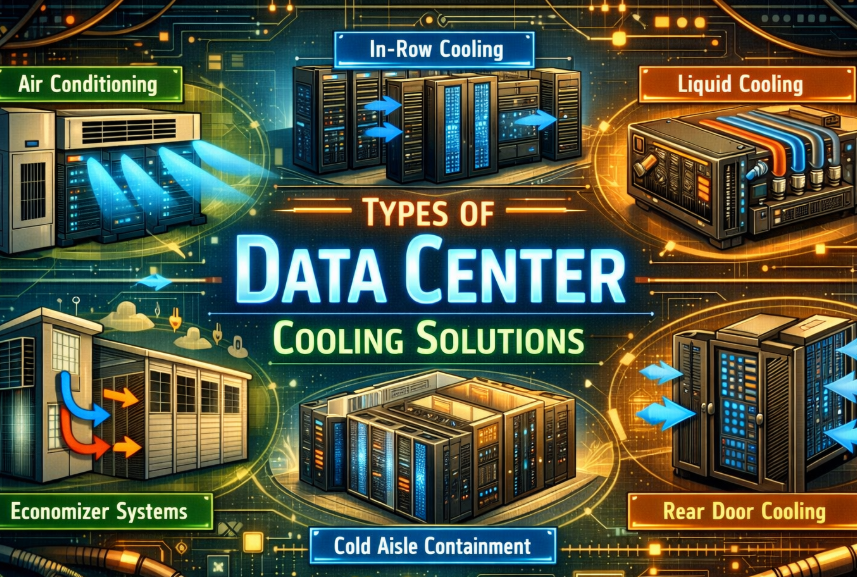
There are several cooling strategies employed in modern data centers, each with its advantages depending on facility size, server density, and energy goals.
1. Air-Based Cooling
Air-based systems remain the most widely used solution in data centers. Common methods include:
- Computer Room Air Conditioning (CRAC) Units: These specialized air conditioners maintain consistent temperature and humidity levels.
- Hot and Cold Aisle Containment: By separating hot and cold airflow paths, this method improves cooling efficiency and reduces energy waste.
- Raised Floor Systems: Cool air is delivered through perforated tiles to maintain even distribution and prevent hot spots.
2. Liquid Cooling
Liquid cooling has emerged as an efficient alternative to traditional air-based methods, particularly for high-density environments. This approach uses liquid to transfer heat away from critical components. Techniques include:
- Direct-to-Chip Cooling: Coolant is circulated directly to servers, providing targeted heat removal.
- Immersion Cooling: Entire servers are submerged in a non-conductive liquid, offering highly efficient temperature control and reduced energy consumption.
3. Hybrid Solutions
Some facilities adopt hybrid approaches, combining air and liquid cooling systems to balance efficiency, performance, and cost. Hybrid systems can be particularly effective for facilities with variable workloads or high-density racks.
Implementing the right cooling solution depends on the specific needs of the data center, including equipment layout, energy objectives, and operational requirements.
Emerging Trends in Data Center Cooling Technology
As data center demands grow, businesses are adopting innovative cooling solutions to improve efficiency, reliability, and sustainability. Some emerging trends include:
- AI-Driven Cooling Systems: Artificial intelligence algorithms analyze real-time environmental data to optimize airflow, fan speeds, and cooling unit operation. This reduces energy consumption while maintaining ideal temperatures.
- Liquid Immersion Cooling: Servers are submerged in non-conductive liquid to dissipate heat more efficiently than traditional air-based methods, offering higher energy efficiency and lower noise levels.
- IoT-Based Monitoring and Control: Internet of Things (IoT) sensors provide real-time temperature, humidity, and airflow data, allowing for predictive maintenance and faster response to potential issues.
- Sustainable Cooling Solutions: Innovative strategies, such as using outside air for free cooling or employing advanced chillers with lower energy consumption, help data centers reduce their environmental footprint.
- High-Density Rack Optimization: Cooling solutions are being designed specifically for high-density server racks, ensuring hot spots are minimized and airflow is managed effectively.
By staying abreast of these trends, organizations can implement cutting-edge cooling solutions that enhance performance, reduce operational costs, and support long-term scalability. Efficient Lowvolt Solutions specializes in incorporating these advanced technologies into custom data center cooling systems to meet each client’s unique requirements.
Benefits of Proper Data Center Cooling
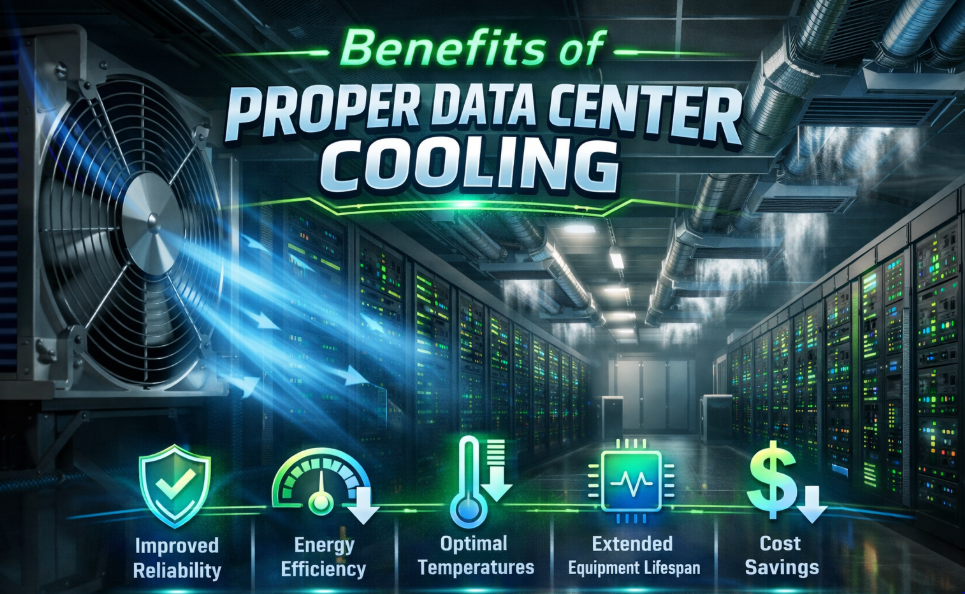
Effective data center cooling provides numerous advantages, both operational and financial:
- Enhanced Reliability and Uptime: Maintaining optimal temperatures ensures servers and storage devices operate without interruption, minimizing downtime risks.
- Reduced Energy Costs: Modern cooling systems are designed to maximize efficiency, lowering overall energy consumption.
- Prolonged Hardware Life: Proper thermal management reduces wear on components, extending their operational lifespan and reducing replacement costs.
- Improved Performance and Efficiency: Servers operating within ideal temperature ranges perform optimally, supporting faster processing and smoother operations.
Businesses that invest in reliable cooling infrastructure can safeguard their IT environment while optimizing operational expenses and performance.
Why Professional Installation Matters
While some organizations attempt to manage data center cooling in-house, professional installation and maintenance offer significant advantages:
- Expert Planning: Specialists assess the facility, design airflow patterns, and recommend cooling methods tailored to the data center’s requirements.
- Optimized Installation: Proper setup of CRAC units, airflow containment systems, and liquid cooling solutions ensures maximum efficiency.
- Ongoing Support: Professionals provide monitoring, preventive maintenance, and troubleshooting to sustain optimal performance.
Efficient Lowvolt Solutions specializes in customized data center cooling systems that align with business goals, ensuring reliability, security, and energy efficiency. Their expert teams design, install, and optimize cooling solutions to prevent downtime, reduce operational costs, and support long-term scalability.
Best Practices for Ongoing Cooling Efficiency
Even after professional installation, maintaining effective data center cooling requires continuous attention. Best practices include:
- Regular Maintenance and Monitoring: Frequent inspections, cleaning, and performance checks ensure that cooling systems operate efficiently.
- Temperature and Humidity Control: Monitoring environmental conditions helps prevent fluctuations that can stress equipment.
- Redundant Systems: Backup cooling solutions protect critical operations in the event of equipment failure.
- Energy Efficiency Measures: Implementing airflow optimization, variable speed fans, and energy-efficient cooling units reduces electricity consumption without compromising reliability.
By adhering to these practices, organizations can maintain a stable IT environment, extend equipment lifespan, and minimize operational disruptions.
Wrapping Up
Data center cooling is more than just a supportive system—it is a critical component of a reliable, high-performing IT infrastructure. Overheating, equipment failure, and energy inefficiency can jeopardize business operations, making professional planning and implementation essential.
Organizations that invest in proper cooling solutions benefit from enhanced system reliability, energy savings, and prolonged hardware life. For businesses seeking expert guidance, Efficient Lowvolt Solutions delivers comprehensive data center solutions, including assessment, design, installation, and ongoing optimization.
Ensure your data center operates at peak performance while safeguarding your critical IT assets. Contact Efficient Lowvolt Solutions today for tailored cooling solutions that support reliable, efficient, and secure IT operations.