
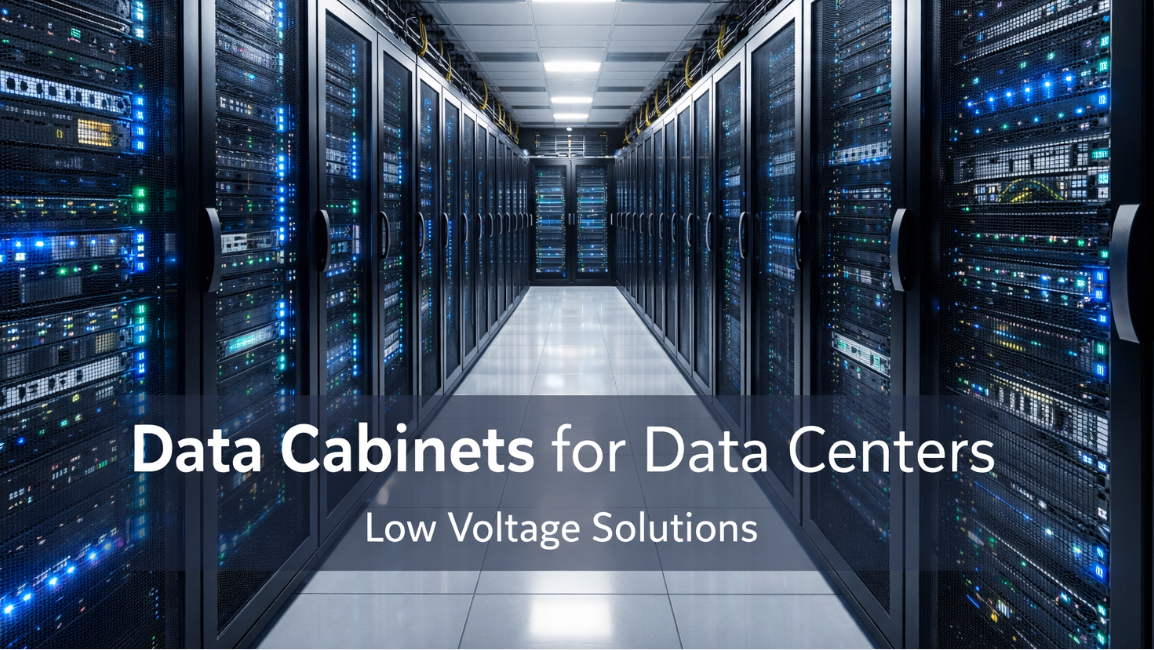
Building and maintaining a high-performance data center requires more than powerful servers and advanced networking equipment. The physical infrastructure supporting that technology—especially data cabinets—plays a critical role in ensuring reliability, efficiency, scalability, and security.
For IT managers, data center planners, and infrastructure decision-makers, selecting the right data cabinets is a strategic decision that directly impacts uptime, cooling performance, cable management, and long-term growth. In this guide, we’ll explore how to choose the right data cabinets for high-performance data centers and why professional planning makes all the difference.
What Are Data Cabinets and Why Do They Matter
Data cabinets—also known as server cabinets or network cabinets—are enclosed or open-frame structures designed to house IT equipment such as servers, switches, patch panels, and power distribution units (PDUs). While they may appear to be simple storage enclosures, their design and configuration significantly influence overall data center performance.
High-quality data cabinets help:
- Protect sensitive equipment from dust, damage, and unauthorized access
- Manage airflow to prevent overheating
- Support structured cabling and reduce congestion
- Optimize space utilization within server rooms
- Enable scalable infrastructure expansion
In high-performance environments, poor cabinet selection can lead to overheating, inefficient cable routing, and unnecessary downtime. That’s why data cabinets are foundational to any well-designed data center infrastructure.
Challenges in High-Performance Data Centers
Modern data centers face increasing demands. As businesses rely more heavily on cloud services, real-time applications, and high-density computing, infrastructure must be engineered to handle significant workloads.
Here are the primary challenges that data cabinets must address:
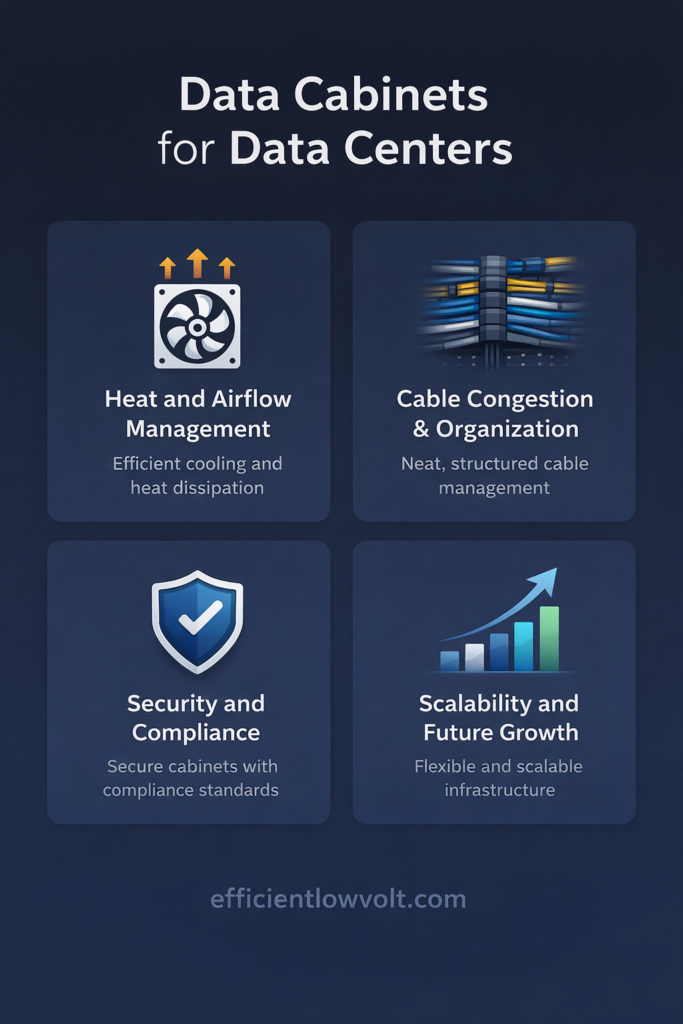
1. Heat and Airflow Management
High-density servers generate substantial heat. Without proper airflow design, hotspots can develop, leading to reduced hardware lifespan and potential system failures. Cabinets with perforated doors, optimized ventilation, and compatibility with hot aisle/cold aisle containment strategies are essential in maintaining thermal efficiency.
2. Cable Congestion and Organization
Improper cable management is a leading cause of troubleshooting delays and airflow obstruction. Overcrowded or tangled cables restrict airflow, complicate maintenance, and increase the risk of accidental disconnections. Data cabinets should support vertical and horizontal cable managers to maintain order and accessibility.
3. Security and Compliance
Physical security is a growing concern, especially in facilities that house sensitive corporate or client data. Lockable cabinet doors, access control integration, and monitoring capabilities help ensure compliance and protect valuable IT assets.
4. Scalability and Future Growth
Infrastructure must be designed with expansion in mind. Businesses rarely remain static. Selecting cabinets that support additional equipment, higher load capacities, and modular upgrades prevents costly redesigns later.
Types of Data Cabinets for Data Centers
Not all data cabinets are built the same. Choosing the right type depends on your facility size, security requirements, and performance goals.
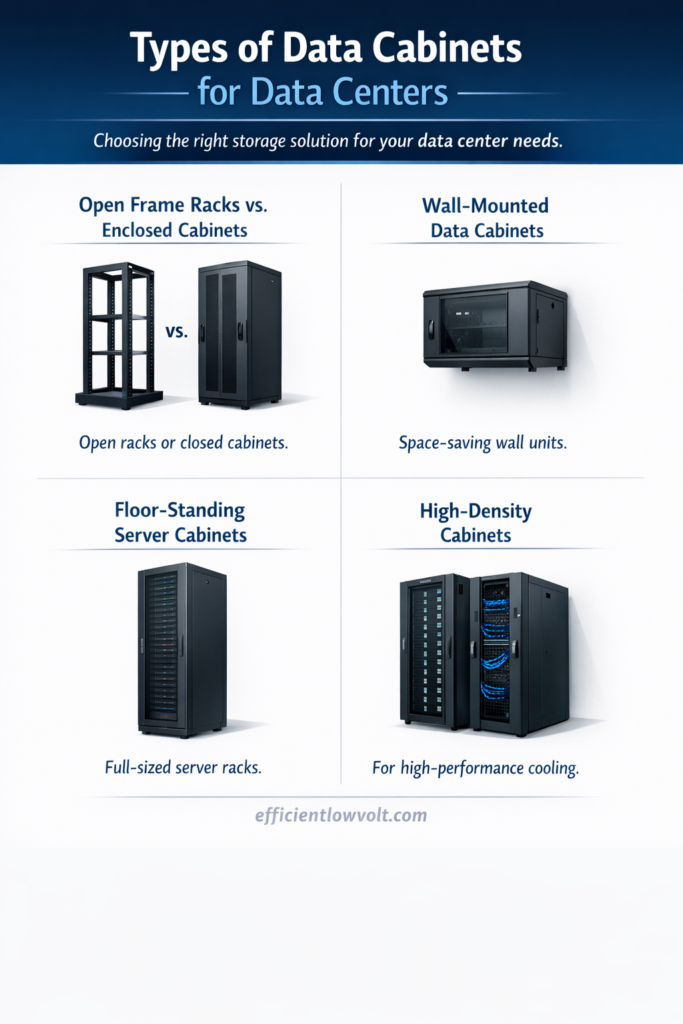
Open Frame Racks vs. Enclosed Cabinets
Open frame racks provide excellent airflow and easy accessibility, making them suitable for secure, climate-controlled data centers. However, they offer limited physical protection.
Enclosed data cabinets provide enhanced security, controlled airflow, and protection from environmental factors. These are typically preferred in enterprise environments where equipment protection and airflow management are critical.
Wall-Mounted Data Cabinets
Ideal for small server rooms, telecom closets, or edge deployments, wall-mounted cabinets save space while organizing networking equipment. They are commonly used for switches and patch panels rather than full server deployments.
Floor-Standing Server Cabinets
Floor-standing cabinets are standard in enterprise data centers. They support higher weight capacities, deeper equipment configurations, and scalable layouts. These cabinets are suitable for high-performance applications and dense computing environments.
High-Density Cabinets
Designed specifically for performance-intensive environments, high-density cabinets accommodate advanced cooling strategies and heavy server loads. These cabinets often include reinforced frames, enhanced airflow systems, and compatibility with intelligent monitoring systems.
How to Choose the Right Data Cabinets
Selecting data cabinets requires a careful evaluation of technical requirements and long-term operational goals.
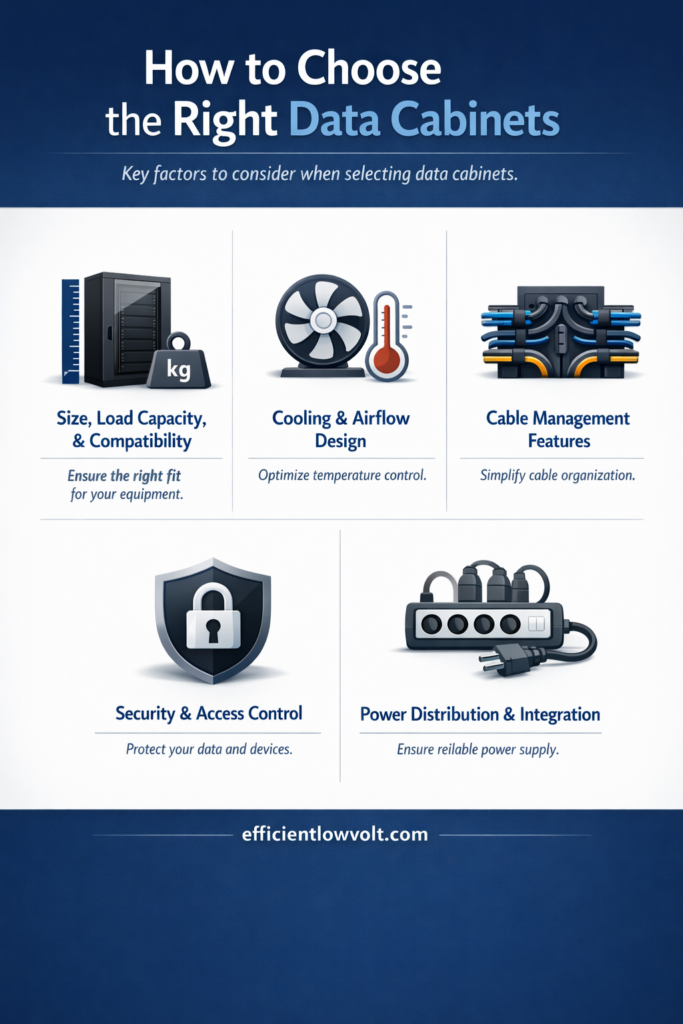
1. Size, Load Capacity, and Compatibility
Cabinet height is measured in rack units (U). Common sizes include 42U and 48U configurations. It’s essential to account for:
- Current equipment footprint
- Future expansion needs
- Equipment depth requirements
- Maximum weight capacity
Choosing cabinets that accommodate both present and projected workloads ensures long-term flexibility.
2. Cooling and Airflow Design
Effective airflow management is critical in high-performance data centers. Look for:
- Perforated front and rear doors
- Removable side panels
- Compatibility with blanking panels
- Support for hot aisle/cold aisle containment
Proper airflow design reduces cooling costs and protects equipment from overheating.
3. Cable Management Features
Structured cabling improves reliability and simplifies maintenance. Cabinets should include:
- Vertical and horizontal cable managers
- Cable routing pathways
- Integrated brush panels
- Labeling support
Well-managed cabling enhances airflow and reduces troubleshooting time.
4. Security and Access Control
Physical security features may include:
- Lockable doors and side panels
- Keyed or electronic access control
- Compatibility with monitoring systems
These features protect equipment from unauthorized access and support compliance requirements.
5. Power Distribution and Integration
Data cabinets must accommodate PDUs and grounding systems safely and efficiently. Planning for proper power distribution ensures stable operations and prevents overload risks.
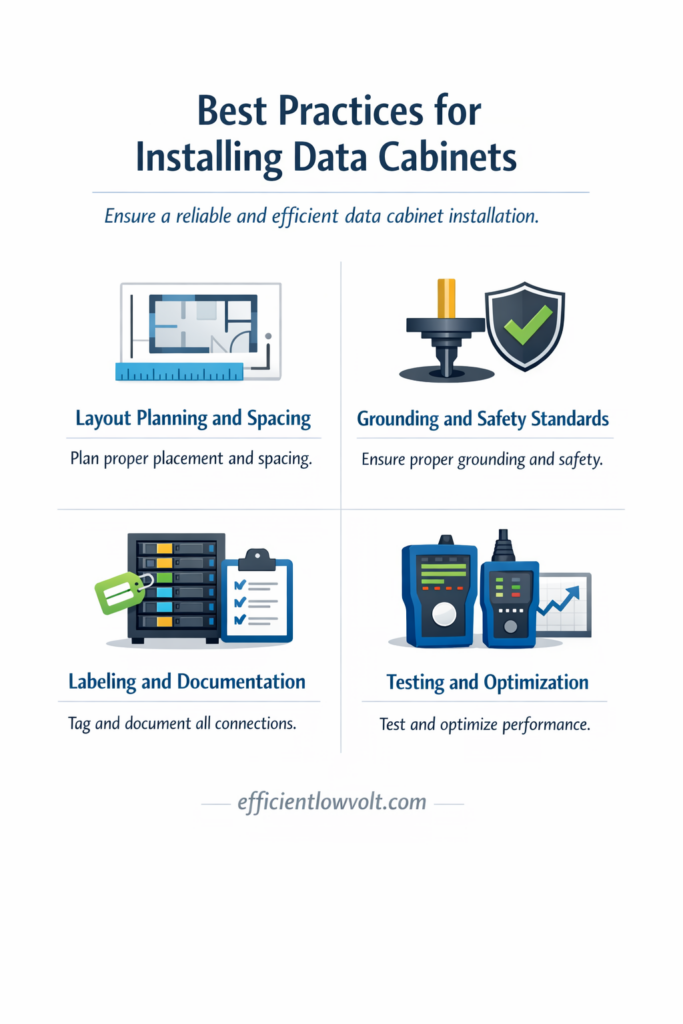
Best Practices for Installing Data Cabinets
Selecting the right cabinet is only part of the equation. Proper installation and layout planning are equally important.
Layout Planning and Spacing
Implementing a hot aisle/cold aisle configuration improves cooling efficiency by separating intake and exhaust airflow. Adequate spacing between cabinets supports maintenance access and airflow optimization.
Grounding and Safety Standards
Proper grounding minimizes electrical hazards and protects equipment from power irregularities. Compliance with industry safety standards is critical in enterprise environments.
Labeling and Documentation
Clear labeling and documentation simplify maintenance and reduce downtime during troubleshooting. Accurate records of cabinet configurations and equipment placement improve operational efficiency.
Testing and Optimization
After installation, airflow and load distribution should be tested. Monitoring temperature and performance metrics ensures the cabinet configuration supports optimal performance.
How Data Cabinets Improve Data Center Efficiency
The right data cabinets directly impact data center performance in several ways:
- Reduced Downtime: Organized cabling and proper airflow minimize hardware failures.
- Improved Cooling Efficiency: Optimized airflow lowers energy consumption and cooling costs.
- Faster Maintenance: Clear organization reduces troubleshooting time.
- Scalability: Modular designs allow seamless infrastructure expansion.
- Enhanced Security: Physical protection safeguards critical IT assets.
In high-performance data centers, efficiency and reliability are non-negotiable. Data cabinet selection plays a central role in achieving both.
Why Professional Installation Matters
Improper cabinet selection or installation can lead to performance bottlenecks, overheating, and future scalability limitations. Partnering with experienced infrastructure professionals ensures that every component—from structured cabling to cooling systems—is integrated effectively.
Efficient Lowvolt Solutions delivers comprehensive Data Center Solutions, including:
- Custom data center design
- Data cabinet selection and installation
- Structured cabling integration
- Airflow and cooling optimization
- Physical security implementation
By aligning cabinet selection with broader infrastructure strategy, businesses gain reliable, scalable, and energy-efficient data environments that support long-term growth.
Future Trends in Data Cabinet Design
As data center demands evolve, cabinet technology continues to advance. Emerging trends include:
- Smart cabinets with environmental monitoring sensors
- Integrated power and thermal analytics
- Modular cabinet systems for rapid expansion
- High-density support for AI and edge computing environments
Organizations investing in modern infrastructure should consider how these innovations can support future performance requirements.
Conclusion
Choosing the right data cabinets for high-performance data centers is a strategic decision that affects cooling efficiency, equipment protection, scalability, and operational reliability. From selecting the appropriate size and airflow configuration to implementing proper cable management and security features, every detail matters.
For IT leaders and infrastructure decision-makers, careful planning ensures that data cabinets support both current performance needs and future expansion.
Efficient Lowvolt Solutions specializes in designing and implementing high-performance data environments tailored to your business requirements. If you’re planning a new data center deployment or upgrading existing infrastructure, partnering with experienced professionals ensures your data cabinets—and your entire infrastructure—are built for reliability, efficiency, and sustainable growth.