
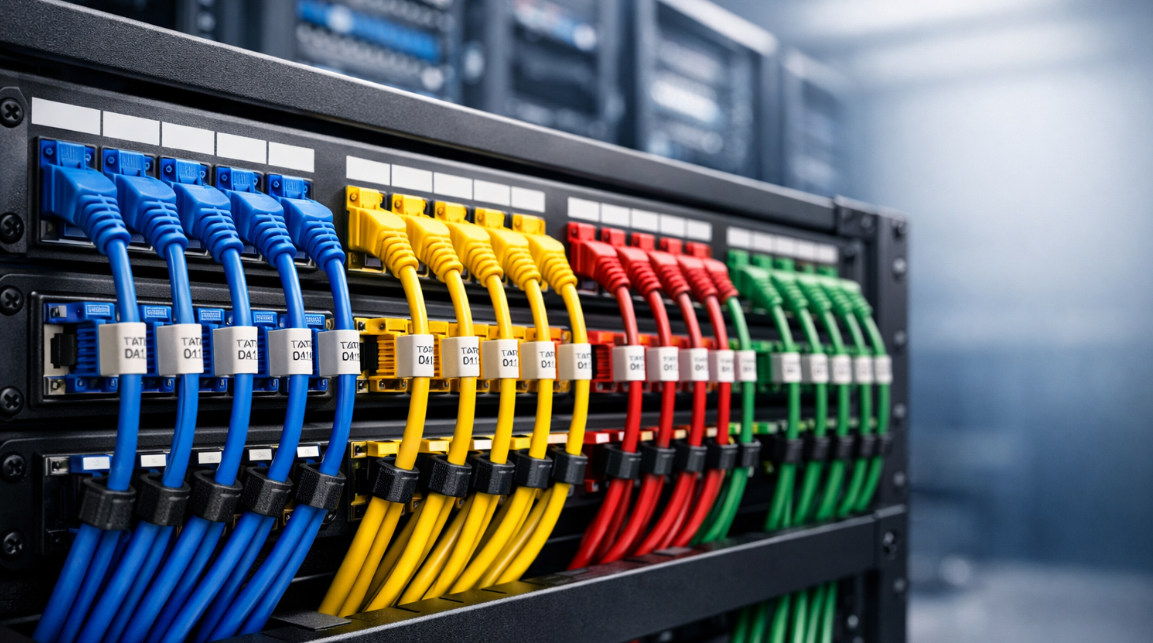
In today’s technology-driven workplaces, reliable network connectivity is essential for daily operations, and color coded connectors play an important role in keeping complex cabling systems organized and manageable. Businesses depend on their networks for communication platforms, cloud applications, security systems, and countless connected devices that support productivity and collaboration. At the core of this digital ecosystem is structured cabling, which provides the organized framework needed for consistent and scalable network performance.
As organizations expand, however, their cabling infrastructure can become increasingly complex. Data centers, office floors, and equipment rooms may contain hundreds or even thousands of cables running between switches, patch panels, and devices. Without a clear organizational system, identifying the right cable during maintenance or troubleshooting can quickly become time-consuming and error-prone.
This is where color coded connectors become especially valuable. By assigning specific colors to different cable types, network segments, or functions, technicians can quickly identify connections, reduce mistakes, and maintain order within structured cabling systems.
For business owners and organizations investing in structured cabling, understanding how color coded connectors improve organization can help create a more efficient, manageable, and scalable network infrastructure that supports long-term growth.
Understanding Structured Cabling and Network Organization
Structured cabling refers to a standardized system of cables, connectors, and related hardware that supports data, voice, and other communication services within a building or campus.
Unlike ad-hoc wiring approaches, structured cabling is carefully designed to ensure that the network remains:
- Organized
- Scalable
- Easy to manage
- Reliable for long-term use
Industry frameworks such as the ANSI/TIA-568 Structured Cabling Standard emphasize proper labeling, documentation, and cable management practices to maintain network efficiency.
Despite these guidelines, physical organization can still become challenging in large network environments. This is where color-coded connectors become extremely valuable.
What Are Color-Coded Connectors?
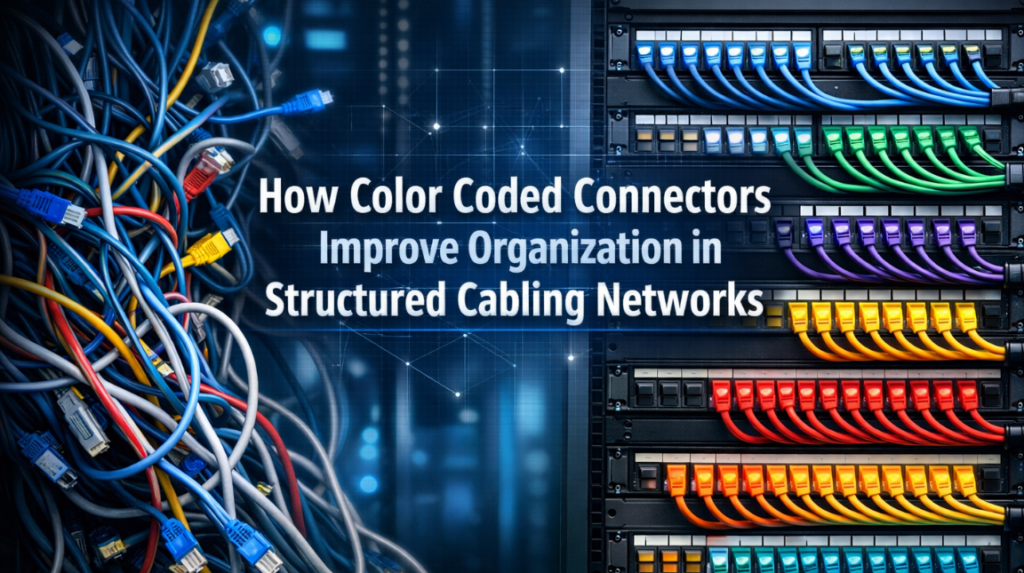
Color-coded connectors are network connectors, patch cords, or keystone jacks that use different colors to visually distinguish between cable functions, network segments, or system types.
Instead of relying solely on labels or documentation, technicians and IT personnel can immediately identify connections based on color.
Common components that may use color coding include:
- Ethernet patch cables
- Keystone jacks
- Patch panel ports
- Fiber optic connectors
- Network switch ports
By assigning specific colors to different types of connections, organizations create a visual system that makes network infrastructure easier to understand and manage.
Why Organization Matters in Structured Cabling Networks
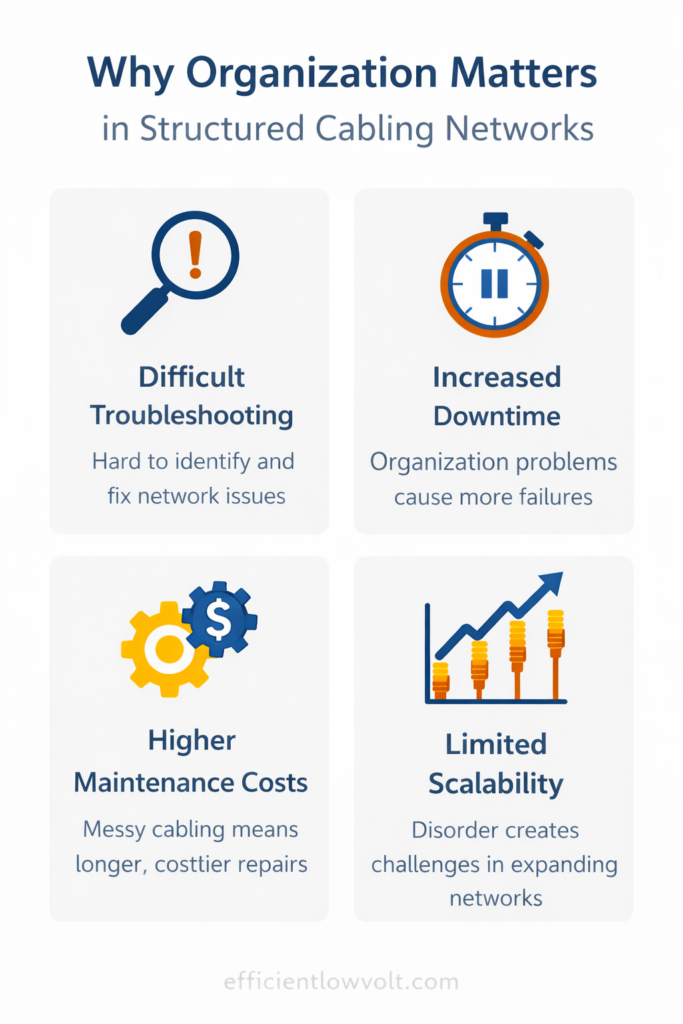
When a network infrastructure lacks proper organization, several operational challenges can arise.
1. Difficult Troubleshooting
Without a clear system for identifying cables, technicians may spend significant time tracing connections manually.
2. Increased Downtime
Network disruptions can take longer to resolve when cables are poorly organized.
3. Higher Maintenance Costs
Disorganized systems require more labor during upgrades, repairs, or expansions.
4. Limited Scalability
Adding new devices or network segments becomes more complicated when existing infrastructure is difficult to interpret.
Color-coded connectors help address these challenges by providing a clear and intuitive way to identify network connections.
How Color Coded Connectors Improve Network Organization
Implementing a color coded connector system brings several practical advantages to structured cabling environments.
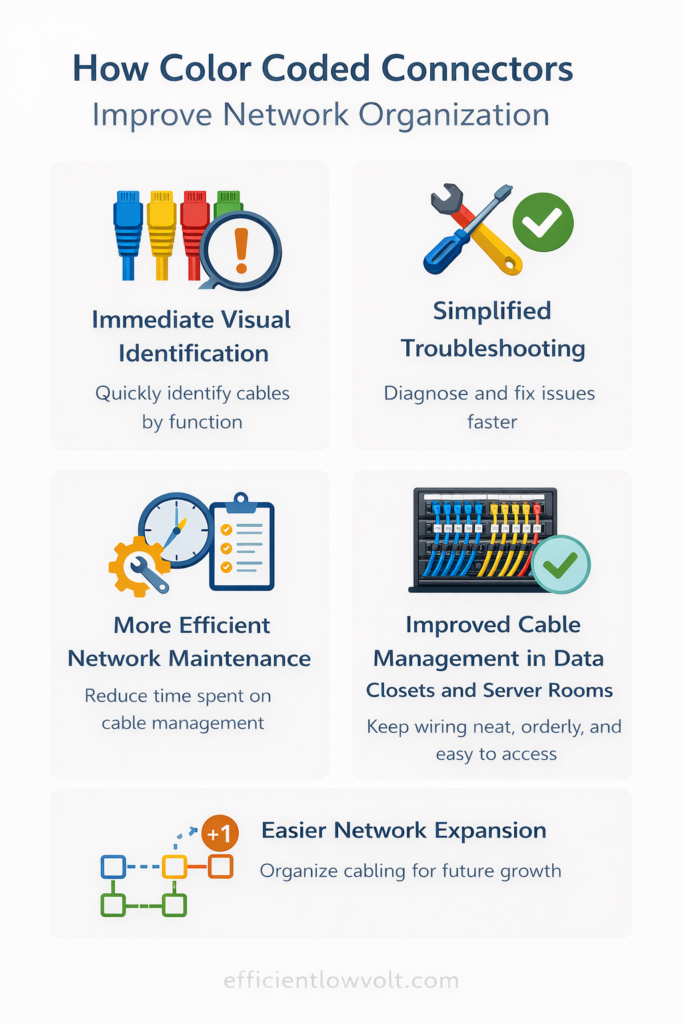
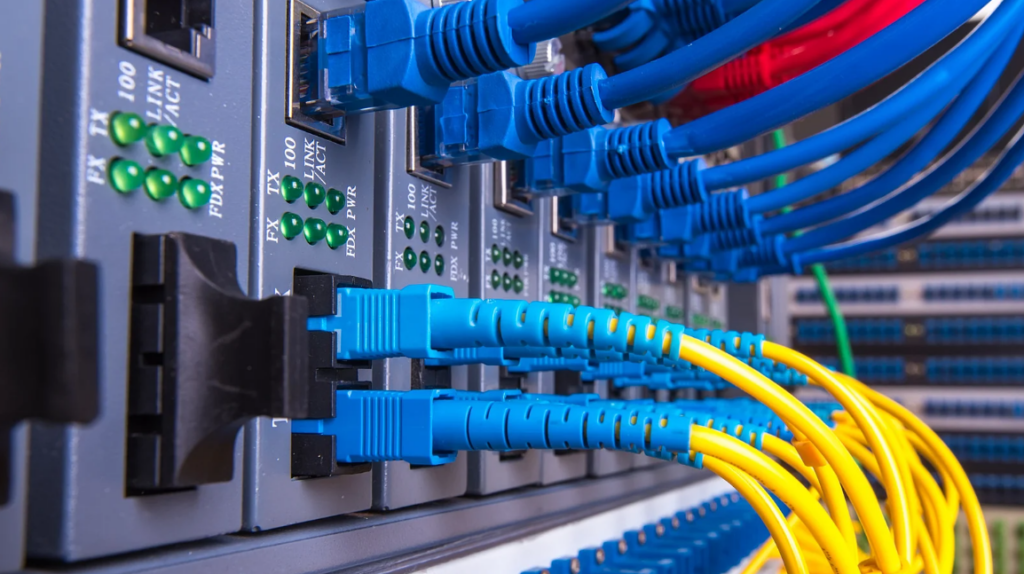
1. Immediate Visual Identification
One of the biggest benefits of color coding is the ability to instantly identify different types of connections.
For example, a company might assign specific colors for:
- Blue – Data network connections
- Yellow – Voice or VoIP systems
- Green – Security devices such as cameras
- Red – Critical infrastructure connections
- Orange – Management or monitoring networks
This visual differentiation allows technicians to quickly locate the correct cable without extensive tracing.
2. Simplified Troubleshooting
When network issues occur, time is critical. Color coded connectors allow IT teams to quickly identify which cables belong to a specific system.
Instead of searching through multiple identical cables, technicians can immediately focus on the relevant color group.
Benefits include:
- Faster fault isolation
- Reduced troubleshooting time
- Less disruption to business operations
3. More Efficient Network Maintenance
Routine maintenance tasks—such as replacing equipment, upgrading switches, or adding new devices—become significantly easier in an organized environment.
Color-coded connectors make it possible to:
- Identify cables quickly
- Avoid disconnecting the wrong connections
- Maintain proper cable routing during upgrades
This leads to smoother maintenance processes and fewer accidental disruptions.
4. Improved Cable Management in Data Closets and Server Rooms
Network racks, patch panels, and cable trays can become crowded as businesses expand their IT infrastructure.
Without a clear organizational system, these spaces can become difficult to manage.
Color coded connectors help maintain order by:
- Grouping related cables visually
- Making patch panels easier to read
- Reducing confusion during system modifications
In large installations, this visual organization can significantly improve efficiency.
5. Easier Network Expansion
As businesses grow, their network infrastructure must expand to support new devices, users, and services.
Color coded connectors simplify expansion by making it easier to integrate new systems into existing infrastructure.
For example:
- New security systems can follow the existing color scheme
- Additional network segments can be assigned unique colors
- Technicians can maintain consistent organization across multiple installations
This approach supports long-term scalability without compromising network clarity.
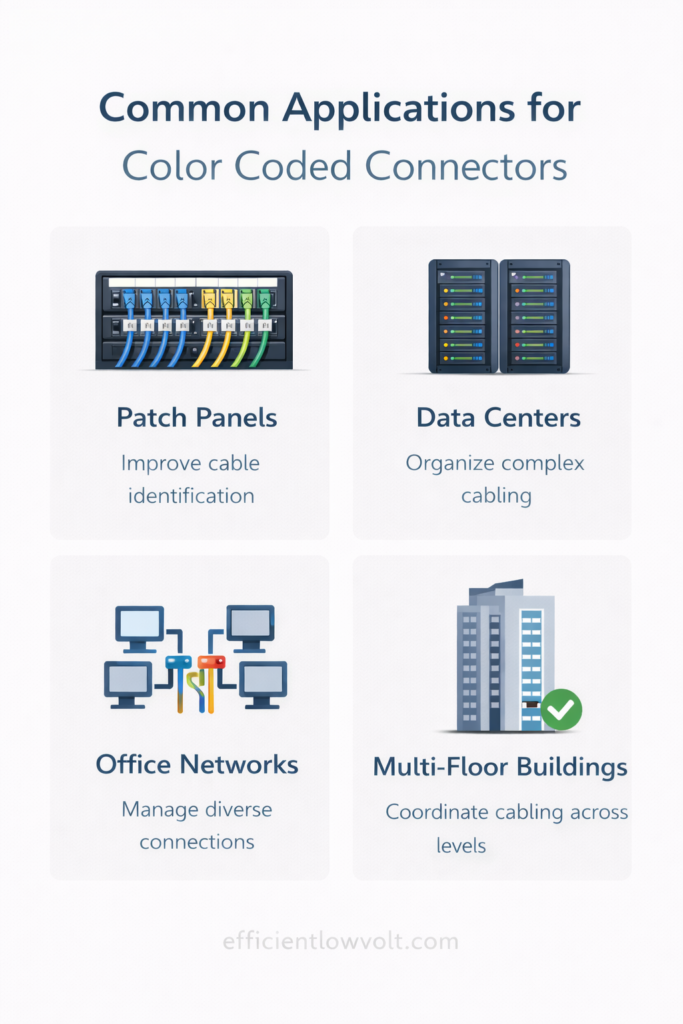
Common Applications for Color Coded Connectors
Color coding can be applied across many areas of structured cabling environments.
1. Patch Panels
Patch panels are central connection points in structured cabling systems. Color coded connectors help technicians quickly identify which ports correspond to specific networks or devices.
2. Data Centers
In large data center environments, thousands of connections may exist within a single rack row. Color coding simplifies navigation and reduces the likelihood of connection errors.
3. Office Networks
Corporate offices often support multiple services through the same infrastructure, including:
- Data networking
- Voice systems
- Security devices
- Access control systems
- Wireless access points
Color coded connectors help maintain clear separation between these systems.
4. Multi-Floor Buildings
In larger facilities, color coding can also represent different floors or departments, making it easier to track network connections across the building.
Best Practices for Implementing Color Coded Connectors
While color coding is a simple concept, implementing it effectively requires planning and consistency.
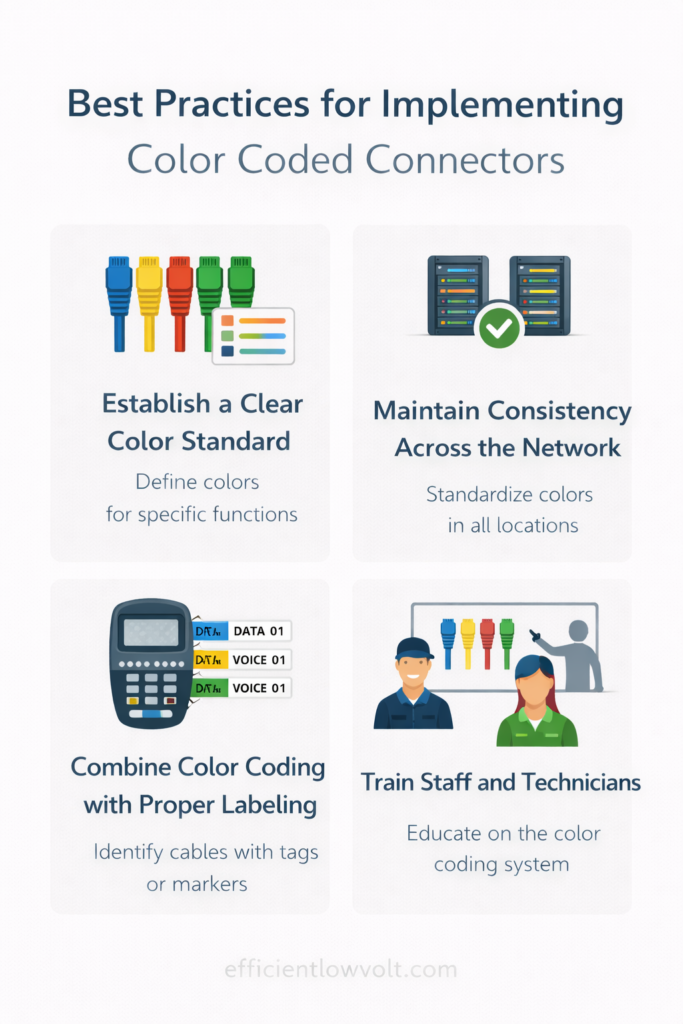
1. Establish a Clear Color Standard
Organizations should define a color scheme that clearly identifies different network services.
For example:
- Blue for standard data connections
- Yellow for voice systems
- Green for surveillance networks
- Red for critical systems
Documenting this scheme ensures that everyone working on the network understands the system.
2. Maintain Consistency Across the Network
Consistency is critical for the success of a color-coded system. All connectors, patch cables, and ports should follow the same color rules.
This prevents confusion and ensures that visual identification remains reliable.
3. Combine Color Coding with Proper Labeling
Color coding should not replace labeling—it should complement it.
Combining both approaches provides:
- Visual identification through colors
- Detailed information through labels
Together, these practices create a well-organized and easy-to-maintain infrastructure.
4. Train Staff and Technicians
IT teams and technicians should understand the organization system used in the network.
Providing clear documentation and training ensures that color coding continues to function effectively as the network evolves.
The Long-Term Benefits of Organized Structured Cabling
A well-organized, structured cabling system provides lasting advantages for businesses of all sizes.
These benefits include:
- Reduced network downtime
- Faster troubleshooting and repairs
- Simplified infrastructure upgrades
- Lower long-term maintenance costs
- Improved scalability as the business grows
Color coded connectors play an important role in achieving these benefits by providing a simple yet powerful way to maintain network clarity.
For businesses planning new installations or upgrading existing infrastructure, incorporating color coding from the beginning can significantly improve long-term efficiency.
Creating a Network Infrastructure That Works for Your Business
Investing in structured cabling is not just about installing cables—it is about building an infrastructure that supports your business operations today and in the future.
By implementing organizational strategies such as color coded connectors, businesses can create networks that are easier to maintain, expand, and troubleshoot.
An organized cabling system ultimately helps ensure that communication, data transfer, and digital services continue running smoothly.
Ready to Build a More Organized Network Infrastructure?
We hope this guide has helped you better understand how color coded connectors can improve organization and efficiency in structured cabling networks.
If you are planning a new network installation or upgrading your current cabling system, professional design and installation can make a significant difference in performance, reliability, and long-term manageability.
At Efficient LowVolt Solutions, we specialize in delivering structured cabling solutions designed to keep your network organized, scalable, and future-ready. Our team focuses on implementing reliable infrastructure that supports seamless communication and efficient operations for growing businesses.
If you have questions about structured cabling, network organization, or color coded connector systems, feel free to reach out to Efficient LowVolt Solutions anytime. Our team will be happy to discuss your needs and help you design a network infrastructure that works for your business.