
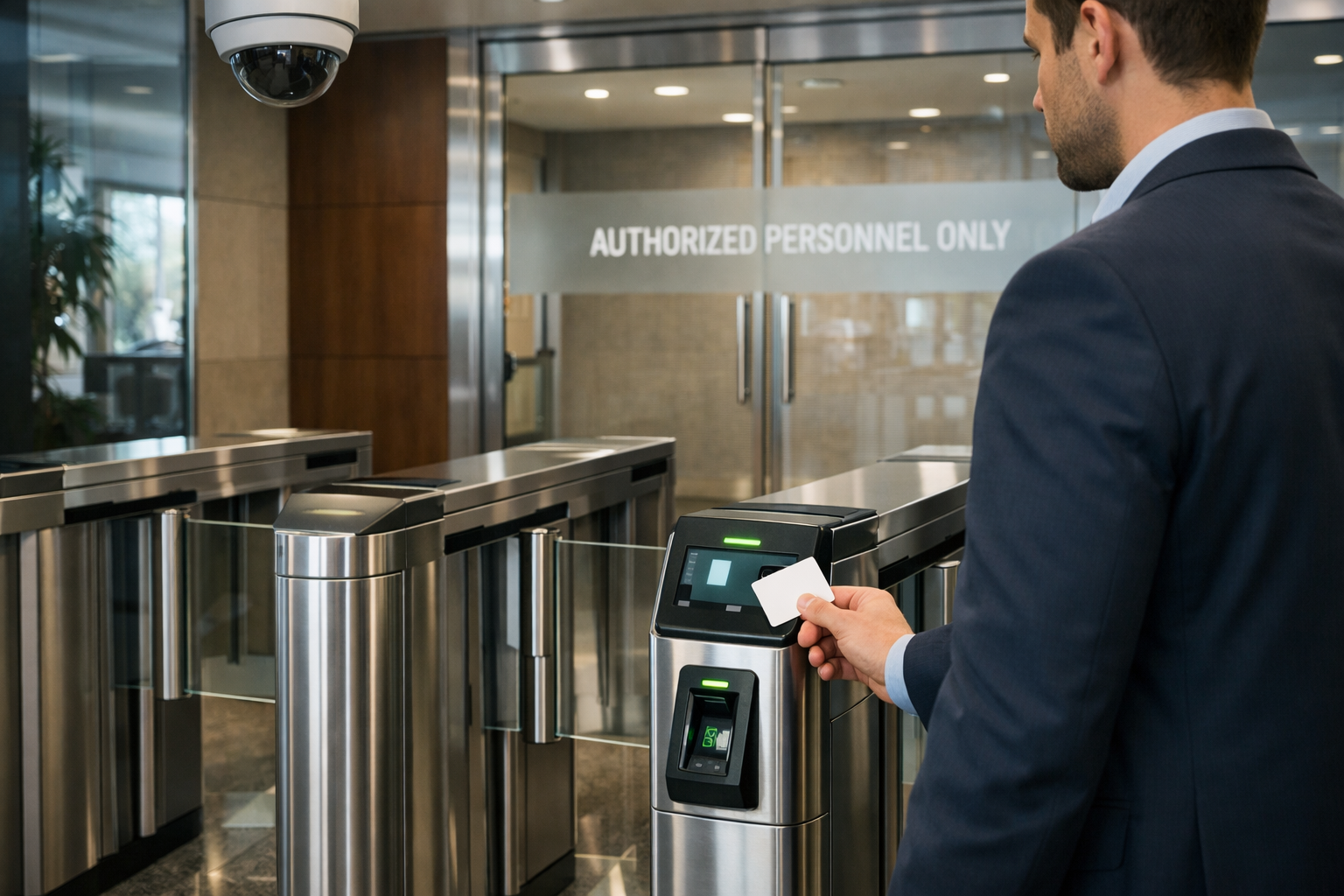
In today???s world, traditional locks and keys are no longer enough to protect commercial and residential spaces. As buildings grow larger, workplaces become more complex, and residential communities expand, the risks of unauthorized access rise. From sensitive office files to high-value inventory in warehouses, securing property has become a critical concern.
This is where physical access control comes in. Unlike mechanical locks, these systems allow property managers and homeowners to regulate who can enter, monitor access events in real time, and scale security as their needs grow. Modern physical access control combines technology such as biometric readers, keycards, PIN pads, and surveillance cameras to deliver a comprehensive security solution for any type of property.
Physical Access Control and Its Role in Safety
Physical access control (PAC) refers to systems that regulate, monitor, and manage entry into buildings or restricted areas. While cybersecurity protects digital assets, PAC safeguards the physical spaces where people and property reside.
At its core, PAC ensures that only authorized personnel or residents can access designated areas. It provides a structured framework to reduce risks, enhance accountability, and integrate with other security solutions, such as cameras or alarms. This makes PAC ideal for both commercial and residential environments, where monitoring access is not just a precaution???it???s essential for safety and operational efficiency.
Essential Components That Make PAC Work
Every effective physical access control system consists of several key components working in tandem:
Control Panels: The System???s Central Hub
Access control panels serve as the ???brain??? of the system. They store user credentials, manage permissions, and communicate with credential readers and electronic locks to enforce access rules.
Credential Readers: Who Gets In
Modern PAC systems rely on a variety of credential readers, including:
- Keycards and fobs: Common in offices and apartment complexes
- Biometric scanners: Fingerprint, facial recognition, and iris scanning for high-security areas
- PIN pads: Simple, cost-effective entry methods
- Mobile credentials: Smartphones replacing traditional cards for convenience and security
Electronic Locks and Door Hardware
Magnetic locks, electric strikes, and smart locks are integrated with the control panel to restrict access physically. These locks respond to verified credentials and can be configured for timed or conditional access.
Monitoring and Management Software
Modern PAC systems include software that provides real-time monitoring, audit trails, and remote access. Administrators can manage multiple doors and sites from a single interface, ensuring security across all entry points.
Different Types of Physical Access Control Systems
Physical access control is not one-size-fits-all. Depending on the property and security needs, systems can vary:
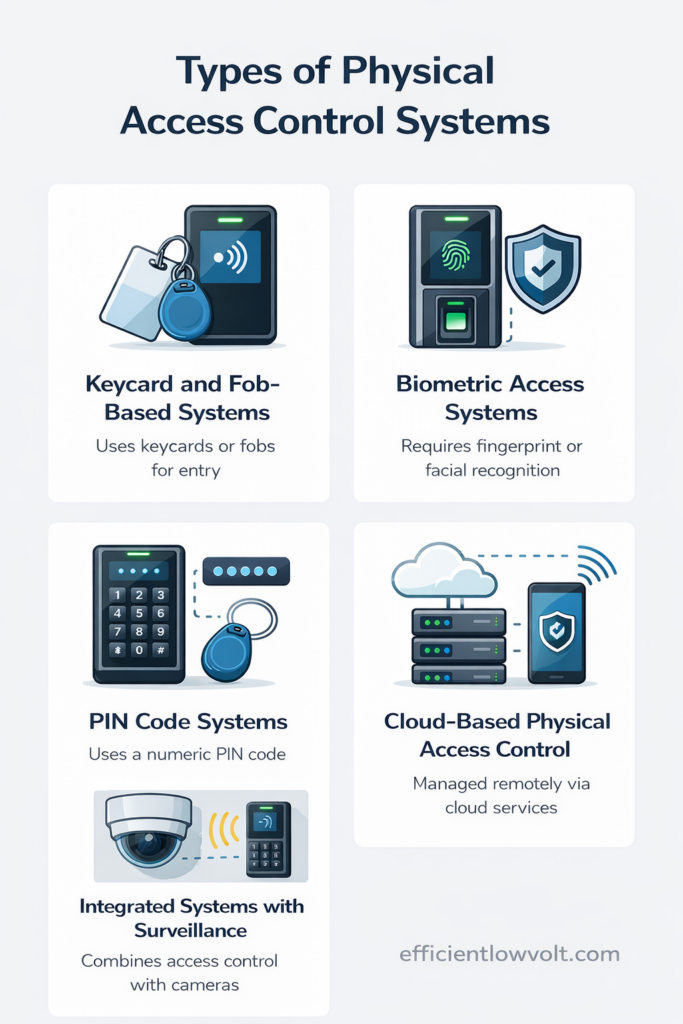
1. Keycard and Fob-Based Systems
These are widely used in office buildings, apartment complexes, and commercial spaces. They provide easy management of employee or resident credentials while maintaining secure entry points.
2. Biometric Access Systems
High-security areas often rely on fingerprint scanners, facial recognition, or iris scanning. Biometric systems are highly accurate and virtually impossible to duplicate, making them ideal for server rooms, labs, or executive offices.
3. PIN Code Systems
PIN-based entry systems are cost-effective and suitable for small offices or residential buildings. Codes can be easily changed if security is compromised.
4. Cloud-Based Physical Access Control
Cloud systems allow administrators to manage access remotely. Multi-site properties, like corporate campuses or residential chains, benefit from centralized control and real-time updates.
5. Integrated Systems with Surveillance
The most robust setups link PAC with surveillance cameras, alarms, and reporting tools, enabling a comprehensive approach to monitoring and responding to security events.
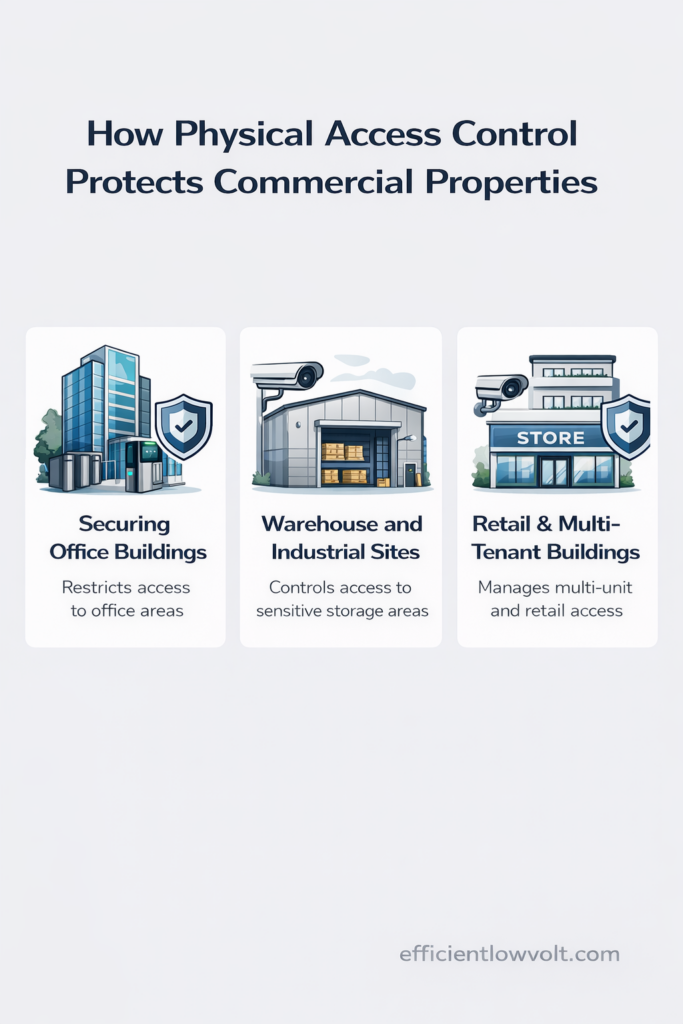
How Physical Access Control Protects Commercial Properties
Commercial spaces face unique security challenges. PAC systems provide targeted solutions:
Securing Office Buildings
- Restrict access by department or seniority
- Manage visitor entry and exits
- Track attendance and entry logs
Warehouse and Industrial Sites
- Limit access to inventory areas or hazardous zones
- Prevent unauthorized after-hours entry
- Reduce theft and internal security breaches
Retail and Multi-Tenant Buildings
- Control access to back offices or stock rooms
- Ensure tenants or employees only access assigned areas
- Monitor high-traffic points for potential security risks
Benefits for Commercial Properties:
- Reduces liability
- Improves accountability through detailed access logs
- Supports compliance with safety and data protection standards
- Provides scalable solutions as operations grow
Strengthening Residential Security with PAC
Residential properties also benefit from physical access control systems:
Apartment Complexes
- Residents gain controlled access to lobbies, gyms, and storage areas
- Property managers can revoke lost or stolen credentials instantly
Gated Communities
- Vehicle and pedestrian access is tracked and controlled
- Residents enjoy secure and seamless entry without compromising convenience
Private Homes
- Smart locks and mobile access offer enhanced convenience
- Homeowners can monitor who enters their property and when
By integrating PAC, residential communities gain peace of mind, improved safety, and an added layer of property value.
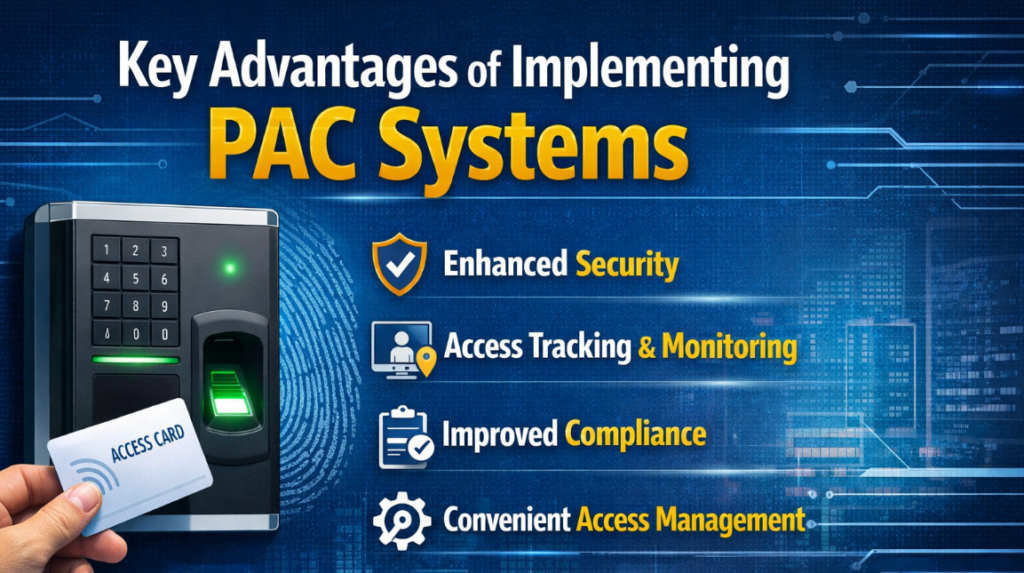
Key Advantages of Implementing PAC Systems
Investing in physical access control provides both tangible and intangible benefits:
- Eliminates lost-key or unauthorized entry risks
- Customizable access levels for employees, residents, or visitors
- Detailed records for auditing and compliance
- Remote management and monitoring capabilities
- Scalable systems to grow with property needs
- Seamless integration with existing security infrastructure
These advantages make PAC a proactive investment rather than a reactive measure.
When to Consider Upgrading to Physical Access Control
Not every property needs a PAC system immediately, but certain signs indicate it may be time:
- Frequent lost or duplicated keys
- Unauthorized access incidents
- High employee or tenant turnover
- Compliance requirements for sensitive data or materials
- Expanding facilities or multiple buildings requiring centralized control
Upgrading before incidents occur ensures safety, operational efficiency, and reduced liability.
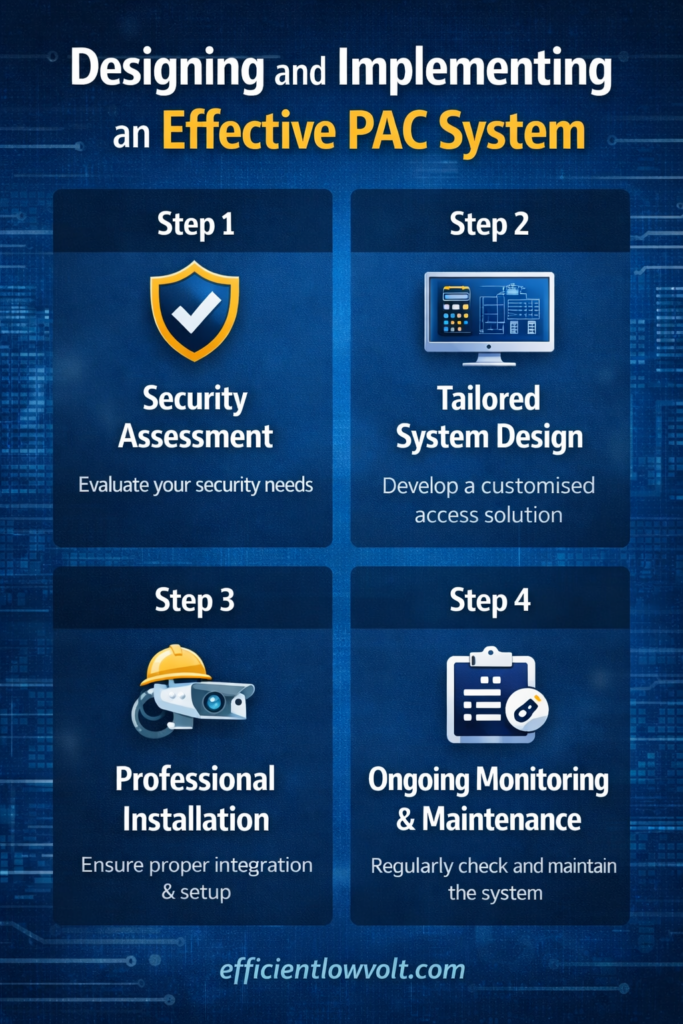
Designing and Implementing an Effective PAC System
Installing a PAC system involves several key steps, regardless of provider:
Step 1: Security Assessment
Conduct a thorough evaluation of entry points, sensitive areas, and potential vulnerabilities.
Step 2: Tailored System Design
Select components that fit the property???s security needs, from keycard and PIN systems to biometric and cloud-based solutions.
Step 3: Professional Installation
Ensure proper setup and integration with existing doors, locks, and surveillance cameras. Test all system components to guarantee reliability.
Step 4: Ongoing Monitoring and Maintenance
Maintain system functionality through software updates, credential management, and preventive maintenance. Scalability is crucial???new doors, users, or locations should be easy to add.
By following these steps, properties can achieve a secure, efficient, and user-friendly access control system.
Choosing the Right Physical Access Control Provider
When selecting a provider, consider not only the technology they offer but also their expertise, reliability, and ability to tailor solutions to your specific property needs. A strong provider will guide you through the entire process???from system design to installation and ongoing management???ensuring that your access control system is both effective and future-ready.
- Proven industry experience
- Customization capabilities for unique property layouts
- Ability to integrate with existing security systems
- Scalable solutions for future growth
- Reliable technical support and maintenance
A competent provider ensures that your investment in PAC delivers long-term security and peace of mind.
Emerging Trends in Physical Access Control
As technology evolves, PAC systems continue to advance:
- Mobile credentials and smartphone-based access replacing traditional keycards
- AI and analytics to detect unusual entry patterns
- Touchless entry systems for health and safety compliance
- Cloud-based platforms for multi-site, remote management
- Smart building integration with IoT sensors and automated workflows
Staying informed about these trends ensures properties maintain cutting-edge security.
Final Thoughts: Securing Your Space for the Future
Physical access control is no longer optional???it???s an essential part of modern security strategies for both commercial and residential properties. By regulating access, tracking entry events, and integrating with surveillance, PAC systems protect people, assets, and operational efficiency.
Whether you???re managing a corporate office, industrial site, apartment complex, or private home, implementing a well-designed PAC system is a long-term investment in safety and peace of mind.
For businesses and homeowners looking for reliable, scalable, and advanced security solutions, Efficient Low Voltage Solutions & System Integration offers tailored physical access control systems that meet unique property needs. Their team combines expertise, cutting-edge technology, and personalized service to ensure your property remains secure today???and prepared for tomorrow.